Botswana is a year-round safari destination, but it behaves differently from almost anywhere else in Africa. The Okavango Delta floods in the dry season, the Kalahari comes alive in the rainy season, and Chobe's elephants gather in their tens of thousands when the bush dries out. There is no single "best month" — only the best month for the Botswana you want to see.
We plan Botswana safaris in every month of the year. This guide is built on what our guests actually experience: the two main seasons, why the Delta floods in winter, each month in detail, the weather, the best time for each region and each animal, how prices change, and when you need to book.
Botswana's Two Main Seasons
| Dry season (May–October) | Green season (November–April) | |
|---|---|---|
| Weather | Sunny, almost no rain; cold mornings June–August, very hot in October | Hot, humid, afternoon thunderstorms |
| Wildlife | Animals gather at rivers and water — easiest game viewing | Animals spread out; newborns, zebra migration in the pans |
| Okavango | Flood high (June–August) — best for mokoro and boating | Water drops; more land-based activities |
| Kalahari & pans | Dry and stark; quad-biking and sleep-outs on the salt pans | Green, zebra migration, Kalahari lions and springbok |
| Vegetation | Thin bush — easier to spot animals | Lush and green — dramatic photos, harder spotting |
| Birding | Good | Excellent — migrant birds arrive and breed |
| Malaria risk | Lower | Higher |
| Prices | Highest (peak season) | Often 30–50% lower at many camps |
Why the Okavango Floods in the Dry Season
The Okavango's water starts as rain in the highlands of Angola between November and March. It flows down the Okavango River into Botswana and then spreads slowly across the flat Delta — a journey of several months over a very gentle slope. The flood reaches the "panhandle" in the north first, arrives in the central Delta from around May and usually peaks June to August — exactly when the rest of the country is at its driest.
The result is extraordinary: a huge oasis of fresh water in the middle of a dry Kalahari winter, drawing animals in from the surrounding dry lands. It is why winter is such a special time to visit, and why water-based activities like mokoro trips depend on the flood. The size of the flood varies from year to year with Angola's rains. Our complete guide to an Okavango Delta safari explains the flood cycle in more detail.


Botswana Month by Month
| Month | Conditions | Delta water | Best for |
|---|---|---|---|
| January | Hot, rainy, green | Low | Zebra migration, Central Kalahari, birding, low rates |
| February | Hot, rainy | Low | Makgadikgadi and Nxai Pan, baby animals |
| March | Rains easing | Low, starting to rise in the north | Kalahari predators, quiet camps |
| April | Warm, drying out | Rising | Shoulder-season value; green and beautiful |
| May | Pleasant, dry | Flood arriving | Good all-round month, fewer vehicles |
| June | Cool, dry | High | Mokoro, great game viewing, comfortable days |
| July | Cold mornings, dry | Peak | Peak Delta season — book a year ahead |
| August | Warming, dry, windy | High | Excellent game, water still high, wild dog denning |
| September | Hot, dry | Falling | Predators, big Chobe elephant herds |
| October | Hottest month | Falling | Dramatic waterhole action, Linyanti and Savuti |
| November | Hot, first rains | Low | Shoulder value, impala and tsessebe births |
| December | Hot, rainy, green | Low | Festive safaris, birding, zebra moving to the pans |
Each Month in Detail
January to March — the emerald season. Rain falls mostly in late-afternoon storms, the Kalahari turns green and the pans fill with shallow water. Thousands of zebra and wildebeest move onto the Makgadikgadi and Nxai Pan, followed by predators. In the Central Kalahari, Deception Valley is at its most beautiful, with springbok, gemsbok and black-maned Kalahari lions. Camps are quiet and rates are at their lowest.
April and May — the shoulder. Rains stop, the bush is still green and the weather is warm and pleasant. The Delta begins to fill as the flood arrives. These are two of our favourite value months: good game viewing, comfortable temperatures and rates well below peak.
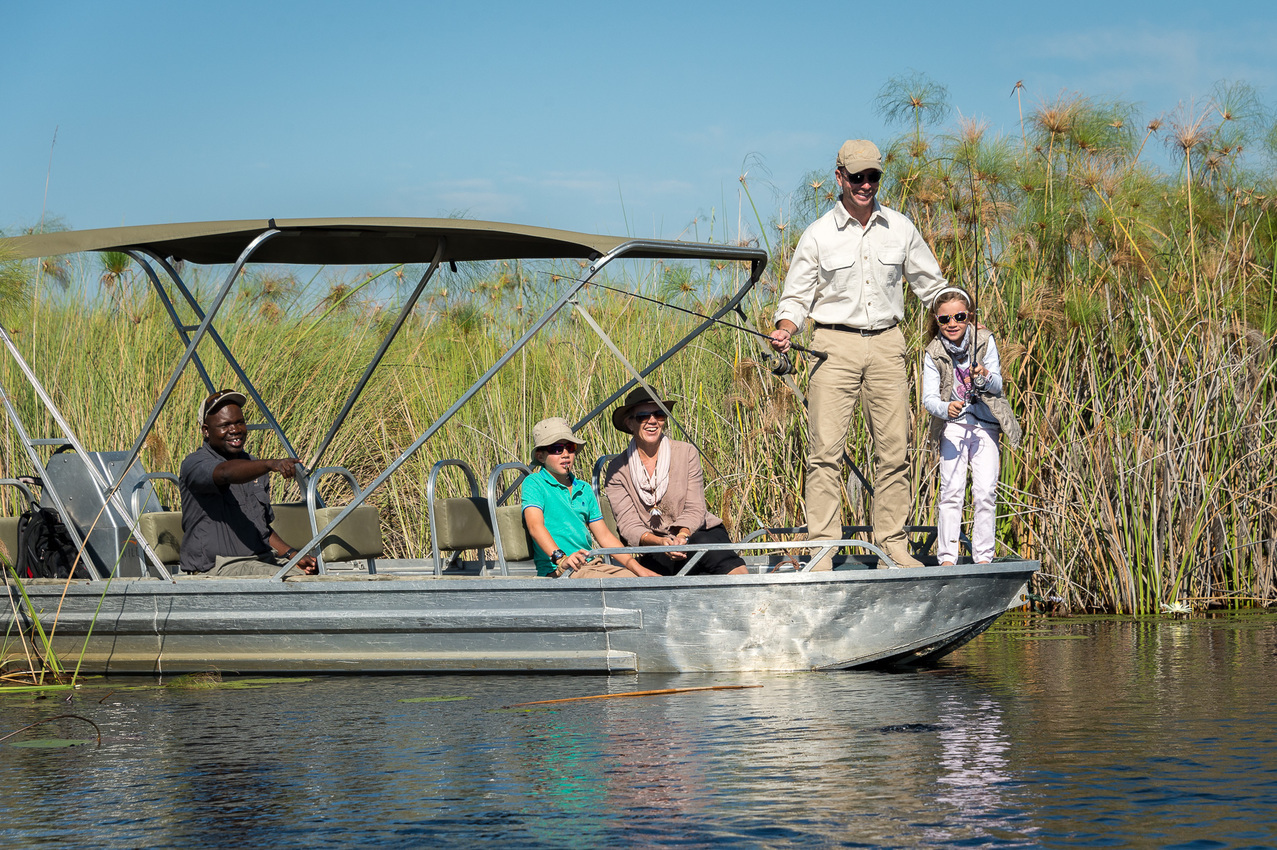
June to August — high flood, high season. Clear, dry, sunny days of about 25°C with cold early mornings. The Delta is at its fullest, which is ideal for mokoro, boating and island walks, while the drying land draws animals to water. This is the most popular time, and the best camps sell out a year ahead.
September and October — peak game, peak heat. The bush is bare, water is scarce away from the Delta and rivers, and wildlife concentrates dramatically. Chobe's riverfront fills with elephants, and Savuti and the Linyanti offer intense predator action. October can reach the high 30s °C — plan activities for early morning and late afternoon.
November and December — the turn of the season. The first rains arrive, the bush greens almost overnight and impala, tsessebe and other antelope give birth, which keeps predators busy. Migrant birds return. Rates drop again, except over the Christmas and New Year holidays.

Weather and Rainfall by Month
Approximate long-term averages for Maun, the gateway to the Okavango Delta. The Kalahari is slightly hotter by day and colder at night; Kasane (Chobe) is a little wetter in summer.
| Month | Avg high | Avg low | Rainfall |
|---|---|---|---|
| Jan | 32°C | 19°C | ~105 mm |
| Feb | 31°C | 19°C | ~85 mm |
| Mar | 31°C | 17°C | ~70 mm |
| Apr | 30°C | 14°C | ~25 mm |
| May | 28°C | 9°C | ~5 mm |
| Jun | 25°C | 5°C | ~1 mm |
| Jul | 25°C | 5°C | 0 mm |
| Aug | 29°C | 8°C | 0 mm |
| Sep | 33°C | 13°C | ~2 mm |
| Oct | 35°C | 18°C | ~20 mm |
| Nov | 34°C | 19°C | ~50 mm |
| Dec | 32°C | 19°C | ~90 mm |
Best Time by Region
| Region | Best months | Why |
|---|---|---|
| Okavango Delta | June – October | High flood, mokoro trips, concentrated game |
| Moremi Game Reserve | July – October | Predators and plains game around permanent water |
| Chobe Riverfront (Kasane) | August – October | Huge elephant and buffalo herds at the river |
| Savuti | July – October; also Dec – Mar | Predators at scarce water; zebra passing through in the rains |
| Linyanti & Kwando | July – October | Lions, wild dogs, elephants along the river |
| Makgadikgadi Pans & Nxai Pan | December – April (wet); May – October (Boteti River) | Zebra migration in the wet season; dry-season zebra at the river |
| Central Kalahari | December – April | Green Deception Valley, springbok, gemsbok and Kalahari lions |
For the desert regions in detail, read our Makgadikgadi Pans and Central Kalahari guide.
Best Time by Wildlife
| Want to see… | Best months | Where |
|---|---|---|
| Big elephant herds | Aug – Oct | Chobe Riverfront, Linyanti, Savuti |
| Lions | All year; best Jul – Oct | Moremi, Savuti, Delta concessions; Kalahari in the rains |
| Leopard | All year; easiest May – Oct | Okavango concessions, Moremi, Chobe |
| African wild dog | Jun – Sep (denning) | Okavango and Linyanti concessions |
| Zebra migration | Dec – Mar | Makgadikgadi and Nxai Pan |
| Baby animals | Nov – Feb | Everywhere |
| Birding | Nov – Mar | Chobe River, Okavango panhandle, Delta |
| Meerkats | All year; most active May – Oct mornings | Makgadikgadi |

Prices Through the Year
| Season | Typical months | Prices | Availability |
|---|---|---|---|
| Green season | Dec (excl. festive) – Mar | Lowest — often 30–50% below peak | Good |
| Shoulder | Apr – May, Nov | Mid | Good |
| High season | Jun – Oct | Highest | Limited — book early |
| Festive | Christmas – New Year | High | Limited |
Season dates differ slightly between camp groups. For real budgets per night and per trip, read our Botswana safari cost guide.
Best Time for Your Type of Trip
First safari
June to September. Comfortable temperatures, the flood is high and wildlife is easy to find. Combine with the Falls in our Victoria Falls, Chobe and Okavango itinerary.
Honeymoon
May, June or September offer good weather and slightly calmer camps than July–August. In the green season, many camps offer couples better rates and more privacy — and the storm skies make for unforgettable sundowners. See our honeymoon safaris.
Families
June to August, during school holidays, with lower malaria risk and mild days. Choose family-friendly camps and a private vehicle so children can set the pace.
Photographers
October for dramatic waterhole scenes and dust-lit sunsets; February for green landscapes, storm skies and newborns.
Budget-conscious travellers
November to April (excluding the festive weeks). Many camps cut rates significantly, and some offer "stay 4, pay 3" type deals.
Birders
November to March, when migrants arrive in breeding plumage. Our Chobe River birding guide covers one of the best birding areas.

What to Pack by Season
| Season | Essentials |
|---|---|
| June – August | Warm jacket, beanie, gloves and scarf for early drives; layers you can peel off by mid-morning |
| September – October | Light, breathable clothing, wide-brimmed hat, sunscreen, rehydration sachets |
| November – April | Light rain jacket, quick-dry clothing, strong insect repellent, waterproof camera cover |
| All year | Neutral colours, binoculars, a soft bag of max 20 kg for light-aircraft flights |
Full packing list in our safari outfit essentials guide.
Combining Botswana With Other Destinations
Botswana's dry season lines up with Victoria Falls, Kruger and Namibia, making multi-country trips easy:
- Victoria Falls — two nights before or after Chobe. See best time to visit Victoria Falls.
- Namibia — via the Caprivi Strip or a flight from Maun. Comparing the two? Read Botswana vs Namibia.
- Cape Town or Kruger — through Johannesburg, under two hours' flight from Maun or Kasane.
- An island finish — May and October work well for the Seychelles. See best time to visit the Seychelles.
When to Book
Botswana follows a "high-value, low-impact" tourism model, limiting visitor numbers, and many top camps have only eight to twelve rooms. For July to October, book 9 to 12 months ahead — earlier for school holidays or if you want specific camps. For the green season, three to six months is usually enough. Explore our Botswana safari tours or luxury Okavango Delta safaris to start planning.
Frequently Asked Questions
What is the best month to visit Botswana?
For a first safari, July to September are among the best months: the Okavango flood is high, the weather is dry and sunny, and game viewing is excellent. September and October are best for Chobe's huge elephant herds and dramatic waterhole action. For value and the zebra migration, choose January to March.
When is the Okavango Delta flooded?
The flood arrives from around May and is usually highest between June and August, even though this is Botswana's dry season. The water comes from rain that fell months earlier in the Angolan highlands and takes about four months to flow through the Delta.
Is the green season a good time to visit Botswana?
Yes, for the right traveller. From December to April the landscape is green, there are newborn animals, birding is excellent, the zebra migration reaches the Makgadikgadi and Nxai Pan, and many camps offer much lower rates. Game is more spread out and some areas are hot and humid.
When is the rainy season in Botswana?
Botswana's rains usually fall from about November to March, mostly as short afternoon thunderstorms. Mornings are often clear, and it rarely rains all day.
When is Botswana cheapest?
The green season, from about November to April (excluding Christmas and New Year), when many camps reduce rates significantly. April, May and November are good-value shoulder months with good game viewing.
How far in advance should I book a Botswana safari?
For July to October, book 9 to 12 months ahead, because many camps have only eight to twelve rooms and Botswana limits visitor numbers. For the green season, three to six months is usually enough.
How cold does Botswana get in winter?
From June to August, early mornings in the Okavango and Kalahari can drop to around 5°C or lower, and it can feel close to freezing on an open game vehicle. Days warm up to about 25°C. Pack a warm jacket, hat and gloves.
When is the zebra migration in Botswana?
Thousands of zebra move to the Makgadikgadi Pans and Nxai Pan with the rains, usually from about December to March. In the dry season, from about May to October, they gather along the Boteti River on the western edge of the Makgadikgadi.
Is Botswana good for a safari with children?
Yes, especially in the dry season from June to August, when malaria risk is lower and temperatures are mild. Many Okavango camps have minimum ages, often 6 to 12 years, so choose family-friendly camps with family rooms and private vehicles.
Bookable Botswana Safaris
Know your month? These are our most popular Botswana safaris — tailored to your dates and budget.


Planning a Botswana Safari?
Tell us your travel month and what this journey means to you. We will match the right regions, camps and flights to your dates.
WhatsApp for a quote Send an enquiry