Some safaris are about ticking off animals. The Okavango Delta is about something slower: gliding through papyrus channels at water level, waking to hippos calling from a lagoon, following a leopard across a floodplain and realising that there is nobody else in sight.
It is also one of the most misunderstood safari destinations in Africa. The Delta is not one single experience. Where your camp sits determines whether your days are built around predator-rich game drives, mokoro and boating excursions or a blend of both — and the month you travel changes the picture again.
This guide explains how the Okavango works, how to plan it properly and how Tourgy Tourz builds a Delta journey with contrast rather than simply booking two beautiful lodges. If you would like to see our featured camps and current 2026 rates first, visit our Luxury Okavango Delta Safaris page.
Okavango Delta Safari at a Glance
| Planning Question | Short Answer |
|---|---|
| Where is it? | Northern Botswana, on the edge of the Kalahari. |
| How do you get there? | A regional flight to Maun, then light aircraft to your camp's airstrip. |
| Best time to go? | Year-round. June–August for peak flood and water activities; September–October for dry-season game viewing; January–February for green season. |
| How long? | 3 nights for one camp; 5–6 nights across two contrasting camps is ideal. |
| What does it cost? | Selected 2026 Wilderness camps from approx. US$1,480 pp per night sharing, fully inclusive. Flights quoted separately. |
| Best for? | Honeymoons, anniversaries, first luxury safaris, family milestones and private journeys with friends. |
What Is the Okavango Delta?
The Okavango is an inland delta. Most rivers end in the sea. The Okavango River does something far more unusual: it flows from the highlands of Angola, enters north-western Botswana and fans out across the flat Kalahari Basin into thousands of channels, lagoons, islands and seasonal floodplains. The water never reaches the ocean.
The result is a desert-edge wetland that supports extraordinary wildlife, and in 2014 the Okavango Delta was inscribed as a UNESCO World Heritage Site.

Part of the Delta is protected within Moremi Game Reserve, including the area around Chief's Island. Much of the rest is divided into large private wildlife concessions, where a small number of camps share a vast area. That concession model is a big part of why the Okavango feels so private — and why camps there can offer experiences such as night drives and guided walks.
The Flood Arrives Months After the Rain
This is the single most important thing to understand when planning an Okavango safari.
Rain falls in the Angolan highlands during the southern summer. That water then travels slowly down the river system, so the Delta's annual inundation typically peaks around July and can extend into August — in the middle of Botswana's dry season.
Why This Matters for Your Trip
When the surrounding bush is at its driest, the Delta is at its wettest. Animals concentrate around permanent water, and water-based camps are at their most atmospheric for mokoro and boating. Water levels vary from year to year, so we confirm expected activities for your specific dates before booking.
When to Visit the Okavango Delta
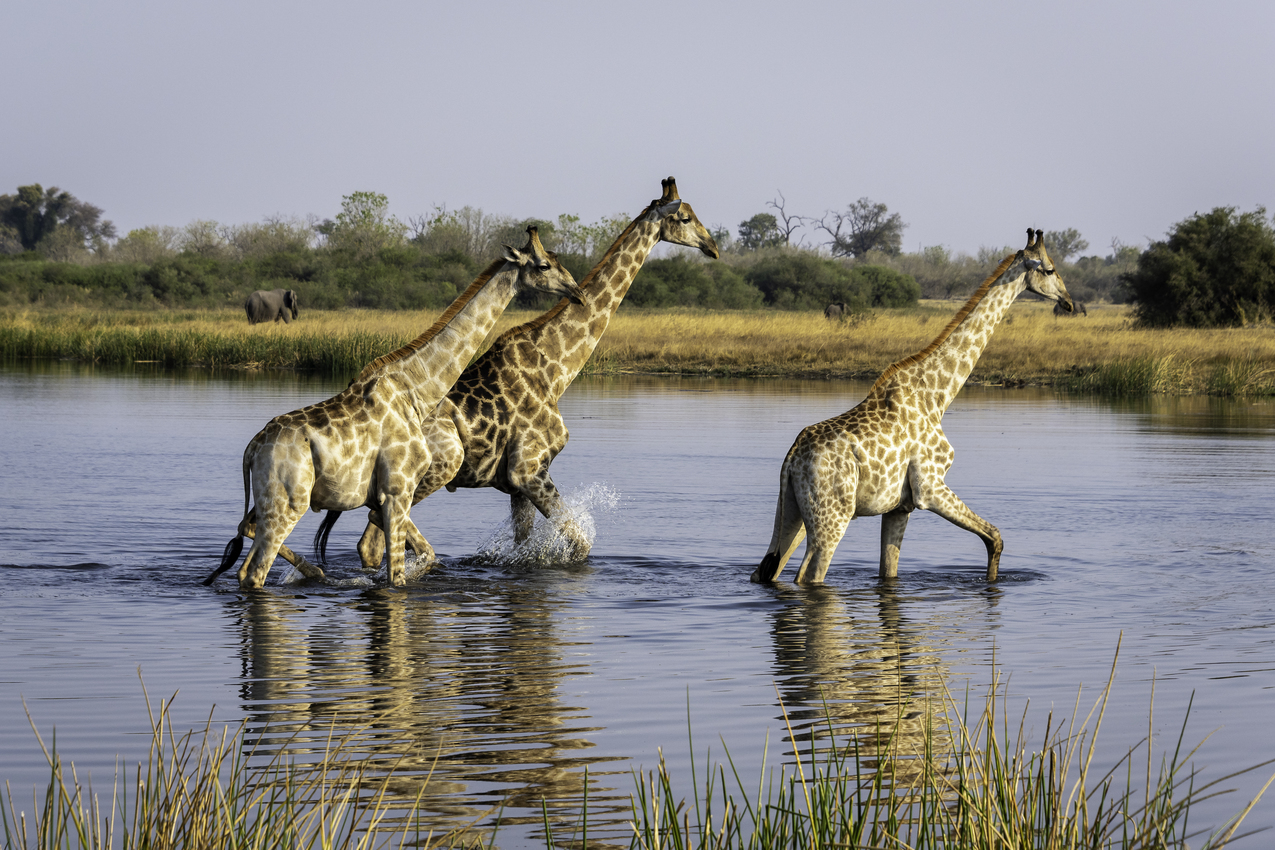
Wildlife viewing is good throughout the year. What changes is the water, vegetation, temperature and animal behaviour — which is why your travel month should influence the camps we recommend.
| Months | Season | What to Expect | Ideal For |
|---|---|---|---|
| January – February | Green season | Lush vegetation, young animals, summer migrant birds and strong predator activity. Warm, with afternoon storms. | Photographers, birders and value-conscious luxury travellers. |
| March – May | Transition | Rain eases, temperatures cool and the landscape begins drying as floodwater starts arriving from Angola. | Travellers wanting mild weather ahead of peak rates. |
| June – August | Peak inundation | Flood usually at its strongest; cold early mornings, clear sunny days. | Mokoro and boating at water camps; classic Delta scenery. |
| September – October | Dry heat | Hotter and drier; thinner vegetation and wildlife gathering at water. | Wildlife-focused travellers and game drive enthusiasts. |
| November – December | First rains | New life, greener landscapes, dramatic skies and excellent photography. | Photographers and travellers wanting shoulder-season rates. |
For a wider view of seasonal safari timing across the region, see our Best Time to Go on Safari guide or our month-by-month pages such as Africa in July .
What Do You Actually Do on an Okavango Safari?
The activities depend heavily on your camp. Some sit on permanent water, some are entirely land-based, and some offer both depending on the season.
Mokoro Excursions
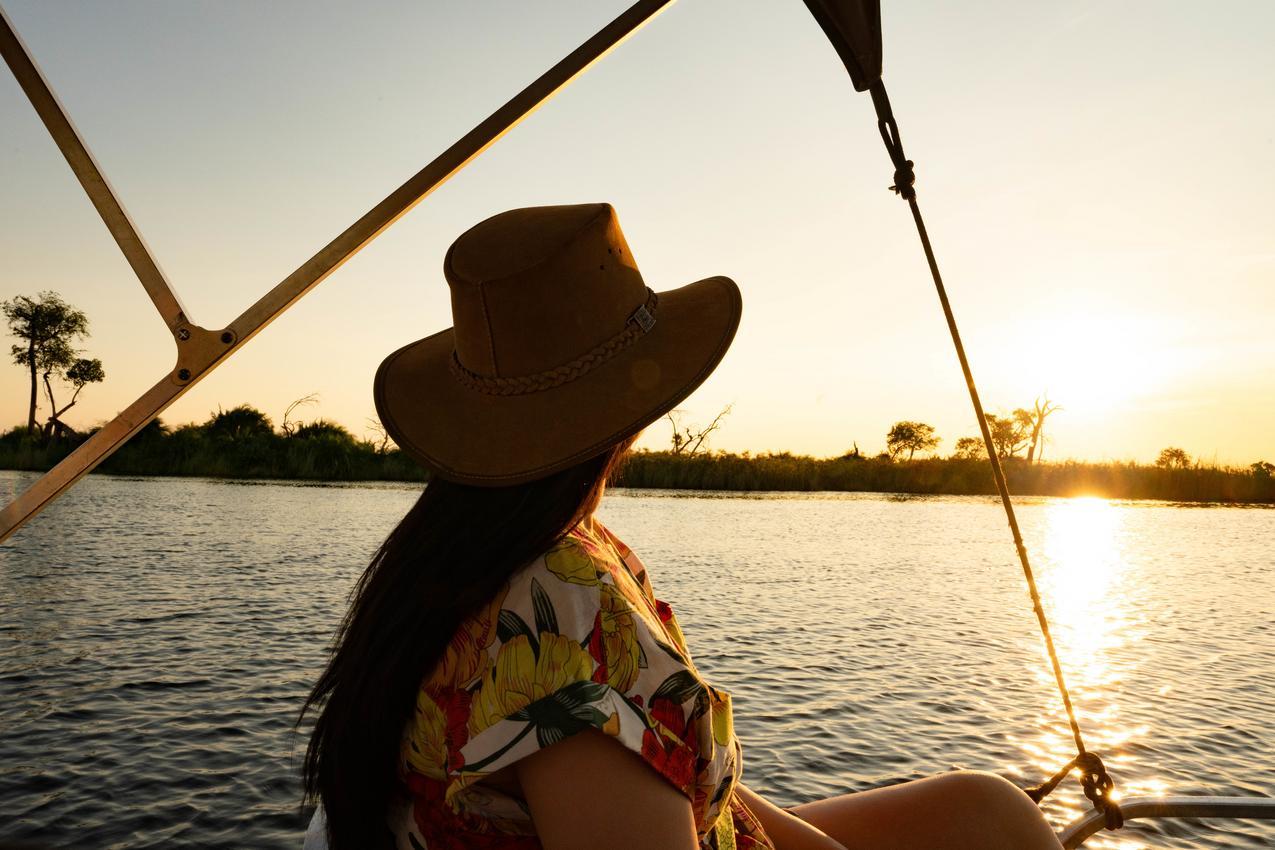
A mokoro is a traditional dugout-style canoe, poled silently through shallow channels by an experienced guide. It is the Okavango's signature experience: reed frogs, water lilies and wildlife seen from water level.
Boating
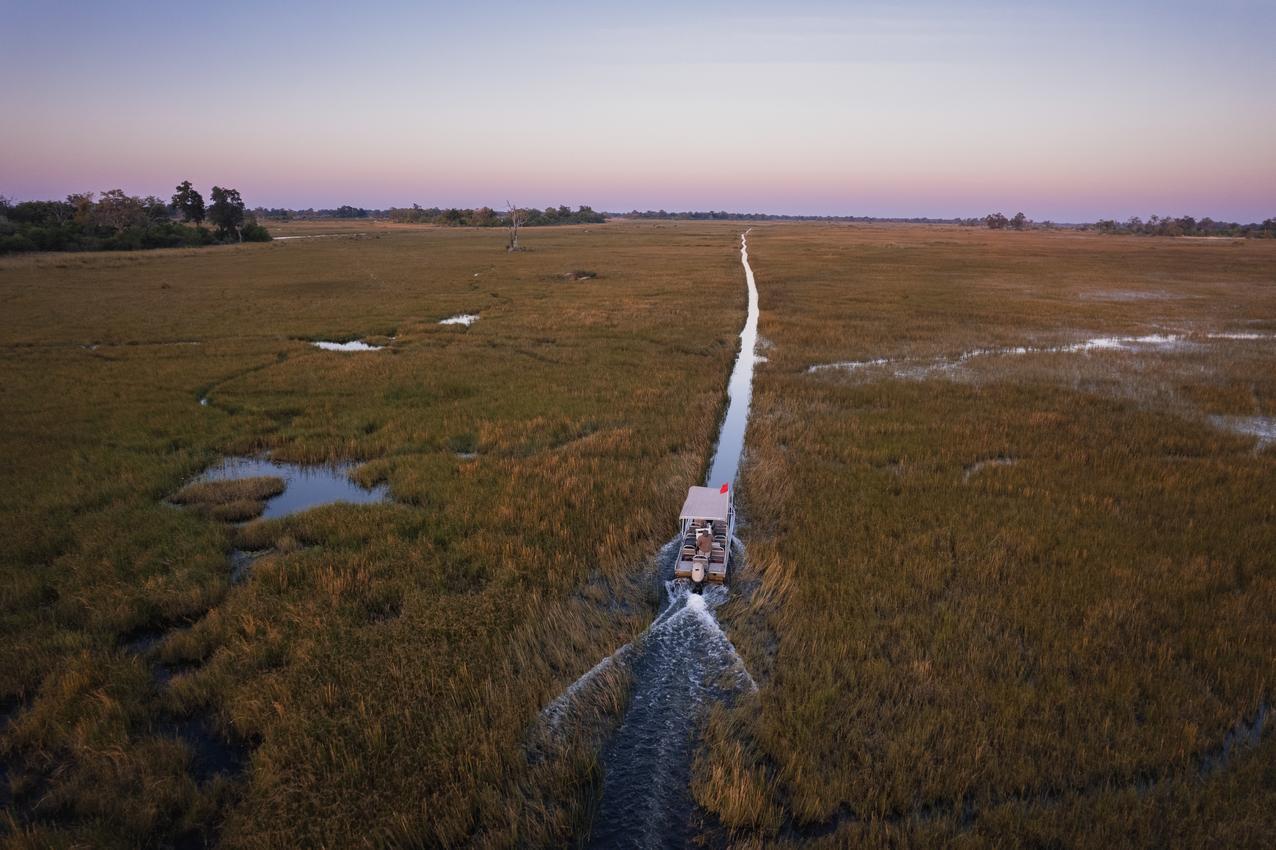
Motorboat excursions cover more distance along deeper channels and lagoons, often ending with sundowners on the water. Excellent for birding and for seeing how vast the Delta really is.

Day & Night Game Drives
Open-vehicle game drives are the backbone of most Delta safaris. In selected private concessions, camps can also offer night drives to look for nocturnal species and predators on the move.
Guided Walks
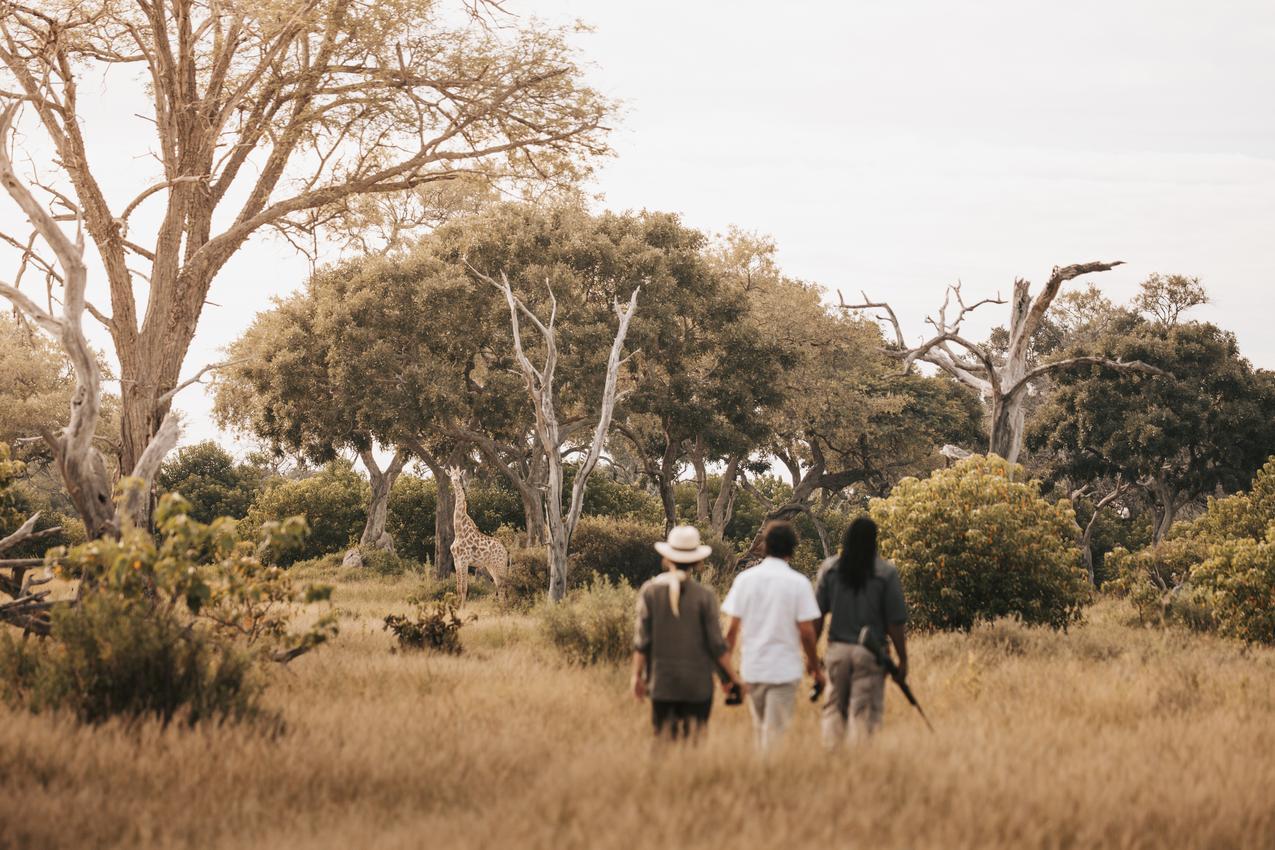
On foot with a professional guide, the focus shifts to tracks, plants, insects and birds — the small details that make the bigger picture make sense.
Not Every Okavango Camp Offers Mokoro
This surprises many travellers. Some of the Delta's most celebrated wildlife camps are entirely land-based, while others sit on permanent water. Activity minimum ages and availability also vary by camp and season. That is why we often pair a land camp with a land-and-water camp.
What Does a Day in Camp Look Like?
Days follow a gentle rhythm built around the cooler hours, when wildlife is most active.
| Time | What Happens |
|---|---|
| Early morning | Wake-up call, coffee and a light breakfast around the fire. |
| Morning | Game drive, mokoro, boating or walk, usually with a bush coffee stop. |
| Late morning | Return to camp for brunch. |
| Midday | Rest on your deck, swim, read or watch the waterhole from camp. |
| Afternoon | High tea, then the afternoon activity. |
| Sunset | Sundowners in the bush or on the water. |
| Evening | Night drive where offered, then dinner in camp or around the boma. |
Exact timings shift with the season and each camp's programme.
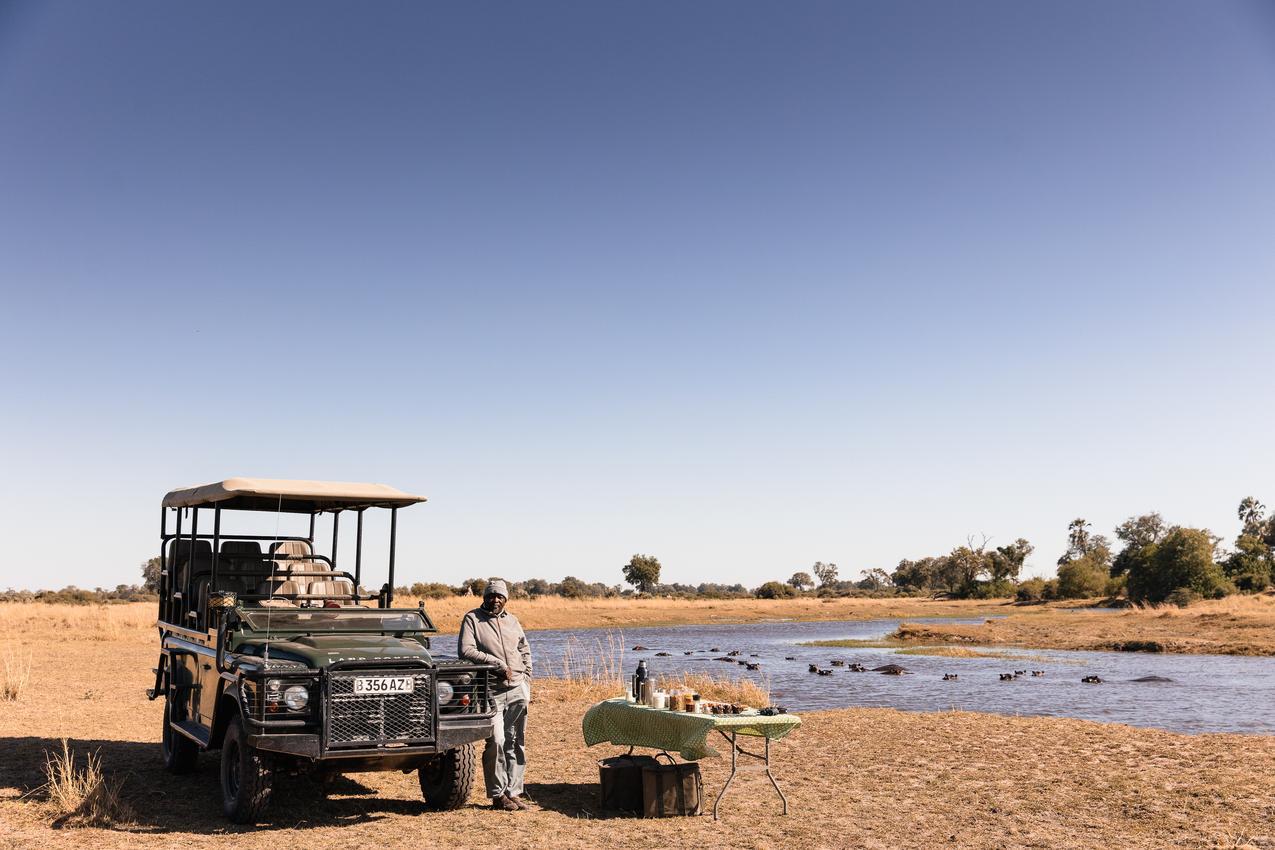
Coffee in the Bush
A mid-drive stop to stretch your legs, with the sounds of the Delta all around you.
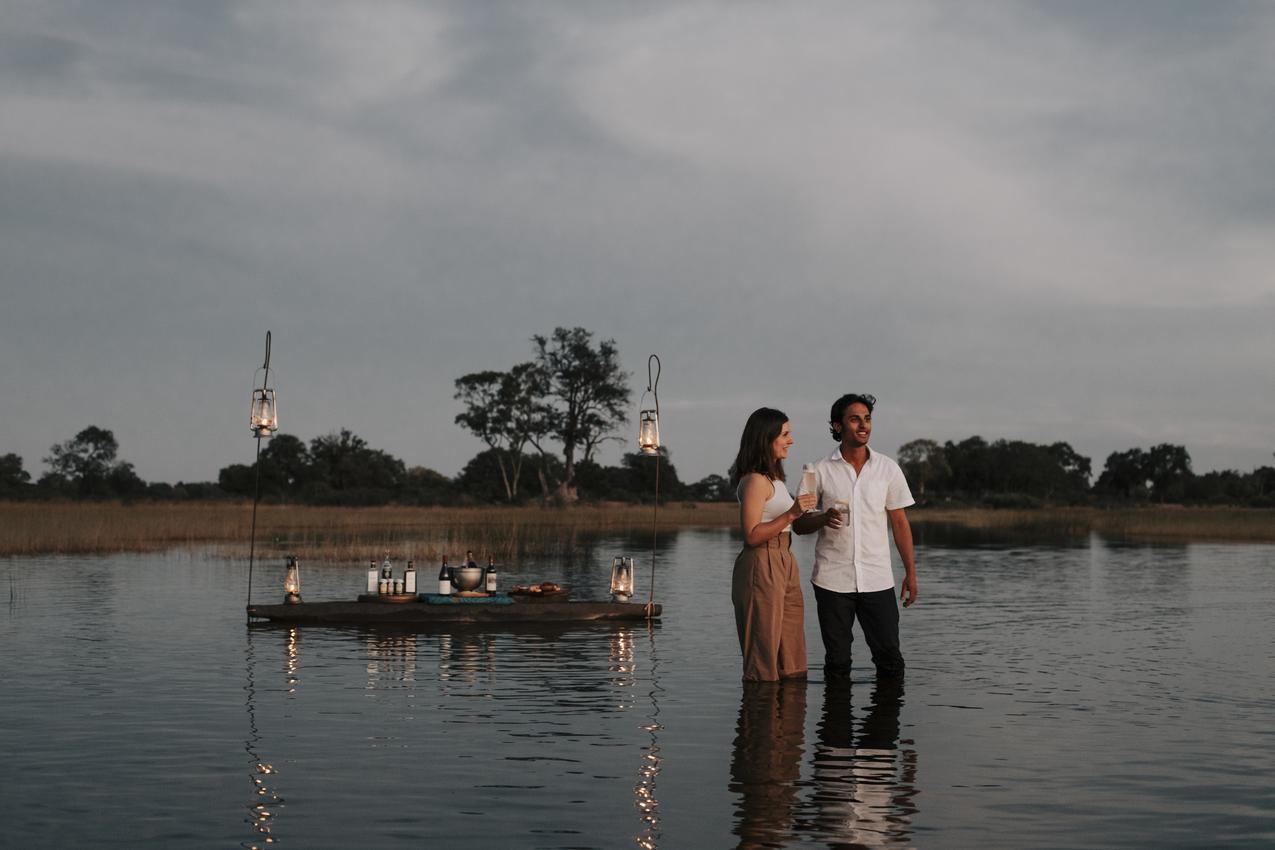
Sundowners
The moment most guests remember longest: a drink in hand as the light turns gold over the water.
What Wildlife Will You See?
The Okavango supports a remarkable concentration of wildlife for a wetland. Depending on the area and season, travellers can encounter elephant, buffalo, hippo, giraffe, zebra and a wide range of antelope — including water-adapted species such as red lechwe and the elusive sitatunga.
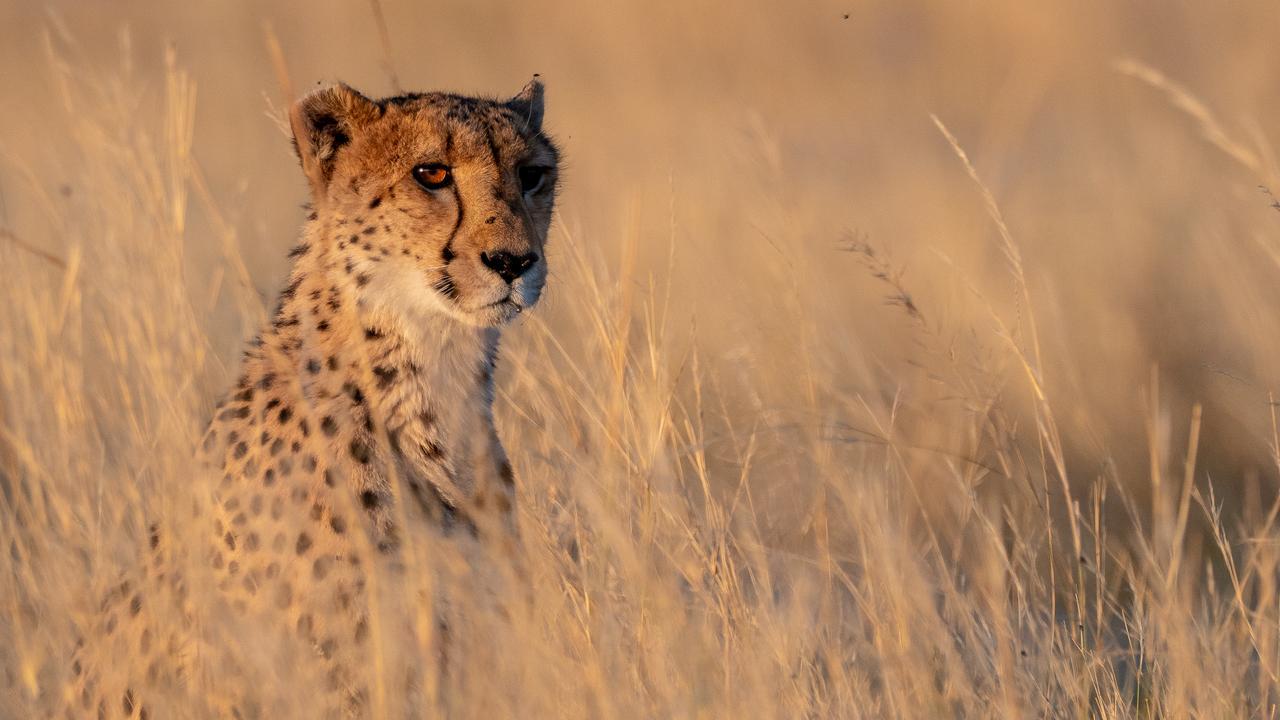
Leopard, Lion & Wild Dog
Lion, leopard, cheetah, spotted hyena and African wild dog all occur in the Delta. Land-focused camps such as Chitabe and Mombo are chosen specifically for their predator stories.

Buffalo & Elephant
Large buffalo herds and elephant families move between islands and floodplains, often crossing water in scenes unique to the Delta.
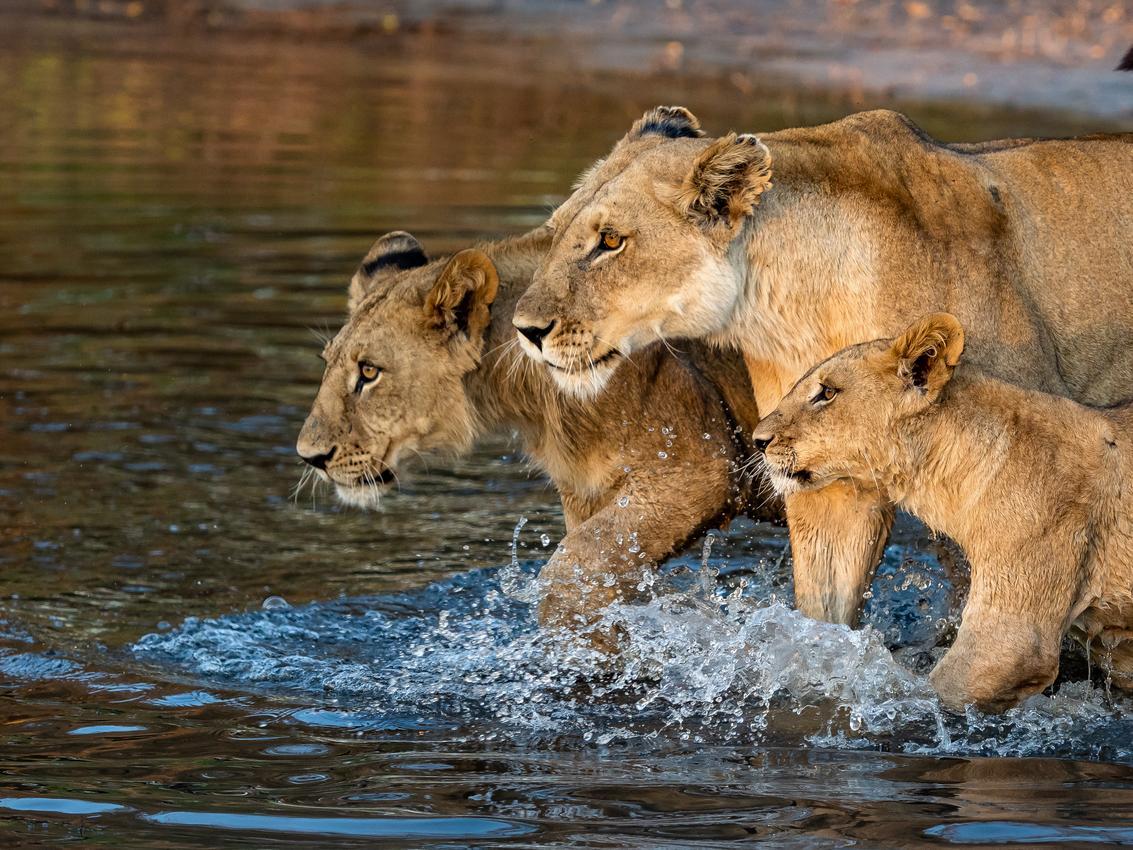
Lion Prides
Delta lions are known to move comfortably through shallow water between islands in search of prey.

Exceptional Birdlife
African fish eagles, kingfishers, herons and storks line the channels, and the Pel's fishing owl is a bucket-list sighting for birders. Read our Best Birding Destinations in Africa .
Wildlife is wild. Sightings are never guaranteed, but choosing the right area for your priorities makes a significant difference.
How Do You Get to the Okavango Delta?
The luxury Delta camps are remote, and most are reached by light aircraft. A typical route looks like this:

Kasane is a useful gateway when you want to combine the Delta with Chobe or Victoria Falls. From the air, the Delta's channels, islands and floodplains finally make sense.
Pack for Light Aircraft
Safari aircraft have strict luggage limits, usually requiring soft-sided bags and a restricted weight allowance per person. We confirm the exact allowance with your itinerary. Laundry is included at Wilderness camps on the fully inclusive basis, so you can pack light. Our Safari Outfit Essentials guide covers what to bring.
Importantly, flights and transfers to and from camp are not included in the nightly camp rates. We quote them separately and build them into your complete proposal.
Choosing Your Okavango Camps
Our featured 2026 collection focuses on Wilderness camps across different parts of the Delta. Each one does a slightly different job.
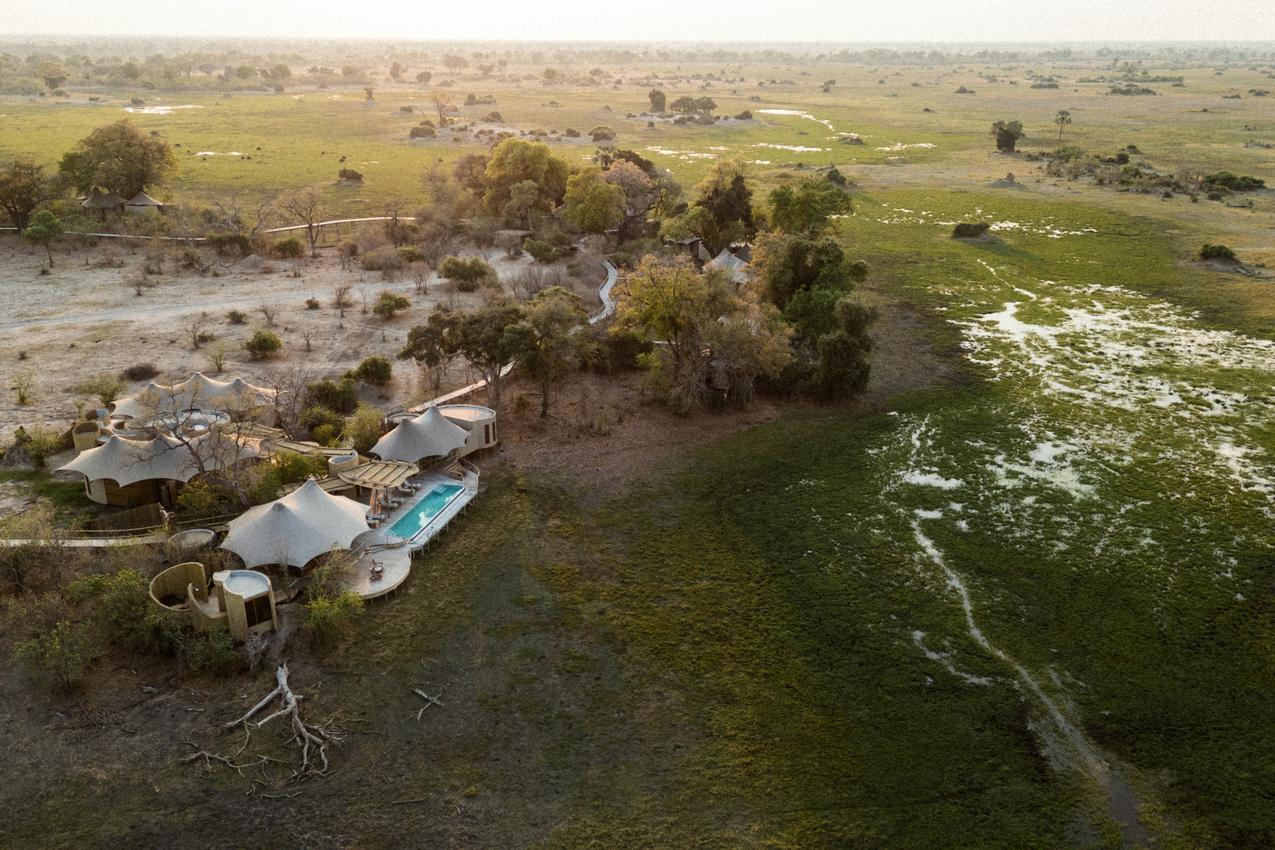
Wilderness Mombo & Little Mombo
Iconic Chief's Island camps for travellers who want exceptional terrestrial wildlife at the centre of the journey. No water activities, so best paired with a contrasting water camp.
2026 from US$2,889 pp per night sharing

Wilderness Chitabe
A private concession with a strong year-round predator story, day and night drives and guided walks. For wildlife lovers who want each drive to feel like the reason they came.
2026 from US$1,707 pp per night sharing
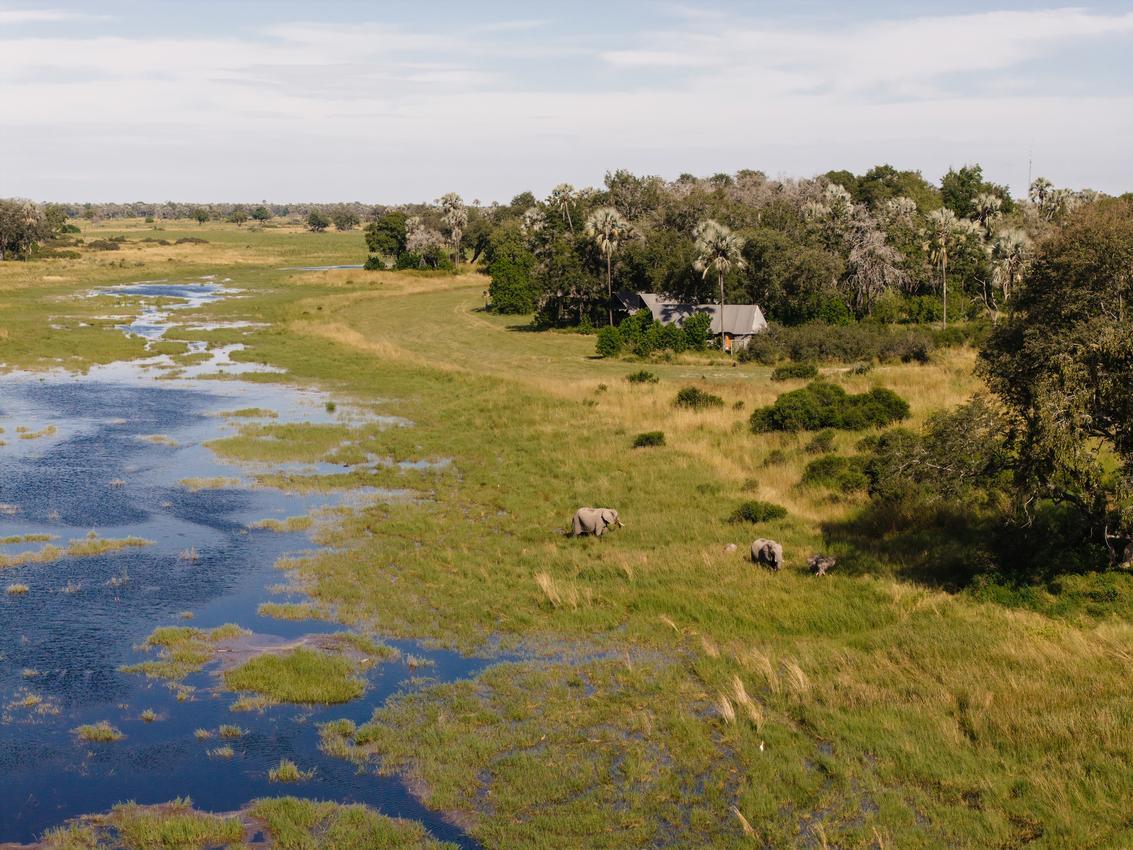
Wilderness Chitabe Lediba
Shares Chitabe's productive wildlife area in a smaller camp with two family units — a strong choice when wildlife and room setup both matter.
2026 from US$1,524 pp per night sharing

Wilderness Little Vumbura
A small island-style camp in the Vumbura Private Wilderness Area, where the Delta's waterways are woven naturally into each day. A favourite for couples.
2026 from US$1,480 pp per night sharing

Wilderness Vumbura Plains North & South
Spacious premier luxury with a genuine blend of land and water safari. Two camps let us match the atmosphere and room setup to couples, families and private groups.
2026 from US$1,903 pp per night sharing

Wilderness Qorokwe
A contemporary, versatile camp with strong game viewing and mokoro or boating when water levels allow. An excellent introduction for first-time Delta travellers.
2026 from US$1,480 pp per night sharing
Compare All 2026 Camp Rates
Rates change by season, from green-season lows to the June–October peak. See the full seasonal rate table, family notes and camp details on our main Okavango page.
How Many Nights Do You Need?
Three nights is a sensible minimum for one camp. Less than that, and a large share of your stay is spent arriving and leaving.
For most travellers, five to six nights across two camps is where the Okavango really opens up. The second camp should add something genuinely different, not just a different room.
Sample Pairing 1: Predators, Then Water
Predator-focused drives and walks first, then a quieter island camp with mokoro, boating and game drives.
Sample Pairing 2: The Once-in-a-Lifetime Safari
Iconic Chief's Island wildlife followed by premier land-and-water luxury.
Sample Pairing 3: A First Delta Safari
A balanced introduction with seasonal water, followed by a smaller, family-friendly predator camp.
Who Is an Okavango Safari For?
Every Okavango journey we plan starts with the reason behind it. The camps and routing follow from there.
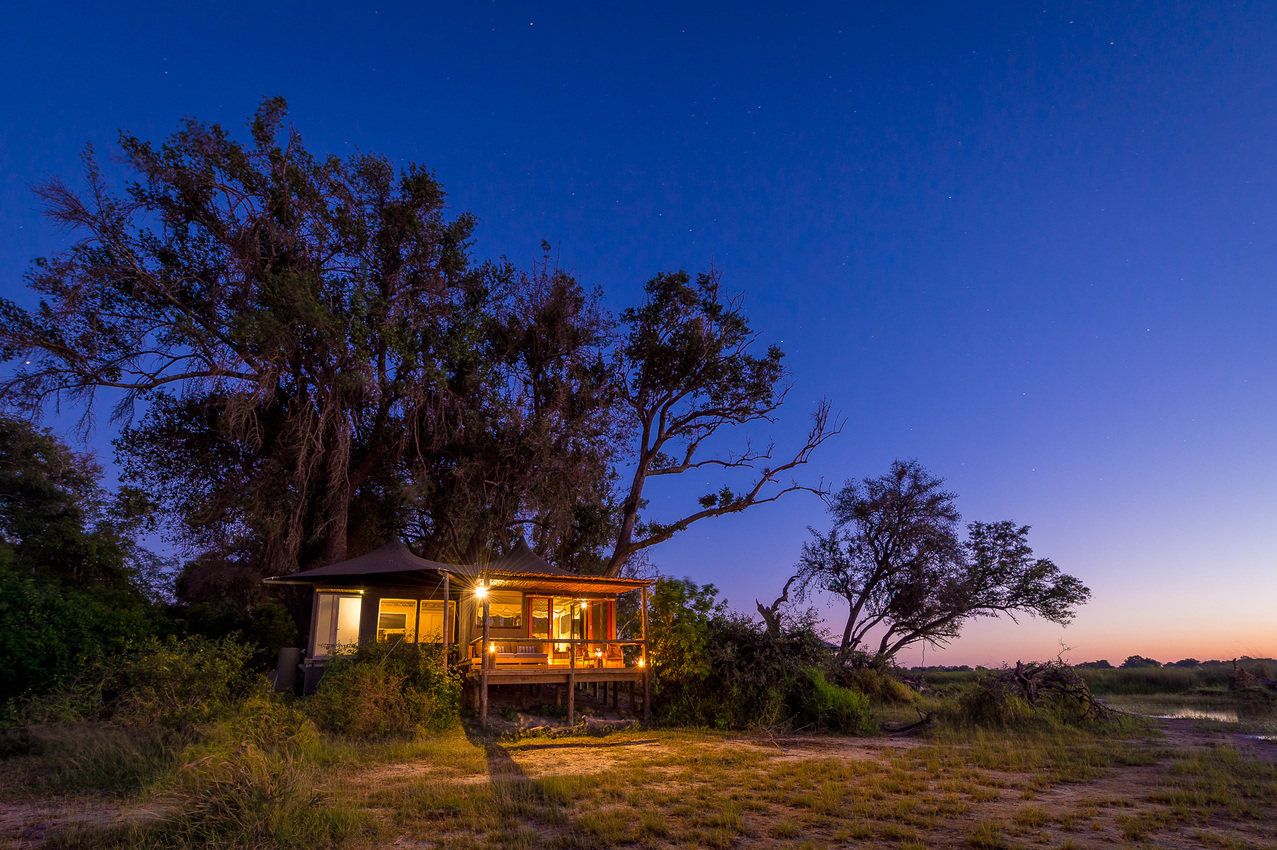
A Love Story in the Delta
Small camps, private decks, silent mokoro trips and sundowners with nobody else on the horizon. See our honeymoon safaris .
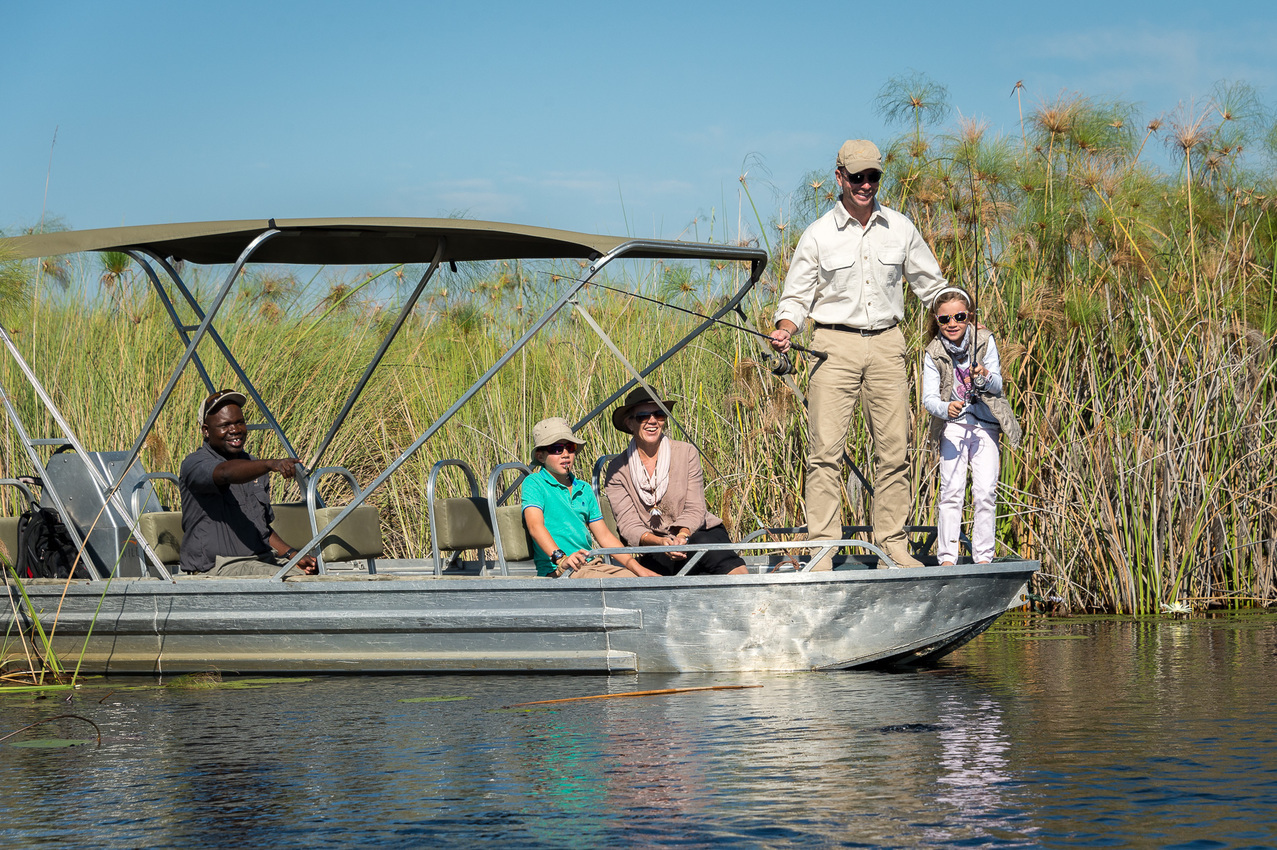
Time Together, Away From the Ordinary
Child ages, room-sharing rules and activity eligibility vary by camp, and some families need a private vehicle. We confirm the correct setup before recommending camps.

The Safari You Have Waited For
For the traveller who has waited years to see Africa properly and wants every camp choice to count.

The Trip You Finally Said Yes To
Close friends turning a long-discussed African safari into a private adventure, often with a vehicle to themselves.
Combining the Okavango With Victoria Falls, Cape Town or the Islands
The Delta works beautifully as part of a wider Southern Africa journey.
- Okavango + Victoria Falls: the classic combination of remote wilderness and one of Africa's great natural landmarks. Explore our Victoria Falls tours and the best things to do in Victoria Falls .
- Okavango + Chobe: add Chobe's famous river safaris and elephant herds via Kasane.
- Okavango + Cape Town: finish with food, wine and coastline, or use the city as the start of a longer journey. See our Cape Town tours .
- Okavango + Indian Ocean: end on a beach in Mauritius, Zanzibar or the Seychelles with a safari and beach holiday .
What Does a Luxury Okavango Safari Cost?
Botswana follows a low-volume, high-value approach to tourism. Fewer beds across very large areas mean higher nightly rates — and a far more exclusive experience than busier safari regions.
Selected 2026 Wilderness Camp Stays
Lower-season rate at Little Vumbura and Qorokwe. Peak-season premier stays at Mombo and Little Mombo reach around US$5,043 pp per night sharing.
Fully inclusive camp basis. Flights and transfers to camp are quoted separately. Rates last checked September 2026 and subject to confirmation.
The Fully Inclusive Basis Covers
- Accommodation
- All meals
- Twice-daily scheduled camp activities
- Park fees
- Laundry
- Local drinks
Excludes premium imported drinks and champagne, flights and transfers, optional activities and private vehicles unless quoted.
Travel season makes a large difference. The same camp can cost significantly less in January to March than in the June to October peak, while green season still delivers excellent wildlife and photography. For broader budgeting, read our African Safari Cost Guide .
Practical Tips Before You Go
- Book early for peak months: Delta camps are small, and June to October availability goes quickly.
- Health: northern Botswana is a malaria-risk area. Speak to your doctor or travel clinic about prevention before you travel.
- Entry requirements: check Botswana's current visa and passport rules for your nationality well ahead of departure.
- Clothing: neutral colours, and layers for cold winter mornings and warm afternoons. Bring a warm jacket for open vehicles between May and August.
- Travel insurance: choose a policy that includes medical evacuation from remote areas.
Tell Us What This Journey Means to You
Share your dates, number of travellers and the kind of experience you are hoping for — exceptional wildlife, water activities, privacy, a honeymoon or a long-awaited first safari. We will recommend the camps, routing and pace that make the Okavango feel like yours.
Explore Luxury Okavango Delta SafarisContinue Planning Your Botswana Journey
Okavango Delta Safari FAQs
Where is the Okavango Delta?
The Okavango Delta is in northern Botswana. It is an inland delta: the Okavango River flows from the Angolan highlands into the Kalahari Basin and spreads into a vast network of channels, lagoons, islands and floodplains instead of reaching the sea.
What is the best time to visit the Okavango Delta?
Wildlife viewing is rewarding all year. June to August usually coincides with peak flood conditions, which suits mokoro and boating at water-based camps. September and October are hotter and drier, while January and February bring green-season colour, young animals and migrant birds.
How do you get to the Okavango Delta?
Most luxury Okavango safaris start in Maun, with light-aircraft flights to airstrips near each camp. Some itineraries connect via Kasane, particularly when combining the Delta with Chobe or Victoria Falls.
How many nights do you need in the Okavango Delta?
Three nights is a useful starting point for one camp. Five to six nights across two contrasting camps usually gives a much fuller picture of the Delta.
How much does a luxury Okavango Delta safari cost?
Selected 2026 Wilderness camp stays begin from approximately US$1,480 per person per night sharing on a fully inclusive basis in the lower season, rising to around US$5,043 at premier camps in peak season. Light-aircraft flights and transfers are quoted separately.
Can you do a mokoro excursion at every Okavango camp?
No. Little Vumbura and Vumbura Plains are strong land-and-water choices, Qorokwe can offer water activities when conditions allow, while Mombo, Little Mombo, Chitabe and Chitabe Lediba are land-based camps.
Is the Okavango Delta good for a honeymoon?
Yes. Small camps, private decks, silent mokoro excursions and remote sundowners make the Okavango one of Africa's most romantic safari destinations. It pairs naturally with Victoria Falls or an Indian Ocean beach stay.
Can children go on an Okavango Delta safari?
Yes, but child ages, room configurations and activity minimum ages vary by camp. Some camps offer family accommodation, while families with younger children may need a private vehicle or private activities. We confirm family eligibility before recommending camps.
Final Thoughts: Plan the Delta Around Your Story
The right Okavango safari is not simply the most expensive camp or the most famous name. It is the combination of area, season and camp style that fits the reason you are travelling.
A honeymoon might call for an island camp and slow mornings on the water. A long-awaited wildlife safari might call for Chief's Island. A family milestone might call for a family unit and a private vehicle.
Tourgy Tourz plans each journey around that story, then handles the flights, transfers and details that make it feel effortless.
Start Planning Your Okavango Story
Send us your travel dates, number of travellers and what matters most to you. We will check camp availability and light-aircraft routing, and prepare a tailor-made Botswana proposal.
Request a Tailor-Made Okavango Quote