Choosing your first African safari can feel overwhelming. Kenya has the Masai Mara, Tanzania has the Serengeti, South Africa has Kruger, Botswana has the Okavango Delta and Zimbabwe has Hwange and Victoria Falls. Namibia is sometimes overlooked because people imagine it as only a desert. That is exactly why it can be such a powerful first choice.
Namibia does not give travellers only one version of Africa. A single journey can move from Windhoek into the red dunes of Sossusvlei, continue to the cool Atlantic coast, cross the rocky wilderness of Damaraland and finish among elephants, lions and rhinos in Etosha National Park. The landscapes keep changing, yet the trip still feels connected.
It is also a destination that can be shaped around the traveller. You can drive independently, travel privately with a guide, join selected excursions, choose comfortable mid-range lodges or build a highly private luxury route. Travellers with only a few days can focus on Etosha or Sossusvlei, while those with ten to twelve days can experience the country in much greater depth.
This article explains why Namibia works so well for first-time safari travellers, what kind of experience to expect and which itinerary may suit you. Start exploring with our Namibia Safari Overview, Namibia Short Safari Packages, Namibia Self Drive Safaris and 10 Day Namibian Highlights Tour.
Why Choose Namibia for Your First Safari?
- The quick answer
- More than a wildlife safari
- Etosha is beginner-friendly
- World-class landscapes
- Space, silence and privacy
- Flexible travel styles
- Self-drive freedom
- Guided safari comfort
- Memorable lodges
- Photography
- Couples and honeymoons
- Families
- Older travellers
- Accessible travel
- How many days you need
- Best first-time routes
- Understanding the cost
- Best time to visit
- Mistakes to avoid
- Namibia first-safari FAQs
Is Namibia Good for a First African Safari?
Yes. Namibia is one of the strongest choices for a first African safari, particularly for travellers who want more than continuous game drives. It combines wildlife, scenery, road-trip adventure, culture, coast and unusual accommodation in one itinerary.
Namibia’s protected-area network covers a significant portion of the country and includes internationally recognised destinations such as Etosha, the Skeleton Coast and Namib-Naukluft. The Namib Sand Sea is a UNESCO World Heritage Site and is the world’s only coastal desert with extensive dune fields influenced by fog. Etosha is Namibia’s flagship wildlife park, with more than one hundred mammal species and over four hundred recorded bird species.
These facts matter because they show that Namibia is not a compromise safari. You are not choosing scenery instead of wildlife. You are choosing a destination where wildlife is one part of a much broader journey.
| What First-Time Travellers Usually Want | What Namibia Offers |
|---|---|
| Iconic African wildlife | Elephants, lions, rhinos, giraffes, zebras, antelope, predators and abundant birdlife in Etosha and other regions. |
| Memorable scenery | Sossusvlei dunes, Deadvlei, the Namib Desert, Skeleton Coast, Damaraland and the Atlantic coast. |
| Comfortable accommodation | Safari camps, desert lodges, private pods, coastal hotels, fixed tents and luxury properties. |
| Choice of travel style | Self-drive, private guided safari, short package, scheduled route or fly-in option. |
| Time to slow down | Open landscapes, low-density routes and lodges designed around views, sunsets and silence. |
| A trip that feels different | Africa’s desert, coast and wildlife combined within one highly visual journey. |
1. Namibia Gives You More Than a Traditional Wildlife Safari
Many people imagine an African safari as a vehicle moving through bush from one animal sighting to the next. That experience is valuable, but Namibia widens the definition. Here, the road itself becomes part of the safari.
One day may begin with oryx walking across a desert plain. The next may involve climbing a dune above Deadvlei. Later, you might eat seafood in Swakopmund, search dry riverbeds for desert-adapted elephants in Damaraland and then spend hours watching wildlife arrive at an Etosha waterhole.
This variety protects first-time travellers from safari fatigue. Continuous early starts and long game drives can become tiring, particularly for guests who did not realise how physically still a safari can be. Namibia naturally alternates wildlife days with scenery, lodge time, coastal activities and road journeys.
It is an excellent match for couples where one person loves wildlife and the other is more interested in photography, design, landscapes, food or adventure. Both travellers can feel that the itinerary belongs to them.
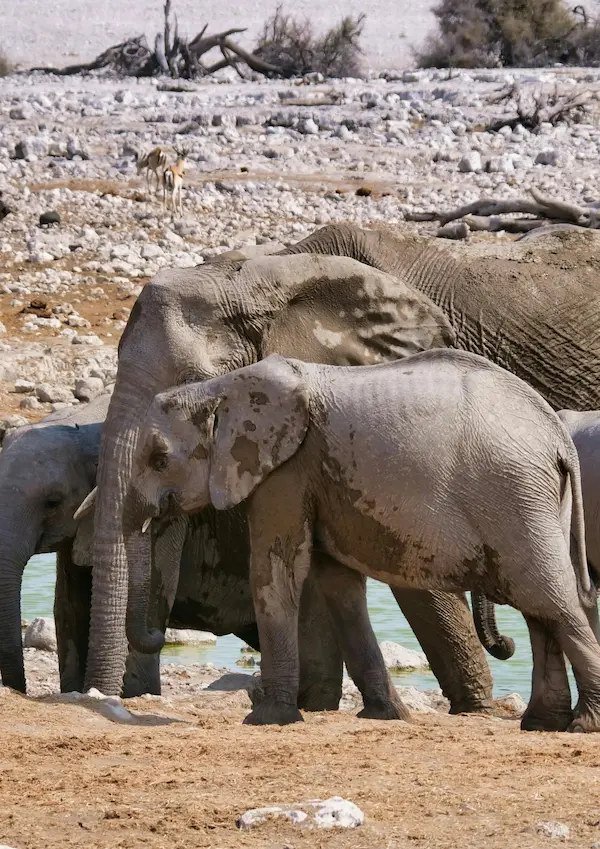
Classic Safari Wildlife
Etosha gives first-time visitors the waterholes, elephants, lions, rhinos, giraffes and open-vehicle game viewing they expect from Africa.
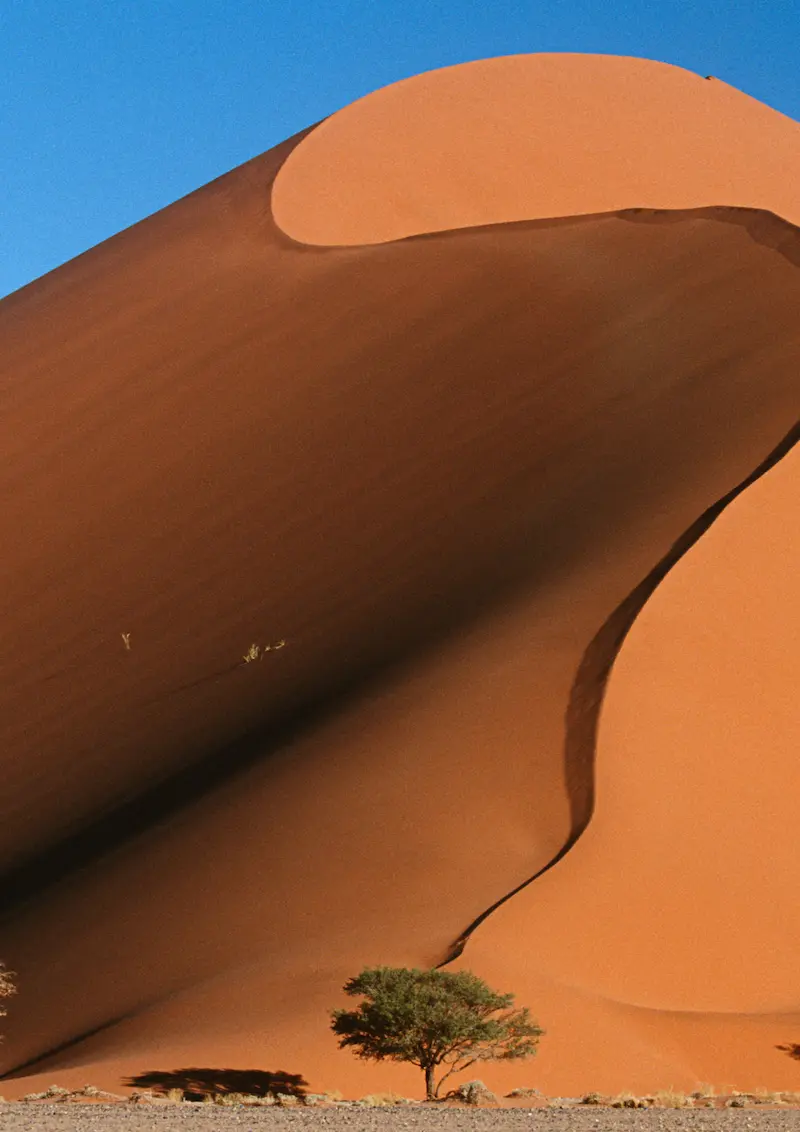
Landscapes That Lead the Journey
Namibia’s dunes, pans, coast and rocky wilderness are not background scenery; they are destinations in their own right.
2. Etosha Is an Excellent Introduction to Safari
Etosha National Park is one of the best reasons to choose Namibia for your first safari. The park’s open landscapes and waterhole system create a game-viewing style that is easy to understand. You do not need to know every animal track to appreciate what is happening.
During drier periods, different species gather around water. Travellers may watch elephants approach, zebras wait at the edge, giraffes spread their legs to drink and antelope suddenly become alert. A single waterhole can reveal behaviour, hierarchy and tension without the vehicle moving.
The park also works for different confidence levels. Guests who want guidance can join a lodge drive or private safari. Independent travellers can follow the permitted road network and stop at marked waterholes. This accessibility is one reason Etosha fits so well into a self-drive Namibia route.
Namibia should not be chosen only for a Big Five checklist. Buffalo are not part of the standard Etosha experience, and leopards remain difficult to find. The strength of Etosha is the complete scene: elephants against pale ground, rhinos at water, dust, silence and the enormous horizon.
Read our complete Etosha National Park Travel Guide before deciding how many nights to include.
Tourgy Tip
Two nights is the minimum we recommend for Etosha. Wildlife does not work on appointment, so one short drive is not enough to judge the park.
3. Namibia Has Some of Africa’s Most Extraordinary Landscapes
Namibia changes the way travellers think about beauty. The country is not lush everywhere, but it is intensely visual. Colour, distance, shape and light do most of the work.
Sossusvlei and Deadvlei
Sossusvlei is the Namibia many travellers recognise before knowing its name. The red dunes, white clay pans and dark camelthorn trees of Deadvlei create one of Africa’s most famous landscapes. The experience begins before sunrise and becomes more dramatic as the light divides the dunes into bright and shadowed sides.
The Namib Sand Sea is globally exceptional. UNESCO describes it as the only coastal desert in the world with extensive dune fields influenced by fog. This is not merely an attractive place to photograph; it is a rare environmental system.
Swakopmund and the Atlantic coast
Swakopmund surprises first-time visitors. After days of dry inland scenery, the air becomes cool and the Atlantic appears. German-influenced architecture, restaurants, cafés and adventure activities give travellers a complete change of pace.
Nearby, the dunes meet the ocean around Sandwich Harbour. The contrast between sand and Atlantic water is one of the strongest visual experiences in Southern Africa.
Damaraland
Damaraland feels older and more remote. Rocky mountains, dry riverbeds, open valleys and desert-adapted wildlife create a quieter kind of safari. It is a place where geology, conservation and culture matter as much as the animal sighting.
The Skeleton Coast
The Skeleton Coast is known for fog, shipwreck history, rough Atlantic water and stark scenery. It adds another identity to Namibia: not warm tropical coastline, but a remote meeting point between desert and sea.
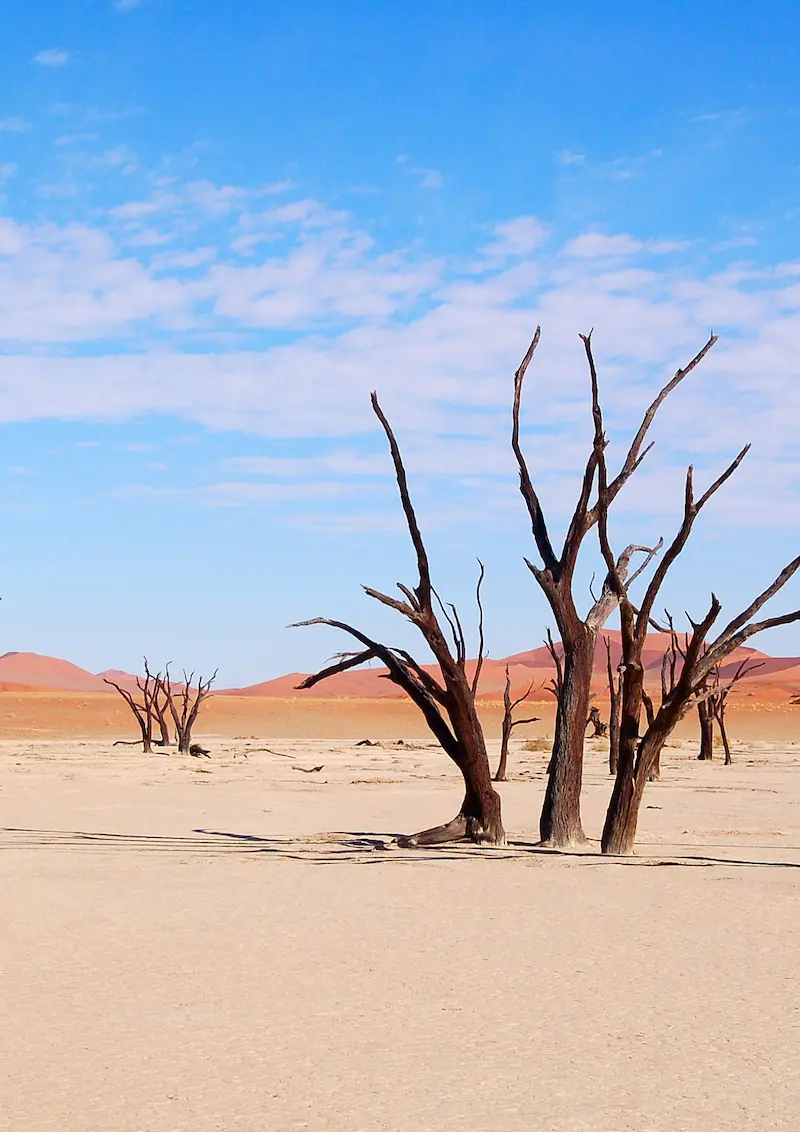
Deadvlei
The white pan, black trees and orange dunes create one of Africa’s most recognisable natural scenes.

Desert Meets Ocean
Coastal Namibia gives a first safari a dimension that many inland itineraries cannot offer.
4. Namibia Gives You Space, Silence and a Sense of Privacy
A first trip to Africa is often imagined as exciting and busy. Namibia shows that it can also be quiet. Long horizons, widely spaced lodges and roads through open country create a strong sense of personal space.
This does not mean every attraction is empty. Sossusvlei, Etosha and popular lodges can be busy during peak periods. However, the wider journey rarely feels compressed into a narrow tourism corridor. The distances spread people out.
Silence becomes one of the memories. Travellers remember standing outside after dinner, seeing more stars than expected and hearing almost nothing. That stillness is particularly valuable for people whose normal lives are crowded by traffic, screens and constant noise.
Couples often describe Namibia as intimate because the landscapes make shared moments feel private. Photographers appreciate the space to compose. Solo travellers may find the openness restorative when supported by a well-planned route.
5. Namibia Can Match Your Preferred Travel Style
One of Namibia’s greatest strengths is that travellers do not have to experience it in one fixed way. The same route can be adapted for independence, support, comfort, adventure or privacy.
| Travel Style | Best For | What to Consider |
|---|---|---|
| Self-drive safari | Confident drivers who enjoy independence, road trips and flexible stops. | Long distances, gravel roads, tyres, fuel, offline navigation and avoiding night driving. |
| Private guided safari | First-time visitors, couples, families, photographers and travellers who prefer support. | Higher cost than self-drive, but local knowledge and easier logistics. |
| Short guided package | Travellers with limited time, business travellers and Southern Africa extensions. | Choose either Etosha or Sossusvlei rather than trying to fit both into three days. |
| Fly-in safari | Luxury travellers and guests prioritising time and aerial scenery. | Cost, luggage restrictions, weather and charter schedules. |
| Camping or fixed tents | Adventurous travellers seeking closer contact with nature and lower accommodation costs. | Temperature, equipment, meal arrangements and comfort expectations. |
6. Namibia Offers One of Africa’s Great Self-Drive Adventures
Namibia is a popular self-drive destination because many of its best-known routes can be connected by road. A rental vehicle gives travellers freedom to stop for landscapes, move at their own pace and enjoy the feeling of a genuine journey.
The attraction should not hide the responsibility. Namibia is large. Gravel roads require slower speeds, tyres require attention and fuel stops cannot be treated casually. Mobile signal is unreliable in remote areas, and driving after dark should be avoided.
A good first self-drive itinerary uses realistic distances. It includes two-night stays where possible and does not ask travellers to drive all day, arrive exhausted and then wake before dawn for an excursion.
Travellers should understand the rental agreement, tyre policy, emergency procedures and the difference between a high-clearance vehicle and a fully equipped 4x4. The right vehicle depends on the route, season and accommodation access.
Explore our Namibia Self Drive Safaris and read Is Namibia Safe for Self Drive? before deciding whether independence suits you.

Freedom With Preparation
Self-drive travel is rewarding when the vehicle, route, fuel plan and driving times are chosen properly.

Support Without Losing the Journey
A private guide lets travellers enjoy the same road-trip scenery without carrying the full responsibility for driving and navigation.
7. A Guided Namibia Safari Can Make a First Visit Easier
First-time travellers often underestimate how much attention long road journeys require. A private guide changes the experience: instead of watching the road surface, the traveller can watch the landscape.
Guides provide context that maps cannot. They explain wildlife behaviour, conservation, communities, geology and the practical reason behind a route. They also know where to stop, how long a journey realistically takes and how to respond when conditions change.
Guided travel is especially valuable for older travellers, families, photographers and people who do not enjoy driving on gravel. It is also helpful for travellers combining Namibia with Victoria Falls, Botswana or South Africa, because the operator can coordinate the wider logistics.
Private guided travel costs more than self-drive, but the comparison should include the guide’s time, vehicle, fuel, route management and support. For some travellers, the added comfort changes the whole holiday.
8. Namibia’s Lodges Are Part of the Safari
In Namibia, accommodation often functions as an experience rather than only a bed. Lodges are designed around views, desert light, waterholes, architecture and the feeling of remoteness.
Desert Grace
Desert Grace combines contemporary design with the Namib landscape. Private plunge pools, wide views and strong interiors make it popular with couples and travellers who want an upmarket Sossusvlei stay.
Desert Whisper
Desert Whisper is a highly private pod designed for two guests. It works well for honeymoons, anniversaries and travellers who want solitude and exclusivity rather than a conventional lodge atmosphere.
Namib Desert Lodge and Dune Star Camp
Namib Desert Lodge provides comfortable mid-range accommodation, while Dune Star adds a sleep-out feeling and desert stargazing. Combining the two can make the accommodation itself a highlight.
Etosha Safari Camp and Etosha Safari Lodge
These properties provide practical access to southern Etosha with different atmospheres. Safari Camp is relaxed and lively, while Safari Lodge places stronger emphasis on elevated views and lodge time.
Etosha King Nehale
Etosha King Nehale gives travellers a northern perspective and a more design-led stay. Its waterhole connection and private plunge pools make it suitable for travellers wanting comfort alongside wildlife.
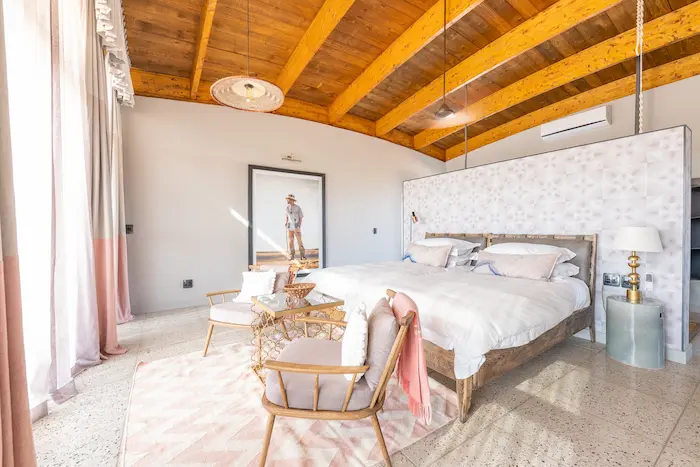
Desert Design
Namibia’s best lodges frame the landscape rather than competing with it.
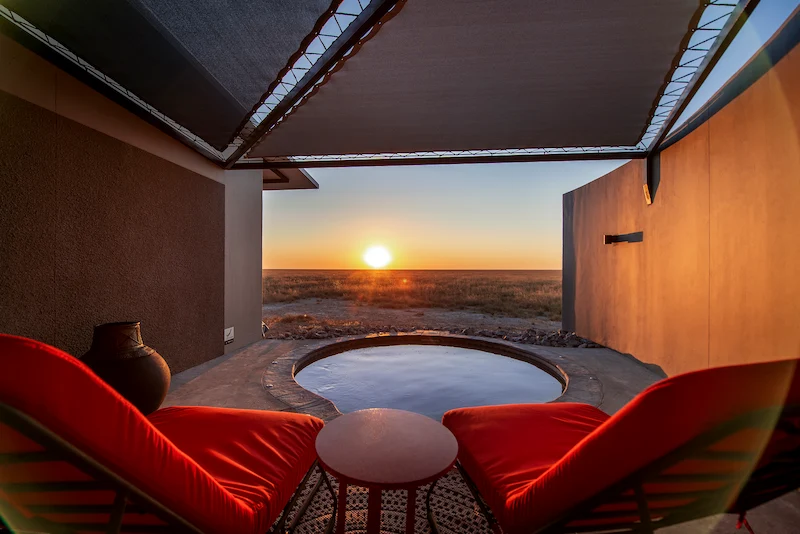
Wildlife and Comfort
A safari can feel adventurous without requiring travellers to give up privacy, a comfortable room or thoughtful design.
9. Namibia Is Ideal for First-Time Safari Photography
Namibia is forgiving for photographers because the country offers strong subjects beyond unpredictable wildlife. If a lion does not appear, the day can still produce dunes, roads, architecture, stars, coast and landscape images.
Etosha’s open terrain helps first-time wildlife photographers see animals before they disappear into thick vegetation. Sossusvlei teaches the value of early light and shadow. Damaraland offers scale and texture, while Swakopmund and Sandwich Harbour add coastal contrast.
A phone is enough to record a beautiful trip. Use people or vehicles to show scale, keep horizons straight and do not over-zoom distant animals. Binoculars often provide a better experience than forcing every sighting into a photograph.
Travellers bringing advanced equipment should protect it from dust and sand. Drone use is restricted in Namibia’s national parks without official permission, and all aviation and protected-area requirements should be confirmed before travel.
10. Namibia Is One of Africa’s Best Safari Destinations for Couples
Namibia has the space and atmosphere that couples often want from a special trip. The route can feel adventurous during the day and private at night. Desert sunsets, stargazing, plunge pools and scenic drives create romantic moments without forcing the itinerary to become overly staged.
The country suits honeymoons because it combines experiences. A couple can begin with wildlife in Etosha, continue through Damaraland, relax in Swakopmund and finish in a private desert lodge. A beach extension to Seychelles or Zanzibar can be added if desired.
Namibia also works for anniversaries and proposals. Private dinners, scenic flights, upgraded rooms and quieter lodge locations can be requested, but availability and weather should always remain part of the plan.
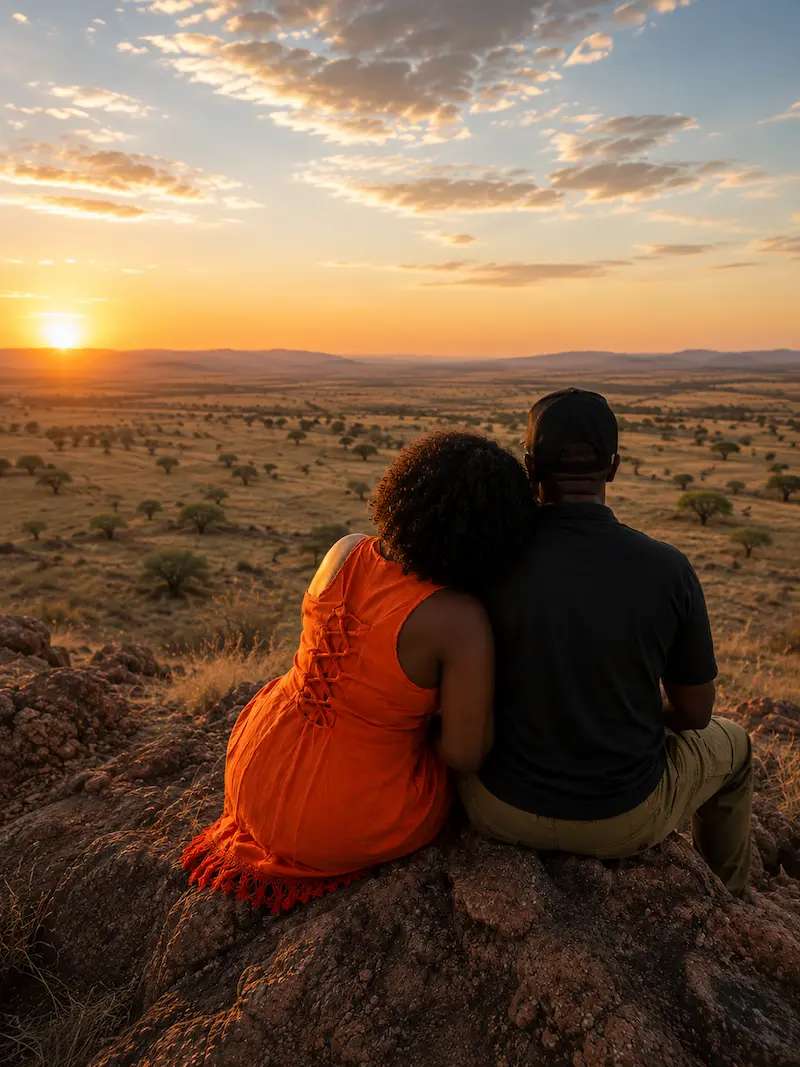
A Safari That Still Feels Personal
Namibia gives couples wildlife and adventure without losing the privacy and slower moments that make a romantic trip memorable.
11. Namibia Can Work Well for Families
Namibia is a strong family destination when the itinerary is built around the children rather than expecting them to fit an adult schedule. Etosha’s waterholes can hold attention, dunes offer movement and coastal activities create variety.
The main issue is distance. Long driving days, early starts and heat can become difficult for younger children. Two-night stays, private vehicles and family accommodation reduce pressure.
Age restrictions may apply to certain activities, vehicles or accommodation. Family rooms and interleading units are limited at some lodges, so booking early is important.
Parents should not treat climbing the highest dune or staying on safari all day as the definition of success. A shorter, enjoyable experience creates better memories than forcing every planned activity.
12. Namibia Is Suitable for Older Travellers With the Right Pace
Namibia attracts older travellers because it offers exceptional scenery, comfortable lodges and wildlife viewing without requiring strenuous walking every day. Most Etosha sightings happen from a vehicle, and many major landscapes can be enjoyed from viewpoints or shorter walks.
The route must be paced carefully. Vehicle step height, gravel-road comfort, toilet stops, luggage handling and room location should be discussed before booking. A private guided tour is often easier than self-drive.
Sossusvlei does not require everyone to climb Big Daddy. Deadvlei and the dunes can be adapted according to walking ability, while scenic flights and guided drives provide alternatives.
13. Namibia Can Be Customised for Visible and Invisible Disabilities
Namibia is not automatically accessible, and travellers should be cautious of vague claims. Soft sand, remote lodges, high safari vehicles and uneven pathways can create real barriers. However, parts of the journey can be adapted when the requirements are known early.
Vehicle type is critical. A traveller who can transfer into a lower closed vehicle has different options from a traveller who must remain in a wheelchair. Accessible rooms, bathrooms, roll-in showers, pathways and dining access must be checked at the specific property.
Invisible disabilities also require planning. Sensory sensitivity, anxiety, fatigue, dietary routines, medication storage and the need for predictable breaks can all affect the itinerary. A private journey may offer more control than a shared departure.
Tourgy Tourz invites travellers to describe what comfort and accessibility mean for them. Visit our Accessible Africa Safaris page for customised support.
How Many Days Do You Need for a First Namibia Safari?
Namibia can be visited in three days or three weeks, but the right length depends on what you expect to see. The country rewards realistic pacing.
Three days
Three days works for one focused destination. Choose either Etosha or Sossusvlei from Windhoek. Trying to include both would create an unreasonable amount of travel.
Seven days
Seven days is enough for a strong northern route, usually combining Etosha, Damaraland and Swakopmund. It is ideal for travellers prioritising wildlife and northern landscapes.
Ten days
Ten days is one of the best first-time Namibia lengths. It can include the Kalahari or Windhoek, Sossusvlei, Swakopmund, Damaraland and Etosha.
Twelve days
Twelve days gives the journey more breathing room. It can add Palmwag, additional wildlife time, lodge experiences or a more comfortable route between the main highlights.
Fourteen days or more
Two weeks allows deeper exploration, a southern extension towards Fish River Canyon, more time in northern Namibia or a slower photographic route.
Best First-Time Namibia Safari Routes
| Trip Length | Suggested Focus | Best For |
|---|---|---|
| 3 days | Etosha or Sossusvlei | Short extensions, business travellers and limited annual leave. |
| 7 days | Etosha, Damaraland and Swakopmund | Wildlife, coast and northern Namibia. |
| 10 days | Sossusvlei, Swakopmund, Damaraland and Etosha | The strongest all-round first-time route. |
| 12 days | Windhoek, Etosha, Damaraland, Palmwag, Sossusvlei and Swakopmund | Travellers who prefer depth and a more relaxed pace. |
| 14 days or more | Classic highlights plus the south, far north or longer specialist experiences | Repeat safari travellers, photographers and slower journeys. |
Seven-Day Northern Namibia Adventure
Our 7 Day Northern Namibia Adventure Tour is one of our most requested routes. It combines Etosha wildlife, Swakopmund and Damaraland in a compact itinerary.
Ten-Day Namibian Highlights
Our 10 Day Namibian Highlights Tour is the route we recommend when a first-time traveller wants the widest range of Namibia experiences without extending to two weeks.
Short Namibia Safaris
Our Namibia Short Safari Packages focus on Etosha or Sossusvlei and are useful for travellers adding Namibia to another African destination.
Is Namibia an Affordable First Safari?
Namibia can suit several budgets, but it should not be treated as a cheap destination. Distances are long, fuel matters and remote lodges have high operating costs. The total trip price depends on season, accommodation level, vehicle, guiding and included activities.
Self-drive travel may reduce guiding costs, but travellers must include vehicle rental, insurance, fuel, tyres, park fees and activities. A low room rate far from the main attraction may also add time and transfer costs.
Guided travel costs more because the vehicle and guide remain with you over long distances. The value lies in route management, local knowledge and reduced driving responsibility.
Mid-range lodge-based travel often offers the best balance for first visitors. Meals are frequently included in remote areas, and selected guided activities can be booked where they add the most value.
Compare complete packages rather than looking only at the nightly rate. Ask whether the price includes accommodation, meals, park fees, game drives, airport transfers, vehicle insurance and local transfers.
Best Time for Your First Namibia Safari
Namibia is a year-round destination, but the best period depends on wildlife, temperatures, photography and budget.
Dry season
Dry-season months are popular for Etosha because animals gather around waterholes and vegetation is thinner. Mornings can be cold, while popular lodges and routes require early booking.
Hotter months
Hot conditions can produce dramatic wildlife concentration around water, but desert excursions must begin early. Travellers who struggle with heat should choose their dates carefully.
Green season
Rain can transform parts of the country. Etosha becomes greener, wildlife disperses and seasonal birdlife improves. Dramatic skies and young animals can make this a beautiful photographic period.
Coastal weather
Swakopmund can remain cool and misty even when inland Namibia is hot. Pack layers and do not assume every destination will share the same temperature.
Common First-Time Namibia Mistakes
Trying to see too much
Namibia’s map can be deceptive. A route that looks simple may involve long gravel-road days. Choose fewer destinations and experience them properly.
Planning one night everywhere
Continuous packing and driving reduces the value of the trip. Use two-night stays at major destinations where possible.
Driving after dark
Wildlife, livestock, limited lighting and unfamiliar roads make night driving risky. Leave early enough to arrive in daylight.
Choosing a vehicle only by price
Vehicle clearance, tyres, luggage capacity and route suitability matter. The cheapest vehicle may not be the best value for the planned journey.
Expecting only Big Five wildlife
Namibia is about complete ecosystems and landscapes. Oryx in the desert, flamingos at the coast and elephants in Damaraland can be as memorable as a lion sighting.
Ignoring the lodge location
“Near Etosha” or “Sossusvlei area” can describe a wide radius. Ask how long it takes to reach the gate or activity departure point.
Underestimating temperature changes
Desert mornings, hot afternoons and cold coastal weather can occur within one itinerary. Pack layers rather than one type of clothing.
Who Should Choose Namibia for Their First Safari?
- Travellers who want variety: Wildlife, dunes, coast and culture can fit into one journey.
- Couples: Remote lodges, privacy and scenic road trips create a romantic itinerary.
- Photographers: The trip remains visually rewarding even when wildlife is quiet.
- Self-drive travellers: Namibia offers one of Africa’s great road-trip experiences when planned responsibly.
- First-time guided guests: A private guide can make the route comfortable and informative.
- Families: Flexible activities and private touring can suit different ages.
- Older travellers: Comfortable lodges and vehicle-based sightseeing reduce the need for strenuous activity.
- Travellers seeking space: Namibia feels open, remote and calm.
Who May Prefer a Different First Safari Destination?
Namibia is not automatically right for everyone. Travellers who want the greatest possible concentration of large animals in a short period may prefer a private reserve or a migration-focused East African safari.
Guests who dislike long road journeys may need a fly-in itinerary or another destination. Travellers wanting a tropical, green safari environment may find Namibia’s arid beauty less aligned with their expectations.
The correct first safari is not the destination with the biggest marketing name. It is the destination that matches how you want to travel.
Final Thoughts: Why Namibia Is Such a Strong First Safari
Namibia is a first safari that does not feel introductory. It gives travellers major wildlife, world-famous landscapes, remote lodges and genuine adventure. At the same time, it offers enough structure and flexibility to make the journey manageable.
You can watch elephants at an Etosha waterhole, walk beneath the dunes of Deadvlei, breathe Atlantic air in Swakopmund, cross the rocky wilderness of Damaraland and sleep under a sky that makes the country feel even larger.
That combination is why Namibia stays with travellers. It is not only a place where you see Africa for the first time. It is a place that shows how many different versions of Africa can exist within one country.
Ready to plan your first African safari?
Tell us your travel dates, number of travellers, preferred budget and whether you want self-drive, private guided travel or a shorter Namibia package. Tourgy Tourz will help you choose a route that feels exciting without becoming rushed.
Plan My Namibia SafariRelated Namibia Safari Pages
FAQs About Choosing Namibia for Your First Safari
Is Namibia good for a first African safari?
Yes. Namibia combines accessible Etosha wildlife with Sossusvlei, Swakopmund, Damaraland, comfortable lodges and several travel styles.
Can I see the Big Five in Namibia?
Namibia offers elephants, lions, rhinos and leopards, although leopard sightings are difficult. Buffalo are not part of the standard Etosha experience, so Namibia is better chosen for its overall landscapes and wildlife than a strict Big Five checklist.
How many days do I need?
Seven days works for a focused northern route. Ten to twelve days is better for combining Sossusvlei, Swakopmund, Damaraland and Etosha at a realistic pace.
Can I visit Namibia for only three days?
Yes. Choose one focused package to either Sossusvlei or Etosha from Windhoek. Trying to include both in three days creates too much driving.
Is self-drive safe for first-time visitors?
It can be safe for confident and prepared travellers. Plan realistic distances, avoid night driving, understand gravel-road handling and confirm tyre, fuel and emergency arrangements.
Is a private guided safari better?
A private guided safari is better for travellers who want local knowledge, easier logistics and less driving responsibility. Self-drive is better for independent travellers who enjoy road trips.
Is Namibia expensive?
Namibia is not a low-cost destination, but accommodation ranges from camping and fixed tents to mid-range lodges and high-end private stays. Season, transport and distance strongly affect the total.
Is Namibia suitable for honeymooners?
Yes. Desert lodges, private rooms, scenic drives, stargazing and remote landscapes make Namibia one of Africa’s strongest honeymoon and anniversary destinations.
Is Namibia suitable for families?
Yes, when driving times, room arrangements and activity ages are planned carefully. Private vehicles and two-night stays make family travel easier.
Can older travellers visit Namibia comfortably?
Yes. Choose comfortable lodges, realistic driving days, suitable vehicles and shorter activity options where necessary.
Can travellers with disabilities visit Namibia?
Parts of Namibia can be adapted, but vehicle access, bathrooms, pathways, sand and room layouts must be checked property by property.
What is the best first-time route?
A ten-day route combining Sossusvlei, Swakopmund, Damaraland and Etosha is one of the best-balanced first Namibia safaris.
When is the best time to visit?
Dry-season months are popular for Etosha wildlife. The green season offers dramatic skies, young animals and birdlife. The best dates depend on heat tolerance, budget and photography goals.
Do I need a 4x4?
Not every itinerary requires a full 4x4, but vehicle clearance, tyres and route suitability matter. The final sandy section at Sossusvlei requires an appropriate vehicle or transfer.
Can Namibia be combined with another country?
Yes. Namibia can be combined with Victoria Falls, Botswana, South Africa or an Indian Ocean beach extension depending on flights, time and budget.