Sossusvlei is the Namibia travellers imagine before they arrive: enormous red dunes, sharp ridgelines, white clay pans, ancient-looking trees and a desert horizon that seems to continue forever. It is one of the country’s most photographed destinations, but the real experience is much bigger than the photographs.
A visit to Sossusvlei is about getting up before sunrise, watching the desert change colour, feeling the effort of climbing a dune, walking across the pale floor of Deadvlei and understanding how life survives in one of Africa’s most dramatic landscapes. Whether you are planning a short escape from Windhoek, a lodge-based self-drive holiday or a longer guided Namibia safari, Sossusvlei deserves careful planning.
This guide explains what to see, how to get there, how long to stay, where to sleep, what to pack and how to choose the right travel style. For ready-made options, explore our Namibia Short Safari Packages, Namibia Self Drive Safaris and 10 Day Namibian Highlights Tour.
Sossusvlei Travel Guide Contents
- Sossusvlei quick facts
- What is Sossusvlei?
- Why is Sossusvlei famous?
- Where is Sossusvlei?
- Best time to visit
- How many days you need
- Main attractions
- Deadvlei
- Big Daddy
- Dune 45
- Sesriem Canyon
- Desert wildlife
- Getting to Sossusvlei
- Self-drive advice
- Guided safari options
- Where to stay
- Photography tips
- What to pack
- Accessibility
- Suggested itineraries
- Sossusvlei FAQs
Sossusvlei Quick Facts
| Location | Namib-Naukluft National Park, southern Namib Desert, Namibia. |
|---|---|
| Gateway | Sesriem is the main gateway settlement and park entrance area. |
| Best known for | Red dunes, Deadvlei, Big Daddy, Dune 45, Sossusvlei Pan and Sesriem Canyon. |
| Ideal stay | Two nights for most travellers; three nights for a slower pace, photography or additional lodge activities. |
| Travel styles | Short guided package, private guided safari, fly-in stay or lodge-based self-drive itinerary. |
| Recommended start | Enter the park as early as your accommodation and current gate regulations allow. |
| Vehicle consideration | The final sandy section is best handled by a suitable 4x4 or the local transfer service. |
| Important note | Park fees, permit procedures, gate times and transfer arrangements can change. Confirm current details before travel. |
What Is Sossusvlei?
Sossusvlei is a salt and clay pan surrounded by towering dunes in the Namib-Naukluft National Park. The name is also commonly used for the wider attraction area that includes Deadvlei, several famous dunes, nearby pans and the road running from Sesriem into the heart of the dune field.
Water rarely reaches the pan, but exceptional rainfall can cause the Tsauchab River to flow deeper into the desert. When this happens, water may temporarily collect between the dunes and transform the landscape. Most visitors, however, encounter the dry pan, red sand, pale clay and harsh desert contrasts for which the destination is famous.
The wider Namib Sand Sea is a UNESCO World Heritage Site and is recognised for its extraordinary coastal dune systems, including dune fields influenced by fog. This environmental story is part of what makes Sossusvlei more than a beautiful photo stop. The landscape shows how wind, sand, fog, river systems and desert-adapted life interact over enormous periods of time.
Tourgy Tip
Many travellers say “Sossusvlei” when they are actually talking about the whole excursion. Your day may include Dune 45, Big Daddy, Deadvlei and Sossusvlei Pan, so allow enough time rather than planning it as one quick stop.
Why Is Sossusvlei So Famous?
Sossusvlei is famous because very few places combine scale, colour and silence in the same way. The dunes rise in clean curves above the desert floor, and the changing angle of the sun creates strong areas of light and shadow. In the morning, the sand can move through shades of deep orange, rust, gold and red within a relatively short period.
Deadvlei adds another level of drama. Its pale pan, dark camelthorn trees, blue sky and surrounding dunes create one of the most recognisable scenes in African travel. The landscape looks almost designed for photography, yet the experience of standing there is quieter and more emotional than an image can communicate.
Sossusvlei is also accessible enough to include in a short Namibia holiday while still feeling remote. Travellers can visit it on a focused three-day escape, add it to a self-drive route or combine it with Swakopmund, Damaraland and Etosha on a longer safari. This flexibility is one reason Sossusvlei appears in so many first-time Namibia itineraries.
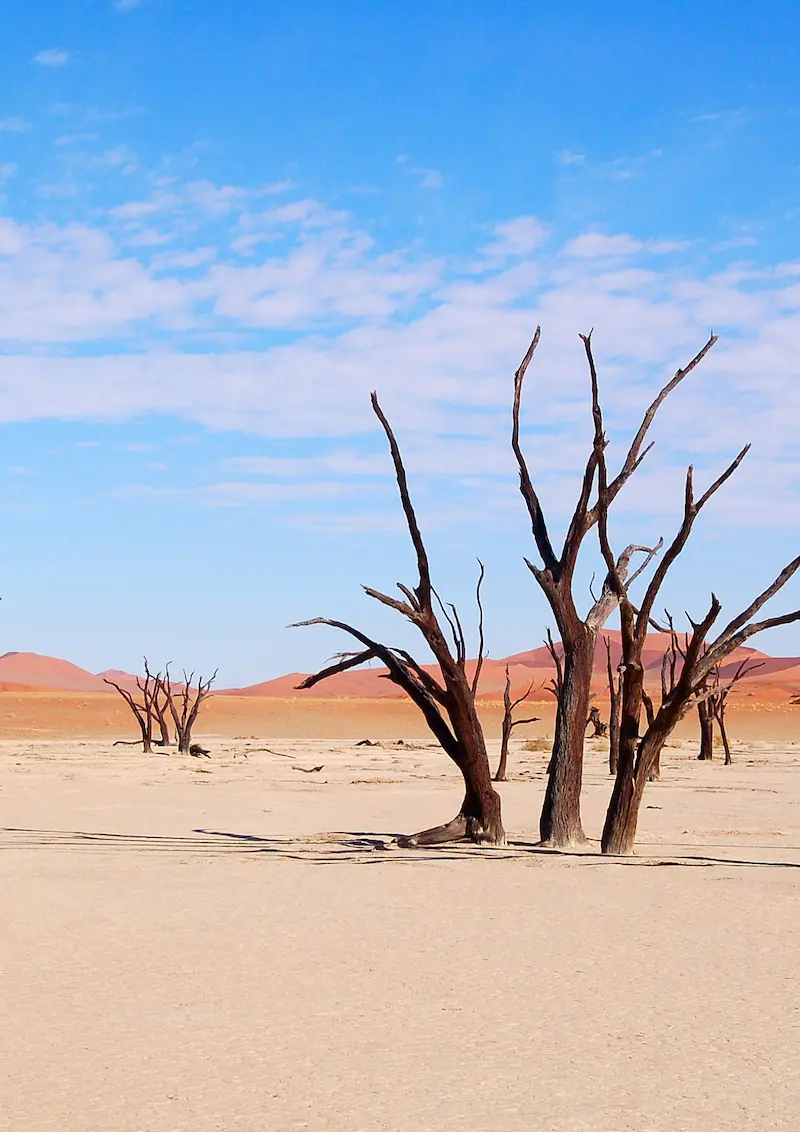
Deadvlei
A white clay pan with dark camelthorn trees surrounded by enormous orange dunes. It is one of Namibia’s most photographed places.
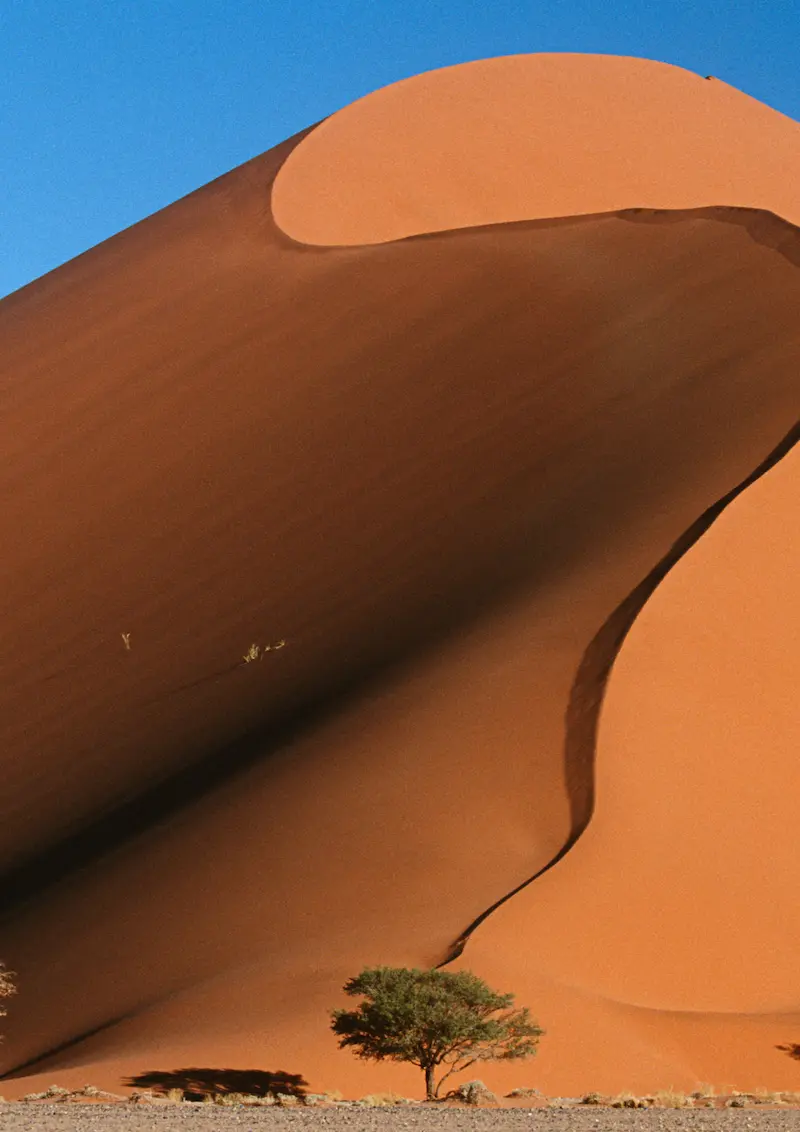
The Namib Dunes
Sharp ridges, changing light and vast open space make the dune field especially powerful at sunrise and in the early morning.
Where Is Sossusvlei?
Sossusvlei lies in the Namib-Naukluft National Park in southern Namibia’s Namib Desert. Sesriem is the gateway to the attraction and the place where travellers usually enter the park, arrange permits or meet excursion vehicles. Most nearby accommodation is described as being in the Sesriem or Sossusvlei area, although actual driving time to the inner attractions varies by lodge location.
The route from Windhoek is commonly used by travellers beginning a short Sossusvlei package or a longer Namibia circuit. The journey can take much of the day once fuel stops, gravel-road speeds, photo stops and lodge access roads are considered. Swakopmund is another common connection, allowing travellers to combine the central coast with the desert.
Namibia should never be planned using distance alone. A route that looks manageable on a map may involve gravel roads, changing surfaces, livestock, dust and long stretches without services. Build in daylight, comfort stops and enough time to arrive before dark.
Best Time to Visit Sossusvlei
Sossusvlei can be visited throughout the year, but the best time depends on your tolerance for heat, your photography goals, your budget and how the destination fits into the rest of your Namibia safari. There is no single month that is perfect for every traveller.
Cooler dry-season months
The cooler dry-season period is popular because early mornings and daytime activities can feel more comfortable than during the hottest part of the year. Nights and pre-sunrise starts can be cold, especially in open vehicles, so travellers should pack warm layers even though they are visiting a desert.
This period also overlaps with Namibia’s busiest safari season. Popular lodges, vehicles and guided excursions can fill early, particularly when travellers combine Sossusvlei with Etosha. Advance planning is important.
Warmer summer period
Summer can bring intense daytime heat, but it may also deliver dramatic skies and a different desert mood. Activities should begin as early as possible, and travellers must take hydration, shade and sun protection seriously. The middle of the day is not the ideal time for demanding dune climbs.
Rainfall in the desert is unpredictable. When rain does fall, the landscape can change quickly, with fresh colour, cloud formations and occasional water movement through normally dry areas. Travellers should not plan a trip expecting water in the pan, but the possibility is part of the desert’s character.
Photography considerations
Photographers usually value early light more than a specific season. Sunrise and the first hours of the morning produce the strongest contrast on the dunes. The side facing the sun glows, while the opposite slope remains dark, defining the dune’s shape.
| Period | What to Expect | Best For |
|---|---|---|
| Cooler dry-season months | Cold early mornings, generally comfortable daytime exploring and high safari demand. | First-time visitors, classic Namibia circuits and travellers combining Sossusvlei with Etosha. |
| Warmer months | Hotter days, strong sun and the possibility of dramatic cloud or rain conditions. | Heat-tolerant travellers, landscape photography and flexible itineraries. |
| Shoulder periods | Changing temperatures and potentially softer demand depending on dates. | Travellers balancing weather, availability and value. |
How Many Days Do You Need in Sossusvlei?
Two nights is the best choice for most travellers. You can arrive during the afternoon, enjoy the lodge or Sesriem Canyon if timing allows, spend the next morning exploring Sossusvlei and Deadvlei, and leave after a second night without turning the visit into a race.
One night
One night is possible, but it is tight. It may work for travellers passing through on a fast itinerary, provided arrival and departure times are carefully arranged. The risk is that a delay on the road, late arrival or weather issue leaves very little flexibility.
Two nights
Two nights gives the trip a much better rhythm. It allows one proper early-morning excursion and time to recover after the dune walk. It also creates space for Sesriem Canyon, a nature drive, sundowner experience or relaxed afternoon at the lodge.
Three nights
Three nights suits photographers, honeymooners and travellers who want the desert to feel like a destination rather than a checklist. An extra night may allow a second sunrise, a ballooning experience where available, stargazing, a guided nature activity or more time to enjoy a remote desert lodge.
Travellers with limited time can consider our Namibia Short Safari Packages, which are designed to make Sossusvlei possible without building a full two-week Namibia itinerary.
Main Attractions in the Sossusvlei Area
The Sossusvlei excursion is a sequence of landscapes rather than one attraction. The order of stops depends on your guide, entrance timing, heat, crowds and your interest in climbing. Do not assume you need to climb every dune to have a meaningful experience.
Deadvlei
Deadvlei is a pale clay pan surrounded by some of the highest dunes in the area. Its dead camelthorn trees stand dark against the white ground and orange sand, creating the most recognisable Sossusvlei composition.
Reaching Deadvlei requires a walk through soft sand. The route is manageable for many travellers but can feel more demanding as the temperature rises. Comfortable closed shoes, water, a hat and a steady pace make a significant difference.
Once on the pan, take time to move away from the most crowded viewpoints. The landscape changes depending on where you stand. A tree that looks isolated from one angle may overlap with others from another, and the balance of sky, pan and dune shifts as you walk.
Tourgy Tip: Visit Deadvlei Early
Deadvlei becomes hotter and busier later in the morning. An early visit usually gives you better light, a more comfortable walk and more space to appreciate the pan.
Big Daddy Dune
Big Daddy is one of the best-known climbs in the Sossusvlei area. The ascent follows a narrow ridge, with each step sliding slightly in the soft sand. It is physically demanding, and the final height should not be underestimated.
The reward is a wide view across the dune field and down towards Deadvlei. Many climbers descend directly down the dune face towards the pan, which can be exhilarating but tiring. Fitness, weather, footwear and confidence should determine how far you go.
You do not have to reach the highest point to enjoy the experience. Even a partial climb provides beautiful views and a sense of the dune’s scale. Travellers with knee, balance, heart or heat-related concerns should discuss the climb with their guide and choose a safer alternative.
Dune 45
Dune 45 is one of the most accessible and photographed dunes along the road into Sossusvlei. Its name is commonly associated with its location along the route from Sesriem. The dune’s curved shape makes it especially attractive in low light.
It is a popular climbing option for travellers who want a dune experience without attempting Big Daddy. The climb can still be strenuous because walking on sand requires more effort than walking on a firm trail. Starting early reduces heat exposure.
Sossusvlei Pan
Sossusvlei Pan is the feature that gives the area its name. It is surrounded by enormous dunes and is usually dry. The pan provides a quieter, broader landscape than Deadvlei and helps travellers understand how the Tsauchab River ends within the dune field.
Exceptional rainfall can change the appearance of the pan, but this is uncommon and should not be expected. Its usual dry form is still striking, particularly when wind patterns, tracks and vegetation add texture to the open ground.
Hiddenvlei
Hiddenvlei receives fewer visitors than Deadvlei and can appeal to travellers who enjoy walking and quieter landscapes. It requires more time and effort, so it is not normally the first choice on a rushed excursion. Ask your guide whether it suits the day’s conditions and your fitness level.
Elim Dune
Elim Dune lies closer to Sesriem and is often considered for sunset or a shorter walk. It offers broad views across the desert plains and surrounding ridges. Because it is closer to the entrance area, it can fit well into an arrival afternoon when time allows.
Sesriem Canyon
Sesriem Canyon provides a completely different experience from the open dunes. The Tsauchab River carved the narrow canyon through layers of rock and sediment, creating shaded passages and textured walls.
The canyon is often included on the arrival afternoon or after the main Sossusvlei excursion, depending on temperatures and timing. Walking conditions vary, and visitors should take care around uneven ground and steep access points.
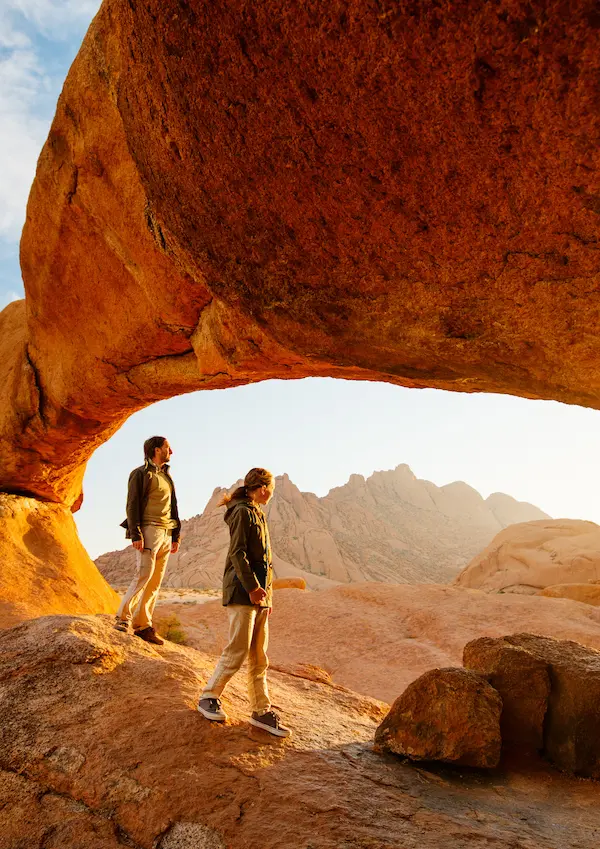
More Than One Viewpoint
The wider Sossusvlei area includes pans, dune climbs, scenic roads, desert wildlife and Sesriem Canyon.

The Lodge Is Part of the Experience
A well-positioned desert lodge adds stargazing, silence, scenic views and a comfortable place to recover after an early excursion.
What Wildlife Can You See Around Sossusvlei?
Sossusvlei is not a traditional Big Five safari destination, but the desert is not empty. Wildlife has adapted to limited water, extreme temperatures and large distances. Sightings may include oryx, springbok, ostrich, jackal and smaller desert species.
Oryx are particularly associated with Namibia’s desert landscapes. Their ability to cope with heat and aridity makes them one of the most memorable animals to see against the dunes. Ostriches can also appear surprisingly at home in the open terrain.
Smaller life is easy to overlook. Beetles, reptiles, birds and other species use fog, burrows, shade and specialised behaviour to survive. A knowledgeable guide can turn what looks like an empty patch of sand into a lesson in adaptation.
Travellers seeking concentrated large-animal viewing should combine Sossusvlei with Etosha. Our 10 Day Namibian Highlights Tour brings the desert, coast, Damaraland and Etosha together in one first-time Namibia route.
How to Get to Sossusvlei
Most visitors reach Sossusvlei by road through Sesriem. The route may begin in Windhoek, Swakopmund or another stop on a wider Namibia itinerary. Road conditions and travel time depend on the exact route, weather and surface conditions.
From Windhoek
Windhoek is the most common starting point for a short Sossusvlei tour. Travellers can depart by guided vehicle, scheduled transfer where available or rental car. The journey should be treated as a full travel day rather than a quick transfer.
A short package works particularly well for travellers adding Namibia to a wider Southern Africa holiday, attending a conference in Windhoek or travelling with limited annual leave. It allows you to experience the dunes without planning every fuel stop, lodge and excursion independently.
From Swakopmund
The Swakopmund–Sossusvlei connection creates one of Namibia’s strongest contrasts: cool Atlantic air and coastal adventure followed by dry desert heat and towering dunes. The route is popular on self-drive and guided highlights tours.
By scenic or charter flight
Fly-in travel can reduce road time and reveal the scale of the Namib from the air. Depending on routing and availability, travellers may connect from Windhoek, the coast or another lodge area. Charter and scenic flying is normally more expensive than road travel but can be valuable on a luxury or time-sensitive itinerary.
Can You Self-Drive to Sossusvlei?
Yes. Sossusvlei is one of Namibia’s most popular self-drive destinations. The journey appeals to travellers who enjoy independence, changing scenery and the freedom to stop for photographs. However, self-drive travel should not be confused with easy city driving.
Gravel surfaces require slower speeds and greater concentration. Travellers should avoid driving at night, monitor fuel, carry water, check tyres and understand the rental company’s procedures for punctures and emergencies. Downloaded offline navigation is useful because signal can be unreliable.
The final sandy section towards the inner Sossusvlei area requires special attention. Travellers without an appropriate 4x4 should leave the vehicle at the designated parking point and use the available transfer service rather than risk getting stuck. Even a 4x4 does not replace sand-driving experience.
Explore our Namibia Self Drive Safaris for lodge-based routes with the vehicle, accommodation and selected activities arranged in advance. You can also read Is Namibia Safe for Self Drive? before choosing this travel style.
Tourgy Tip: Do Not Chase the Arrival Time
If delays make you late, reduce your speed and contact the lodge. Driving faster on gravel or continuing after dark is not worth protecting an itinerary that can be adjusted.
Is a Guided Sossusvlei Tour Better?
A guided excursion is the easiest option for travellers who want local knowledge and less pressure. The guide manages route timing, the final sandy section, key viewpoints and the practical flow between dune climbs and pans.
Guides also add context. Without interpretation, the excursion can become a sequence of beautiful photo stops. With the right guide, travellers learn about river systems, dune formation, desert adaptation, wildlife tracks and the relationship between fog, wind and survival.
Guided travel is particularly useful for first-time visitors, families, older travellers, photographers who want to focus on their equipment and anyone uncomfortable with long gravel-road driving. Private guided touring offers the greatest flexibility, while a shared lodge excursion may provide better value.
Where to Stay Near Sossusvlei
Accommodation choice affects how early you can begin, how much driving you do and how the desert feels outside the main excursion. When comparing lodges, look beyond the room photographs. Consider distance from the park entrance, meal plan, activity departure point, air conditioning, vehicle access and whether the lodge suits your pace.
Comfortable mid-range option
Namib Desert Lodge is a practical choice for travellers who want a comfortable base, desert scenery and good value. It works especially well in short Sossusvlei packages and guided routes where transfers and excursions are arranged.
Upmarket desert stay
Desert Grace offers a more design-led experience with a strong sense of place. It suits couples, celebrations and travellers who want the accommodation to feel like part of the holiday rather than simply a place to sleep.
Private luxury experience
Desert Whisper is a highly private option for two guests and is designed around exclusivity, views and uninterrupted desert time. It suits honeymoons, anniversaries and travellers looking for a once-off stay rather than a conventional lodge experience.
Budget-conscious and adventurous stays
Camping and fixed-tent options can make the Sossusvlei area more affordable while keeping the experience close to nature. They are best for travellers comfortable with simpler facilities, temperature changes and a more outdoors-focused stay.
The cheapest room is not always the best value. A property farther from the gate may add transfer time, while a lodge including dinner, breakfast and activities may reduce the number of separate expenses. Compare the total experience, not only the nightly rate.
What Does a Typical Sossusvlei Day Look Like?
The day usually begins before sunrise. Travellers leave the lodge in darkness or low light, enter the park according to current access arrangements and drive between the dunes as the sky brightens. The first part of the journey is often one of the most beautiful moments of the excursion.
Depending on the plan, you may stop at Dune 45, continue to the final parking area, transfer through the sand and walk towards Deadvlei or Big Daddy. After the main dune and pan experience, the group may visit Sossusvlei Pan before returning towards Sesriem.
Breakfast or a picnic may be included depending on the excursion. By late morning the heat is usually stronger, and most travellers are ready to return to the lodge. The afternoon can be used for rest, a pool, Sesriem Canyon, a nature drive or a sundowner activity.
| Time of Day | Typical Experience |
|---|---|
| Before sunrise | Departure from the lodge or Sesriem area and entry according to current gate arrangements. |
| Early morning | Dune views, photography and possible Dune 45 stop. |
| Morning | 4x4 transfer where required, Big Daddy option, Deadvlei walk and Sossusvlei Pan. |
| Late morning | Return towards Sesriem as temperatures rise. |
| Afternoon | Rest, lodge time, Sesriem Canyon or an optional activity. |
| Evening | Dinner, stargazing and a quiet desert night. |
Sossusvlei Photography Tips
Sossusvlei is one of Africa’s great landscape-photography destinations, but strong images depend on timing, position and patience more than expensive equipment. Early light creates shape by dividing the dunes into illuminated and shadowed sides.
Use people to show scale
A tiny figure walking along a dune ridge can communicate the size of the landscape. Place the person carefully and leave enough negative space around them. Bright but simple clothing can help the subject stand out without overwhelming the scene.
Move around Deadvlei
The first composition you see is rarely the only one. Walk slowly around the pan and watch how trees line up against the dunes. Avoid touching, climbing or damaging the trees. They are part of a fragile and protected landscape.
Protect equipment from sand
Fine sand can enter camera bags, lens mechanisms and phones. Change lenses only when necessary, keep equipment zipped away when not in use and carry a simple cleaning cloth or blower. Do not place cameras directly on the sand.
Phone photography works well
Modern phones can capture excellent Sossusvlei images. Use the grid, keep the horizon straight and tap to expose for the bright sand without losing all detail in the shadows. Portrait mode is useful for people, but standard wide-angle images often show the landscape more naturally.
Drone regulations
Do not assume drones are permitted. Protected areas and Namibian aviation rules may require approvals, and lodge policies can also apply. Confirm the current rules through official channels before travelling and never launch a drone simply because another visitor is doing so.
What to Pack for Sossusvlei
- Closed walking shoes: Sand becomes hot and dune climbs require grip and support.
- Warm layer: Pre-sunrise departures can be cold, even when the afternoon is hot.
- Light breathable clothing: Choose comfortable fabrics for the warmer part of the day.
- Wide-brimmed hat: Shade is limited once you enter the open pan and dunes.
- Sunscreen: Apply before departure and carry enough to reapply.
- Water: Carry more than a small bottle, especially when climbing.
- Sunglasses: Bright sand and strong light can be tiring on the eyes.
- Camera or phone protection: Use a sealed bag or cover against fine sand.
- Power bank: Early starts and photography can drain phone batteries.
- Small daypack: Keep hands free while walking.
- Personal medication: Carry what you need because the area is remote.
- Travel documents and permits: Keep identification and booking information accessible.
Is Sossusvlei Safe?
Sossusvlei is generally considered a safe tourism destination when travellers follow park rules and use normal precautions. The main risks are environmental and practical rather than urban: heat, dehydration, sun exposure, getting stuck in sand, speeding on gravel roads and underestimating walking difficulty.
Stay on permitted routes, listen to guides, carry water and avoid separating from your group without a clear plan. Do not climb beyond your ability simply because other visitors continue. In a remote area, prevention is far easier than emergency assistance.
Is Sossusvlei Accessible for Travellers With Disabilities?
Sossusvlei can be challenging for travellers with limited mobility because of soft sand, uneven surfaces, vehicle transfers and the walk into Deadvlei. However, accessibility is not an all-or-nothing question. Some travellers may enjoy scenic drives and dune viewpoints even if a long sand walk is not suitable.
The right arrangement depends on the traveller’s mobility, transfer ability, wheelchair type, support person, heat tolerance and expectations. Accessible bathrooms, room layout, vehicle step height and the distance between lodge facilities should be checked individually rather than assumed.
Tourgy Tourz supports travellers with visible and invisible disabilities through customised planning. Visit our Accessible Africa Safaris page and tell us exactly what would make the journey more comfortable.
Is Sossusvlei Good for Families?
Yes, Sossusvlei can be a memorable family destination. Children often enjoy the scale of the dunes and the freedom of walking in an open landscape. The main challenge is managing heat, early starts, long drives and realistic expectations around climbing.
Families should choose accommodation with enough space and a practical meal plan. A private guided vehicle can also be valuable because it allows more control over stops, pace and the amount of time spent at each attraction.
Not every child needs to climb Big Daddy. Dune 45, a shorter ridge walk or simply exploring the pan may be more enjoyable. The best family experience is the one that leaves children curious rather than exhausted.
Is Sossusvlei Good for Honeymoons and Couples?
Sossusvlei is one of Namibia’s strongest destinations for couples. The landscape feels private, the desert lodges are atmospheric and the journey offers a slower, more meaningful alternative to a beach-only honeymoon.
Couples can combine a private desert stay with Swakopmund, Etosha, Victoria Falls or a beach extension. Upmarket lodges, private dinners, scenic flights, stargazing and quieter room locations can be requested depending on budget and availability.
Suggested Sossusvlei Itineraries
Three-Day Sossusvlei Short Safari
A three-day trip normally includes a travel day from Windhoek, two nights in the desert area, one guided Sossusvlei and Deadvlei excursion and return travel. It suits business travellers, conference guests, regional visitors and anyone with limited leave.
Explore the available options on our Namibia Short Safari Packages page.
Seven-Day Namibia Option
A seven-day itinerary requires careful choices. Travellers can focus on the north and coast or build a route around Sossusvlei and Swakopmund. Trying to combine every major Namibia destination in one week can create too much driving.
Our 7 Day Northern Namibia Adventure Tour focuses on a different part of the country and is useful for travellers more interested in Etosha, Damaraland and Swakopmund. Sossusvlei can instead be added through a longer customised route.
Ten-Day Namibian Highlights
Ten days is one of the strongest first-time Namibia options. It allows travellers to combine the Kalahari, Sossusvlei, Deadvlei, Swakopmund, Damaraland and Etosha National Park. The route demonstrates that Namibia is more than one desert attraction.
View the full 10 Day Namibian Highlights Tour.
Sossusvlei Self-Drive Extension
Independent travellers can include Sossusvlei in a lodge-based self-drive circuit. Tourgy Tourz can arrange the vehicle, accommodation and selected activities while leaving you free to drive the route at your own pace.
Browse our Namibia Self Drive Safaris for complete route ideas.
Common Sossusvlei Planning Mistakes
Planning only one rushed night
Long road journeys and a pre-sunrise excursion make a one-night stay tiring. Two nights usually provides much better value from the time and effort needed to reach the area.
Underestimating the heat
A pleasant dawn can become a hot late morning quickly. Carry water, wear sun protection and make your most demanding walk early.
Driving too fast on gravel
Namibia’s open roads can create false confidence. Loose surfaces, dips, animals and changing conditions make speed dangerous. Allow more time instead of trying to recover delays.
Assuming every vehicle can cross deep sand
Use the transfer service if your vehicle or experience is not suitable. Recovery from deep sand can waste time and create unnecessary risk.
Focusing only on Deadvlei
Deadvlei is extraordinary, but the road, dune light, desert wildlife, Sossusvlei Pan, Sesriem Canyon and lodge setting all contribute to the experience.
Booking accommodation without checking location
“Sossusvlei area” can describe a wide region. Ask how long it takes to reach the park entrance and where the excursion departs.
Why Include Sossusvlei in a First-Time Namibia Safari?
Sossusvlei introduces travellers to the scale and silence that define Namibia. It is visually impressive enough to justify the journey, but it also explains the country’s broader appeal: landscapes are not background scenery here; they are the main experience.
The destination also combines well with Namibia’s other highlights. Swakopmund adds coast and adventure, Damaraland adds rocky wilderness and conservation, while Etosha adds classic wildlife viewing. Together they create one of Africa’s most varied road-trip and safari experiences.
Travellers who are unsure where to begin can read our Best Namibia Safari Itinerary comparison guide.
Why Plan Sossusvlei With Tourgy Tourz?
Tourgy Tourz plans Namibia journeys for travellers with very different needs: short stays, self-drive holidays, private guided safaris, couples, photographers, families and travellers requiring additional accessibility support.
We do not treat Sossusvlei as an isolated hotel booking. We consider your arrival city, driving confidence, available days, lodge standard, activity preference and the destinations that should come before and after the desert.
A good Namibia itinerary should feel exciting, not exhausting. Our role is to create a realistic route, recommend suitable accommodation and make the practical details clear before you travel.
Ready to plan your Sossusvlei safari?
Tell us your travel dates, number of travellers, preferred budget and whether you want a short guided package, private safari or self-drive itinerary. Tourgy Tourz can build Sossusvlei into a Namibia trip that matches your pace.
Plan My Sossusvlei SafariRelated Namibia Safari Pages
FAQs About Visiting Sossusvlei
Is Sossusvlei worth visiting?
Yes. Sossusvlei is one of Namibia’s defining destinations. The red dunes, Deadvlei, desert light and scale of the landscape make it valuable for photographers, couples, families and first-time visitors.
What is the difference between Sossusvlei and Deadvlei?
Sossusvlei is a salt and clay pan and also the common name used for the wider attraction area. Deadvlei is a nearby white clay pan famous for its dark camelthorn trees and surrounding dunes.
How many nights should I stay?
Two nights is ideal for most travellers. Three nights is better for photographers, honeymooners and guests who want more lodge time or additional desert activities.
Do I need a 4x4?
You can generally reach the designated two-wheel-drive parking area when conditions allow, but the final deep-sand section requires an appropriate 4x4 or use of the local transfer service. Confirm current access arrangements before travel.
Can I visit Sossusvlei from Windhoek?
Yes. Windhoek is a common starting point for a three-day Sossusvlei package. The road journey takes much of the day, so two nights near the desert is recommended.
Can I visit Sossusvlei and Etosha in one trip?
Yes. A ten-day or longer Namibia itinerary can combine Sossusvlei with Swakopmund, Damaraland and Etosha National Park at a more realistic pace.
Is Big Daddy difficult to climb?
Yes. The soft sand, ridge exposure and heat can make the climb demanding. A partial climb is still worthwhile, and travellers should turn back when the effort exceeds their comfort or ability.
Can children climb the dunes?
Many children can enjoy shorter dune walks, but the route should match their age, fitness and heat tolerance. Carry water, start early and avoid making the highest climb the only measure of a successful visit.
Is there wildlife at Sossusvlei?
Yes. Possible sightings include oryx, springbok, ostrich, jackal, birds, reptiles and smaller desert species. Sossusvlei is a landscape destination rather than a concentrated Big Five safari area.
What should I wear?
Wear breathable layers, closed walking shoes, a wide-brimmed hat and sunglasses. Carry a warm jacket for the early departure and strong sun protection for later in the morning.
Can I fly a drone at Sossusvlei?
Do not assume drone use is permitted. Protected-area rules, aviation requirements and lodge restrictions may apply. Obtain current official guidance and any required approvals before travelling.
Are park fees included in guided tours?
Inclusion depends on the package. Check whether park permits, local transfers, meals and guiding are included in the quotation. Park charges and procedures can change.
Can travellers with limited mobility visit?
Some scenic parts may be possible, but Deadvlei involves soft sand and uneven access. Arrangements should be assessed individually according to transfer ability, wheelchair type, walking distance and vehicle access.
Is a guided tour better than self-drive?
Guided travel is easier and provides local interpretation. Self-drive offers independence and suits confident travellers who are prepared for gravel roads, long distances and route planning.
What is the best Sossusvlei itinerary for a first visit?
Choose two nights for a focused visit or include Sossusvlei in a ten-day Namibia route with Swakopmund, Damaraland and Etosha for a fuller first-time experience.