Yes, Namibia is generally safe for self-drive travel, especially for visitors who plan properly and respect the country’s road conditions. Namibia is popular with independent travellers because it offers wide open landscapes, reliable tourism infrastructure and clear routes between major highlights such as Windhoek, Sossusvlei, Swakopmund, Damaraland and Etosha National Park.
The most important thing to understand is this: Namibia is not difficult because of heavy traffic. It is challenging because of long distances, gravel roads, remote areas, wildlife, livestock and the temptation to drive too fast. If you are planning your first Namibia road trip, start with our Namibia Self Drive Safaris page, then use this guide to understand the main safety points before confirming your route.
Quick Answer: Is Namibia Safe for Self Drive?
- Yes, Namibia is suitable for self-drive travel if you are a confident driver and plan realistic daily distances.
- The biggest risks are road-related, not usually crime-related: gravel roads, speed, punctures, animals and night driving.
- Avoid driving after dark because wildlife and livestock are much harder to see.
- Choose the right vehicle for your route, especially if visiting Sossusvlei, Damaraland, Palmwag or remote areas.
- For nervous travellers, a guided Namibia safari may be more relaxing than self-drive.
Is Namibia Safe for Tourists?
Namibia is widely viewed as one of Africa’s more comfortable destinations for international visitors. The country has a strong tourism industry, well-known lodge routes, established safari circuits and a long history of welcoming travellers from Germany, France, the Netherlands, the United Kingdom, South Africa and many other markets.
For most tourists, the main safety concern is not whether they can visit Namibia safely. It is whether they are prepared for the style of travel. Namibia is spacious, remote and beautifully quiet. That is part of its magic. But it also means you should not treat the trip like a short city break where help, fuel and shops are always nearby.
If you want a broader destination overview before deciding between self-drive, guided or scheduled tour options, visit our Namibia Safari Overview.
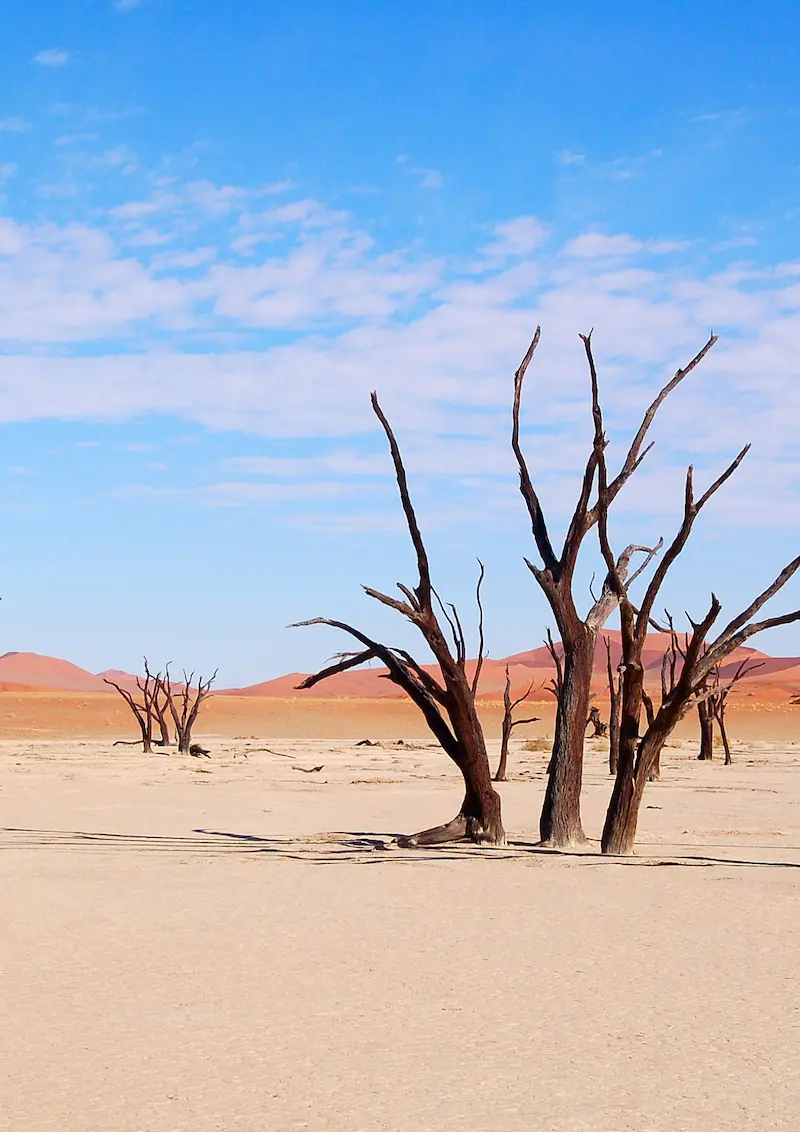
Sossusvlei & Deadvlei
Best for travellers who want red dunes, desert scenery, photography and one of Namibia’s most iconic landscapes.
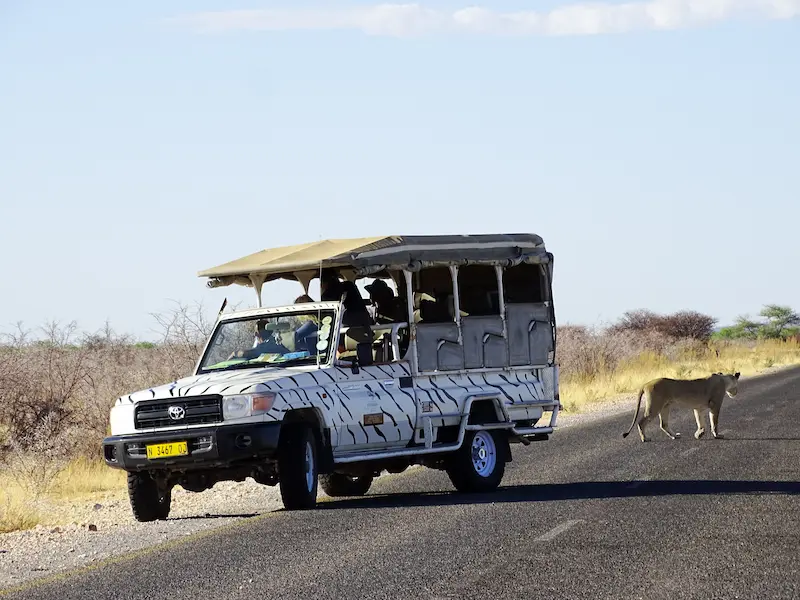
Etosha National Park
Best for classic Namibia wildlife viewing, waterholes, elephants, lions, rhinos, giraffes and plains game.
Is It Safe to Self Drive in Namibia?
Self-driving in Namibia is safe for many travellers, but it suits certain types of guests better than others. You should be comfortable driving long distances, handling gravel roads, reading route notes and making practical travel decisions without rushing.
Namibia rewards travellers who move slowly. The landscapes are huge, the roads are scenic and the best trips are not built around squeezing in too much. A good Namibia self-drive safari should include enough time between destinations, early departures, lodge arrival before sunset and backup planning for fuel, water and tyres.
Travellers wanting independence can look at our Namibia Self Drive Safaris. Travellers who prefer not to drive can compare guided and scheduled options on our Namibia Safari Tours page.
The Biggest Safety Risks When Driving in Namibia
Namibia is not a destination where you should be scared to drive, but it is a destination where you must drive with respect. Below are the most common safety risks visitors should understand before planning a Namibia road trip.
| Risk | How Serious Is It? | How to Reduce the Risk |
|---|---|---|
| Speeding on gravel roads | High | Drive slower than you think you need to, especially on bends, corrugations and loose gravel. |
| Driving at night | High | Avoid night driving completely where possible. Plan to arrive at your lodge before sunset. |
| Wildlife and livestock | Medium to high | Watch carefully for animals near roads, especially in rural areas, near farms and close to parks. |
| Tyre punctures | Medium | Check tyres daily, reduce speed on gravel and make sure your spare tyre and tools are in good condition. |
| Long distances | Medium | Keep your itinerary realistic. Avoid planning too many kilometres in one day. |
| Remote areas with limited signal | Medium | Download offline maps, share your route and keep enough water in the vehicle. |
| Crime | Low to medium | Use normal travel precautions in towns. Do not leave valuables visible in the vehicle. |
Why Namibia’s Gravel Roads Catch Visitors by Surprise
Many first-time visitors underestimate Namibia’s gravel roads. The roads may look wide and empty, which can make drivers feel confident, but gravel behaves very differently from tar. Loose stones, dust, corrugations and sudden bends can quickly become dangerous if you drive too fast.
Gravel roads also change depending on weather, recent maintenance and traffic. A road that was smooth last month can feel rough after rain or heavy use. This is why local advice and realistic travel times matter. Do not plan your driving day using only the distance shown on a map.
Tourgy Tip
On Namibia gravel roads, slower is not boring — slower is safer. Give yourself time to enjoy the landscape, stop for photos and arrive at your lodge feeling calm instead of exhausted.
Should You Drive at Night in Namibia?
No. As a general rule, you should avoid night driving in Namibia. This is one of the strongest safety recommendations for self-drive travellers.
The reason is simple: animals are difficult to see after dark. Wildlife, livestock and donkeys can move onto the road unexpectedly. In remote areas, there may be little lighting, limited shoulder space and slower emergency assistance. Even if you are a confident driver, night driving removes the visibility and reaction time you need on open rural roads.
Plan your itinerary so that you leave early in the morning and arrive at your next lodge before sunset. This is especially important when travelling between Windhoek and Sossusvlei, Sossusvlei and Swakopmund, Swakopmund and Damaraland, or Damaraland and Etosha.
Do You Need a 4x4 for Namibia?
You do not always need a 4x4 for every Namibia route, but a higher-clearance vehicle is strongly recommended for many self-drive itineraries. A comfortable SUV or 4x4 gives you better visibility, better clearance and more confidence on gravel roads.
For classic routes including Windhoek, Sossusvlei, Swakopmund, Damaraland and Etosha, many travellers prefer a 4x4 or high-clearance SUV. For more remote areas such as Palmwag, Kaokoland or some Damaraland routes, a 4x4 may be more important.
We will cover this in more detail in our upcoming guide: Best Car for a Namibia Self Drive Safari. For now, the safest advice is to choose comfort, clearance and reliability over the cheapest rental option.
Is It Safe to Self Drive to Etosha National Park?
Yes, many visitors self-drive to and inside Etosha National Park. Etosha is one of Namibia’s most famous safari areas and is a major highlight on many road trip itineraries. Inside the park, visitors must stay on designated roads and follow park rules.
Self-driving in Etosha can be very rewarding because you can move at your own pace between waterholes. However, a guided game drive is still valuable if you want expert interpretation, help spotting wildlife and a more relaxed safari experience.
If Etosha is your main priority, you can also compare short safari options on our Namibia Short Safari Packages page.
Is It Safe to Drive from Windhoek to Sossusvlei?
Yes, but this is one of the routes where first-time visitors need to take gravel roads seriously. Sossusvlei and Deadvlei are among Namibia’s most iconic attractions, but the journey includes long distances and sections where road conditions can vary.
Leave Windhoek early, avoid rushing, stop when needed and plan to arrive at your lodge before sunset. If you are not comfortable with gravel driving, a guided or semi-guided Namibia route may be a better option.
For a classic first-time Namibia route including Sossusvlei, Swakopmund, Damaraland and Etosha, see our 10 Day Namibian Highlights Tour.
Namibia Self Drive Safety Tips for First-Time Visitors
The safest Namibia self-drive trips are usually the simplest ones: realistic distances, good vehicles, early starts and calm driving. These practical tips will help you plan better.
- Do not drive after dark. Plan every day so you arrive before sunset.
- Keep your speed low on gravel roads. Loose gravel can cause loss of control very quickly.
- Check your tyres every morning. Look for damage before leaving the lodge.
- Keep fuel above half tank. Do not wait until the last minute to refuel.
- Carry drinking water in the vehicle. Namibia is dry, hot and remote in many areas.
- Download offline maps. Mobile signal can be limited outside towns.
- Do not overload your itinerary. Namibia is best enjoyed slowly.
- Use headlights on open roads. This improves visibility, especially on dusty gravel sections.
- Watch for animals. Wildlife and livestock can appear suddenly near roads.
- Ask lodges about road conditions. Local advice is often more useful than a map alone.
Self Drive vs Guided Safari in Namibia
Self-drive is not the only way to experience Namibia. The right choice depends on your confidence, budget, time and travel style.
| Travel Style | Best For | Things to Consider |
|---|---|---|
| Self-drive safari | Independent travellers who enjoy open roads and flexible pacing. | You are responsible for driving, navigation, fuel stops and road decisions. |
| Private guided safari | Travellers who want comfort, local knowledge and easier logistics. | Usually costs more, but reduces stress and driving responsibility. |
| Scheduled safari tour | Guests who want a structured route at a better value than private touring. | Less flexible than self-drive, but easier for first-time visitors. |
If you are confident and want freedom, start with Namibia Self Drive Safaris. If you prefer guided travel, compare our Namibia Safari Tours.
Who Should Choose a Namibia Self Drive Safari?
A Namibia self-drive safari is a good fit if you enjoy independence, photography stops, scenic roads and flexible travel days. It suits travellers who are calm drivers, comfortable with maps and happy to take responsibility for the journey.
Self-drive is especially popular for couples, friends, repeat Africa travellers and visitors who want to move at their own pace between lodges. It can also be excellent for travellers who want a deeper connection with Namibia’s landscapes.
Who Should Avoid Self Driving in Namibia?
Self-drive may not be the best choice if you are nervous on gravel roads, uncomfortable with long distances, travelling with very young children, arriving after long international flights or wanting a fully relaxed holiday with no driving pressure.
In that case, a guided Namibia safari can be the better investment. You still enjoy the same destinations, but with less stress and more local insight along the way.
Best Namibia Routes for a Safe First Self Drive
For first-time visitors, the safest Namibia self-drive routes are usually the classic routes. These have established lodges, popular tourist stops and better-known travel patterns.
- Windhoek to Sossusvlei: Best for red dunes, Deadvlei and desert scenery.
- Sossusvlei to Swakopmund: Best for desert-to-coast landscapes and scenic road trip stops.
- Swakopmund to Damaraland: Best for open landscapes, culture and dramatic scenery.
- Damaraland to Etosha: Best for combining remote landscapes with wildlife.
- Etosha to Windhoek: Best for ending the trip with classic safari memories.
This is why a well-paced 10 day itinerary is often the best starting point for first-time visitors. Compare the route on our 10 Day Namibian Highlights Tour.
When Is the Best Time for a Namibia Self Drive Safari?
Namibia can be visited throughout the year, but the best time depends on what you want from the trip. The dry season is popular for wildlife viewing in Etosha, while shoulder seasons can offer beautiful scenery and softer travel conditions.
Road conditions can also change after rain, especially on gravel and remote routes. For broader seasonal planning across safari destinations, visit our Best Time to Visit Africa guide.
Final Verdict: Is Namibia Safe for Self Drive?
Yes, Namibia is safe for self-drive travellers who plan properly, drive slowly and respect the conditions. It is one of Africa’s most rewarding road trip destinations, with unforgettable routes through Sossusvlei, Swakopmund, Damaraland and Etosha National Park.
The key is not to rush. Avoid night driving, choose the right vehicle, keep your itinerary realistic and treat gravel roads with care. If you do that, a Namibia self-drive safari can be one of the most memorable ways to experience Southern Africa.
Planning a Namibia self-drive safari?
Tell us your travel dates, number of travellers, budget level and preferred route. Tourgy Tourz can help you plan a safer, smoother Namibia self-drive safari with the right lodges, routing and vehicle advice.
Plan My Namibia Self Drive SafariRelated Namibia Safari Pages
FAQs About Namibia Self Drive Safety
Is Namibia safe for self drive?
Yes. Namibia is generally safe for self-drive travel if you plan well, avoid night driving and drive carefully on gravel roads. The main risks are road-related rather than typical tourist crime.
Is Namibia safe for first-time visitors?
Yes, Namibia is a good destination for first-time visitors to Southern Africa, especially if the itinerary is well planned. First-time travellers should avoid overpacking the route and should allow enough time between destinations.
Is it safe to drive from Windhoek to Sossusvlei?
Yes, but the drive includes gravel sections and long distances. Leave early, drive slowly, avoid sunset arrivals and use a suitable vehicle.
Can tourists self-drive in Etosha National Park?
Yes, tourists can self-drive in Etosha on designated roads during park opening hours. Guided game drives are still useful for wildlife interpretation and a more relaxed safari experience.
Do I need a 4x4 for Namibia?
A 4x4 is not always compulsory for the main routes, but it is highly recommended for comfort, clearance and confidence, especially on gravel roads and in more remote areas.
Is it safe to drive at night in Namibia?
No. Night driving is not recommended because wildlife, livestock and poor visibility increase the risk of accidents. Plan to reach your lodge before sunset.
Is Namibia safer than South Africa for self-drive tourists?
Namibia often feels easier for self-drive tourists because of its lower population density and quieter roads. However, travellers should still use normal safety precautions in towns and take road safety very seriously.
What is the safest Namibia self-drive route for beginners?
A classic route from Windhoek to Sossusvlei, Swakopmund, Damaraland, Etosha and back to Windhoek is one of the best options for first-time visitors. It includes Namibia’s major highlights while using established tourism routes.