Etosha National Park is the wildlife heart of Namibia. Its pale salt pan, open grasslands, mopane woodland and busy waterholes create a safari experience that feels completely different from the greener parks of East Africa or South Africa. In Etosha, patience at the waterhole is often as important as driving.
The park is home to large and small mammals, hundreds of recorded bird species, reptiles and highly specialised life adapted to harsh seasonal conditions. Elephants, lions, rhinos, giraffes, zebras, wildebeest, springbok, oryx and predators can all be encountered, but the park never feels like a controlled wildlife display. Sightings depend on season, movement, weather, water and luck.
Etosha can be explored on a guided safari, private tour or self-drive holiday. It can also be visited on a focused short package from Windhoek or included in a longer route with Swakopmund, Damaraland and Sossusvlei. For ready-made options, explore our Namibia Short Safari Packages, 7 Day Northern Namibia Adventure Tour, 10 Day Namibian Highlights Tour and Namibia Self Drive Safaris.
Etosha National Park Guide Contents
- Etosha quick facts
- What is Etosha?
- The Etosha Pan
- Why visit Etosha?
- Best time to visit
- How many days you need
- Animals in Etosha
- Waterhole game viewing
- Etosha regions and gates
- Self-drive safari advice
- Guided Etosha safaris
- Where to stay
- A typical safari day
- Photography tips
- What to pack
- Families and older travellers
- Accessible Etosha travel
- Suggested itineraries
- Common planning mistakes
- Etosha FAQs
Etosha National Park Quick Facts
| Location | Northern Namibia, spanning parts of the Kunene and Oshikoto regions. |
|---|---|
| Main landscape | The immense Etosha Pan, grasslands, thornbush, mopane woodland and waterhole habitats. |
| Best known for | Waterhole game viewing, elephants, rhinos, lions, open landscapes and self-drive accessibility. |
| Ideal stay | Two to three nights for most first-time visitors; longer for photographers or travellers crossing several sectors. |
| Main travel styles | Guided lodge safari, private guided tour, scheduled Namibia circuit or self-drive safari. |
| Safari rhythm | Early morning and late afternoon drives, with strategic time at waterholes. |
| Big Five note | Etosha is normally described as having four of the traditional Big Five; buffalo are not part of the standard Etosha experience. |
| Important note | Park fees, gate hours, road access, permit procedures and camp services can change. Confirm current details before travel. |
What Is Etosha National Park?
Etosha National Park is Namibia’s flagship wildlife reserve and one of the country’s most important tourism destinations. It was first protected in the early twentieth century and remains one of Africa’s best-known conservation areas. The park’s identity is inseparable from the vast Etosha Pan at its centre.
Unlike safari areas defined by rivers or thick woodland, Etosha is shaped by dryness, salt, seasonal water and open sightlines. Much of the wildlife activity concentrates around natural and artificial waterholes, particularly during dry periods. This makes the park especially rewarding for travellers who are prepared to stop, switch off the engine and wait.
Etosha is also one of the easiest major African parks to include in a self-drive itinerary. A network of permitted roads connects gates, viewpoints, rest areas and waterholes. This does not make the park predictable, but it makes independent game viewing possible for travellers who understand the rules and plan properly.
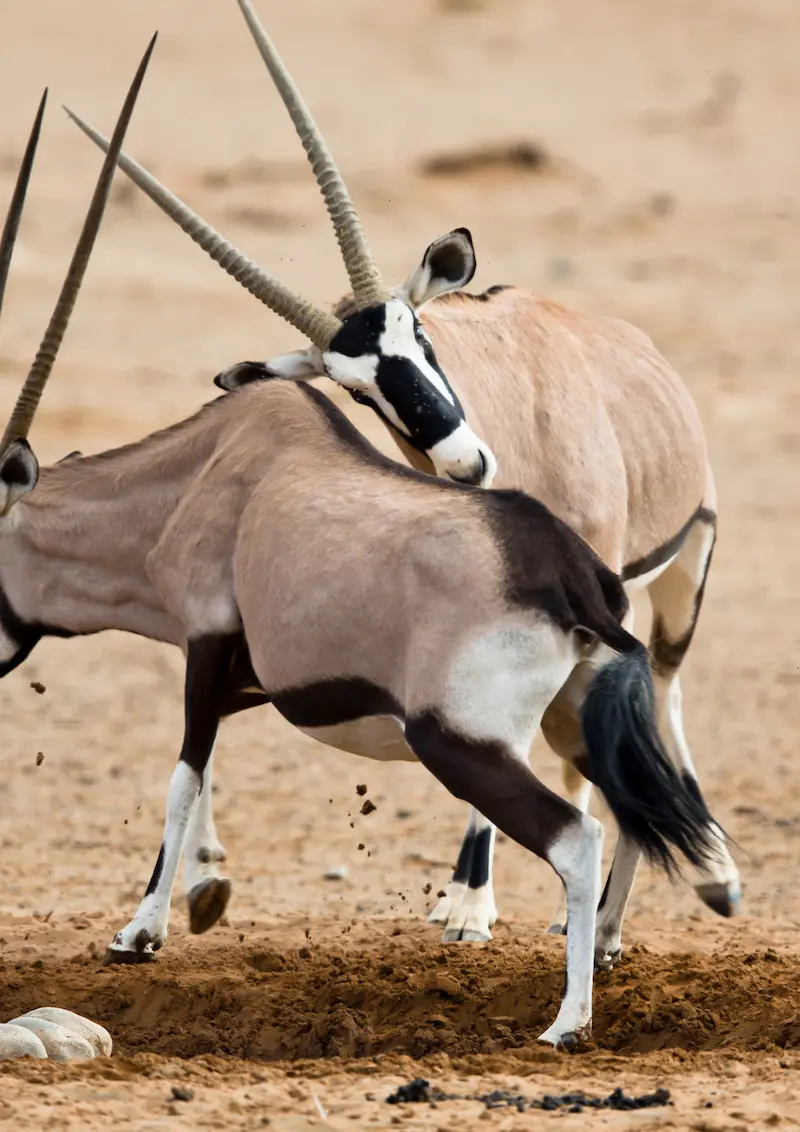
Open Etosha Landscapes
Pale ground, distant horizons and sparse vegetation make wildlife encounters feel visually different from greener safari parks.
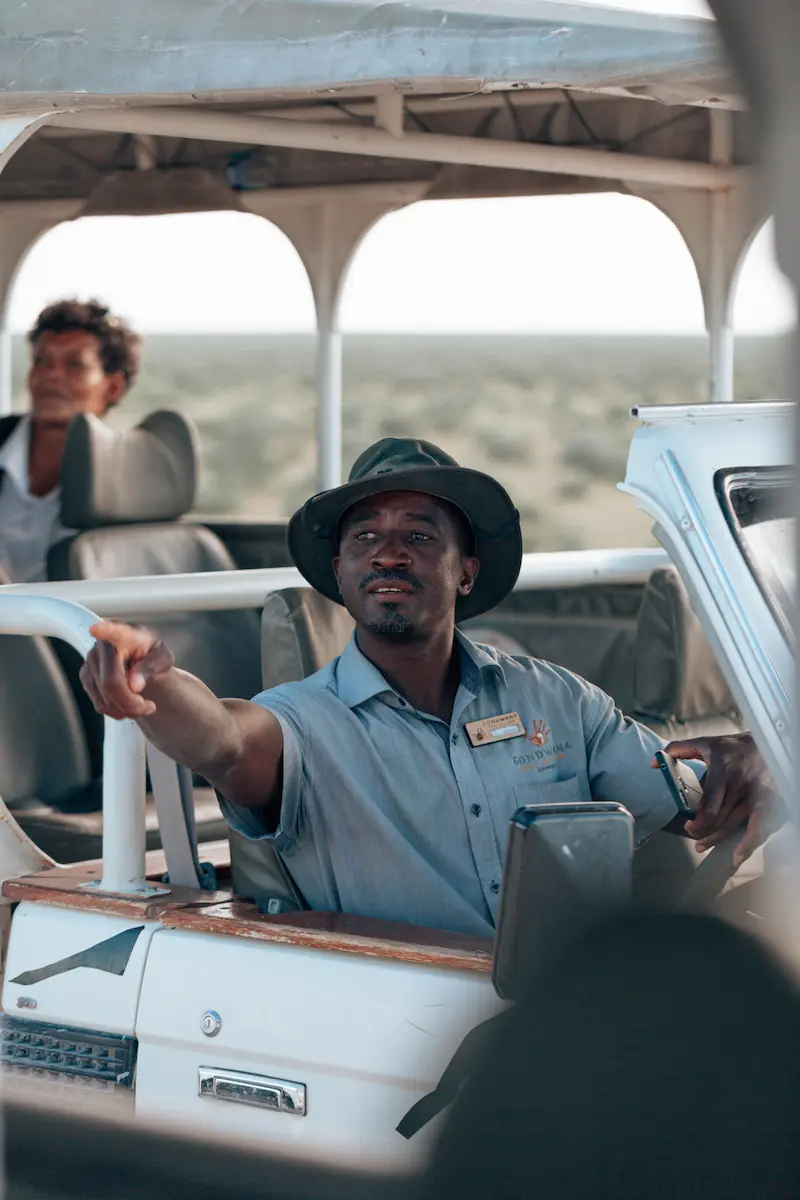
Accessible Safari Viewing
Etosha works well for guided vehicles and confident self-drive travellers following the park’s permitted road network.
What Is the Etosha Pan?
The Etosha Pan is a vast, flat salt depression and the park’s defining feature. UNESCO’s tentative-list description gives the pan an area of approximately 4,730 square kilometres, making it one of the world’s larger salt pans. Its name is commonly interpreted as “great white place” or “bare place,” reflecting the pale, exposed surface.
For much of the year the pan is dry, hard and saline. Heat creates mirages across the surface, and the white horizon can appear almost oceanic. Wildlife usually concentrates around the pan margins rather than deep on the open floor.
During exceptionally wet periods, water from the wider drainage system can partially flood the pan and transform it into a shallow lake. This can attract large numbers of waterbirds, including flamingos and pelicans. Flooding is seasonal and unpredictable, so travellers should never book a safari expecting a particular water level.
The pan is not simply a photographic background. It influences movement, vegetation, water distribution and the entire visual identity of Etosha. Scenic viewpoints along permitted routes give travellers a sense of its scale without entering restricted surfaces.
Tourgy Tip
Do not judge Etosha only by the number of animals you see in the first hour. The park rewards a slower rhythm: scan the pan edges, stop at several waterholes and give wildlife time to move into view.
Why Visit Etosha National Park?
Etosha offers one of Southern Africa’s most distinctive safari experiences. The park is not only about collecting sightings. Its appeal lies in watching wildlife interact around limited water, seeing elephants emerge through dust, following giraffes across a white horizon and sitting quietly while different species approach a waterhole in stages.
The open environment can make animals easier to spot than in thick bush, although distance, heat shimmer and seasonal vegetation still affect visibility. Waterholes create natural observation points where travellers can spend meaningful time without constantly driving.
Etosha also fits a wide range of budgets and travel styles. Travellers can camp, stay in comfortable safari camps, choose higher-end lodges, travel privately with a guide or combine the park with a self-drive road trip. This makes it suitable for first-time safari travellers as well as repeat visitors to Africa.
Most importantly for a Namibia itinerary, Etosha adds wildlife to a country famous for landscapes. Sossusvlei gives you dunes, Swakopmund gives you coast, Damaraland gives you geology and remote wilderness, while Etosha gives the route its classic game-viewing focus.
Best Time to Visit Etosha National Park
Etosha can be visited throughout the year, but the experience changes dramatically between dry and wetter periods. The best time depends on whether your priority is concentrated waterhole viewing, green scenery, birdlife, photography, lower demand or a wider Namibia route.
Dry-season wildlife viewing
The dry season is the most popular time for Etosha. As natural water becomes limited, animals gather around permanent and artificial waterholes. Vegetation is generally thinner, and wildlife can be easier to see from the road.
Early mornings can be cold, especially in open safari vehicles. Daytime temperatures are usually more comfortable than in the hottest months, but dust increases and popular waterholes can attract many vehicles. Accommodation should be booked early.
Hot late-dry-season conditions
As the dry period continues, temperatures rise and waterhole activity can become dramatic. Elephants may dominate a water source, predators can wait near movement routes and large groups of herbivores may appear in the same area.
The heat can be tiring for travellers, and midday photography is affected by harsh light and shimmer. Plan early starts, carry enough water and avoid making every day an uninterrupted dawn-to-dusk drive.
Green and rainy season
Rain changes Etosha. The landscape becomes greener, animals disperse away from permanent water and game viewing can require more patience. In return, travellers may experience dramatic skies, fresh vegetation, young animals and stronger seasonal birdlife.
The green season can be beautiful for photographers who want colour and atmosphere rather than only concentrated dry-season sightings. Roads and local conditions can vary after rain, so follow official guidance.
| Season | Etosha Experience | Best For |
|---|---|---|
| Cooler dry season | Thinner vegetation, cold mornings and strong waterhole viewing. | First-time visitors, classic wildlife safaris and travellers combining Etosha with Namibia’s highlights. |
| Hotter late dry season | High temperatures, dusty scenery and concentrated water dependence. | Experienced safari travellers, dramatic waterhole behaviour and wildlife photography. |
| Green season | Fresh vegetation, dispersed wildlife, young animals, birds and dramatic skies. | Repeat visitors, birders and photographers who value colour and atmosphere. |
How Many Days Do You Need in Etosha?
Two nights is the minimum we normally recommend for a meaningful Etosha visit. This can provide an afternoon or sunset drive on arrival, a full day of game viewing and a final morning before departure. One night leaves very little protection against delays or a quiet wildlife period.
One night
One night may work as a transit stop, but it is not ideal for a first safari. Wildlife does not follow an itinerary, and a short visit can end before you have explored enough waterholes or sectors.
Two nights
Two nights suits short packages and compact Namibia itineraries. It creates space for one full safari day and gives travellers a realistic chance to see a range of habitats and animals.
Three nights
Three nights is better for photographers, families and travellers who dislike rushing. It allows different routes, more time at waterholes and a less exhausting schedule. You can also divide the stay between two sides of the park.
Four nights or more
A longer stay is appropriate for dedicated wildlife travellers, birders or guests crossing from one gate region to another. It gives Etosha time to reveal patterns rather than isolated sightings.
Travellers with limited leave can use our Namibia Short Safari Packages to visit Etosha without committing to a full Namibia circuit.
What Animals Can You See in Etosha?
Etosha supports an impressive variety of mammals and birds. The Ministry of Environment, Forestry and Tourism describes the park as home to 114 large and small mammal species and more than 400 recorded bird species. Sightings vary by season and location, but Etosha is especially well known for elephants, rhinos, lions and plains game.
Elephants
Etosha’s elephants are among its most memorable animals. They may arrive at a waterhole in family groups, cover themselves in pale dust and drink for long periods. Vehicles should give them space and never block their route to or from water.
Rhinos
Etosha is internationally important for black-rhino conservation. Rhinos may be seen during daytime drives or at selected waterholes, sometimes after sunset where accommodation overlooks an illuminated water source. Never broadcast live locations of sensitive wildlife.
Lions and other predators
Lions are present throughout suitable areas of the park. They may rest near water, use road shade or follow prey movement. Leopards and cheetahs occur but are more difficult to find, while spotted hyenas and jackals may be encountered around open areas and waterholes.
Giraffes, zebras and antelope
Giraffes, plains zebras, blue wildebeest, springbok and oryx create the classic Etosha panorama. Their behaviour around water can be fascinating: some approach cautiously, others wait at the edge, and predator presence can change the mood instantly.
Birdlife
Etosha’s birding ranges from raptors and ground birds to seasonal waterbirds. After good rains, flamingos and other aquatic species may appear in large numbers around flooded areas. Even during dry periods, waterholes attract varied bird activity.
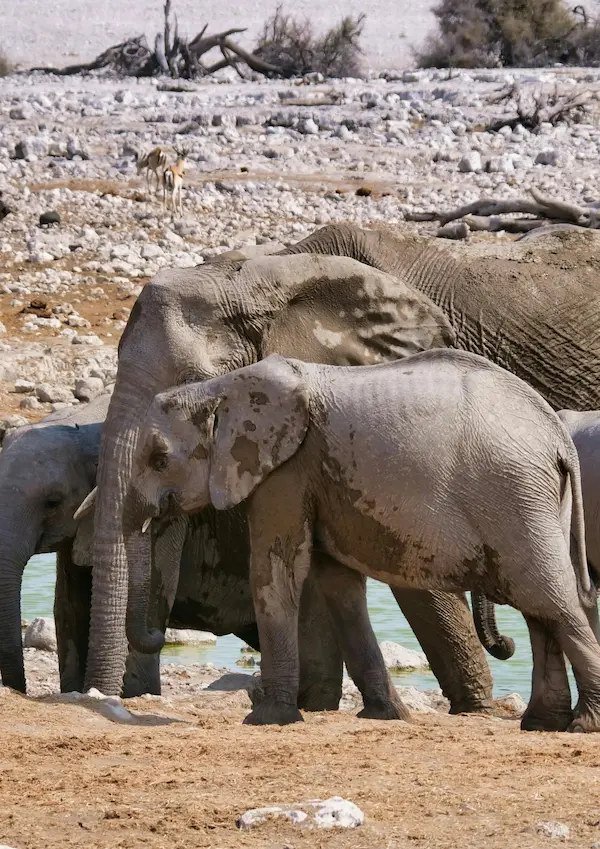
Elephant Waterhole Encounters
Etosha’s open waterholes can reveal family behaviour, dust bathing and the social order within larger elephant groups.
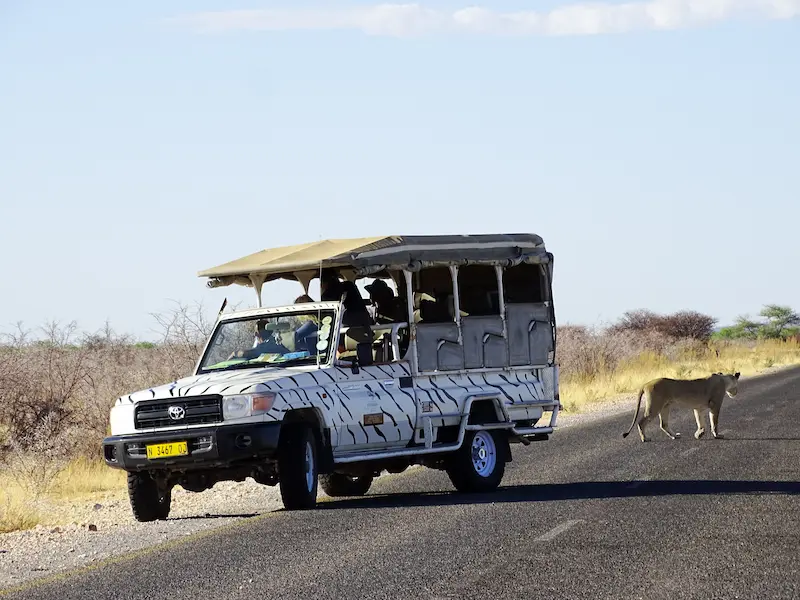
Predator Country
Lions, cheetahs, leopards, hyenas and jackals occur in Etosha, although every predator sighting still requires patience and luck.
Why Etosha’s Waterholes Matter
Waterholes are central to the Etosha safari experience. During dry periods, they become meeting points for species that may otherwise be spread across large areas. One waterhole can move from quiet to intense within minutes.
A productive waterhole is not always the one with the most vehicles. Look for fresh tracks, nervous antelope, circling birds, dust in the distance and animals facing the same direction. These signs can indicate approaching wildlife or predator pressure.
Turn off the engine where permitted, keep voices low and avoid moving the vehicle every few seconds. Wildlife may need time to approach. An animal that appears hesitant is often reacting to noise, traffic or another species you have not yet seen.
Some camps and lodges offer views over waterholes. These can be especially valuable because wildlife activity continues outside normal driving hours. Guests should still follow quiet-hours and lighting rules.
Tourgy Tip: Wait Longer
Ten quiet minutes at the right waterhole can be more rewarding than racing between ten different stops. Ask your guide what signs they are watching before deciding to move.
Etosha Regions, Gates and Safari Areas
Etosha is too large to think of as one simple destination. The area you choose affects driving time, accommodation and the waterholes you can explore. Gate names, opening arrangements and road access should always be checked before departure.
Southern and central Etosha
The southern approach is popular for travellers arriving from Windhoek or Outjo. It provides access towards Okaukuejo and a broad network of central waterholes. This region is practical for short packages and first-time visits.
Eastern Etosha
The eastern side connects with the Namutoni area and lodges outside the park. It can be useful for itineraries continuing towards northern or north-eastern Namibia. The landscape and wildlife distribution differ from the central sector.
Northern Etosha and King Nehale area
The northern gateway offers a different way to experience Etosha. Etosha King Nehale is positioned near this approach and includes a private waterhole experience linked to the park region. It works well for travellers combining Etosha with northern Namibia.
Western Etosha
Western Etosha provides a more remote feeling and different vegetation. Access rules, routes and accommodation arrangements should be confirmed carefully, particularly when crossing longer distances within the park.
Trying to cover every region in two days usually creates too much driving. Choose a logical section based on the route before and after Etosha.
Can You Self-Drive in Etosha National Park?
Yes. Etosha is one of Africa’s strongest self-drive safari destinations. Independent travellers can follow marked roads, stop at designated waterholes and move at their own pace. A self-drive safari can be rewarding, but it requires discipline.
Stay inside the vehicle except at authorised places. Follow speed limits, do not drive off road, do not block animals and return before the applicable gate deadline. Park rules exist for wildlife protection and traveller safety.
A high-clearance vehicle improves comfort and visibility, although the exact vehicle choice depends on the wider Namibia route. Tyres, fuel, water and emergency procedures matter more than appearance. Confirm whether your rental agreement permits every planned road.
Self-driving also means finding wildlife without a guide. Learn to scan under trees, check distant movement, read alarm behaviour and use waterholes strategically. Do not follow other vehicles aggressively or assume a traffic cluster guarantees a major sighting.
Explore our Namibia Self Drive Safaris for lodge-based routes with the vehicle, accommodation and selected activities arranged in advance.
Is a Guided Etosha Safari Better?
Guided safaris remove the pressure of navigation and let travellers focus on wildlife. Experienced guides understand animal behaviour, seasonal movement and the practical relationship between waterholes, wind and time of day.
Open safari vehicles can provide better visibility than a standard rental car, although conditions may be colder, hotter or dustier. A guide can also manage longer days more comfortably for guests who do not want to drive and search at the same time.
Guided travel is especially useful for first-time safari visitors, photographers, families, older travellers and anyone combining Etosha with a wider private Namibia route. Shared drives offer value, while private vehicles offer greater control over timing and interests.
Where to Stay Around Etosha
Accommodation can be inside or outside the park, depending on availability, budget and preferred style. Staying inside can reduce some access time and may provide waterhole viewing after normal driving hours. Staying outside can offer more lodge choice, larger rooms and different meal or activity options.
Etosha Safari Camp
Etosha Safari Camp is a lively and comfortable option near the southern side of the park. It works well for short packages, guided circuits and travellers who want a relaxed atmosphere after game drives.
Etosha Safari Lodge
Etosha Safari Lodge offers elevated views, decks and a more lodge-focused stay. It suits couples and travellers who value scenery and comfort alongside park access.
Etosha King Nehale
Etosha King Nehale provides a distinctive northern Etosha experience. Rooms, private plunge pools and access to a waterhole setting make it suitable for travellers who want more privacy and a strong lodge component.
Camping and fixed-tent options
Camping and Camping2Go-style accommodation can reduce costs and keep the experience close to nature. Travellers should still consider heat, cold mornings, meal preparation, equipment and the distance to park access.
In-park rest camps
In-park camps can be valuable for location and waterhole access. Facilities and room standards vary, so compare practical advantages with the comfort level you expect. Availability in peak periods can be limited.
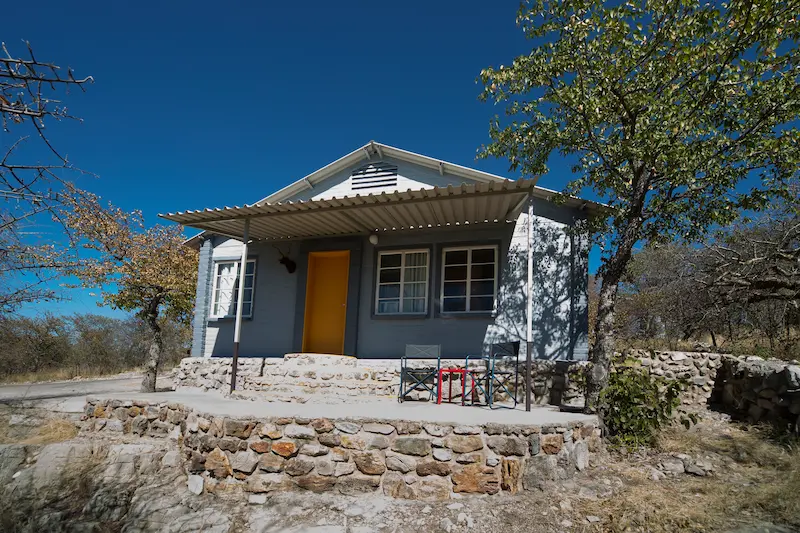
Comfortable Safari Camp
A practical option for short Etosha packages and longer guided Namibia itineraries.
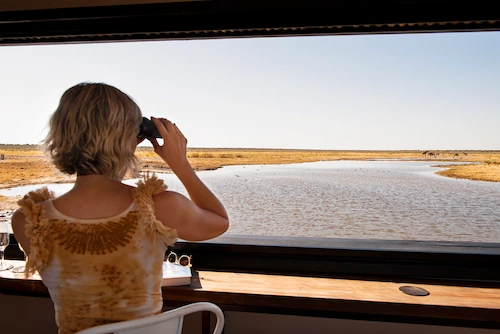
Northern Etosha Perspective
The King Nehale area offers a different approach to the park and can add a more private lodge experience.
What Does a Typical Etosha Safari Day Look Like?
A safari day normally begins early. Wildlife is often active in cooler conditions, and sunrise light is better for photography. Guests may depart with a packed breakfast or return to the lodge later depending on the itinerary.
The morning route usually links several waterholes and habitat types. Guides watch tracks, fresh dung, animal direction and reports from other vehicles, but they should never chase wildlife or ignore park rules.
Midday can be slower, especially in hot weather. Some animals rest in shade, while elephants and other species may still visit water. Travellers can pause for lunch at an authorised rest area or remain in the park on a full-day drive.
Late afternoon brings softer light and renewed movement. The return must allow enough time to reach the applicable gate before closing. Guests staying near a waterhole may continue watching wildlife from the lodge or camp after dinner.
| Time of Day | Typical Experience |
|---|---|
| Early morning | Cooler temperatures, predator movement, bird activity and soft photography light. |
| Mid-morning | Waterhole circuit, open-pan viewpoints and scanning shaded areas. |
| Midday | Rest, lunch or patient waterhole viewing during hotter conditions. |
| Late afternoon | Renewed animal movement, warm light and final waterhole stops. |
| Evening | Dinner, lodge time and possible waterhole viewing from accommodation. |
Etosha Wildlife Photography Tips
Etosha’s open terrain is excellent for wildlife photography, but the white pan, bright sky and heat shimmer create technical challenges. Strong images come from positioning and behaviour, not only close distance.
Photograph the environment
Do not crop every animal tightly. A giraffe crossing the pale pan or an elephant surrounded by dust can communicate Etosha better than a portrait with no landscape.
Watch the light
Early and late light gives warmth and texture. Midday creates harsh contrast and shimmer, but dust, silhouettes and waterhole reflections can still produce interesting photographs.
Anticipate behaviour
Focus on the space where an animal is moving rather than constantly reacting after the moment happens. Watch ears, body direction, interactions and the behaviour of nearby species.
Keep equipment ready but protected
Dust enters vehicles easily. Keep a lens cloth and blower available, avoid unnecessary lens changes and cover equipment during longer drives.
Respect sensitive wildlife
Do not pressure animals for a better angle. Never publish real-time rhino locations or ask a guide to break rules for a photograph. The sighting is not more important than the animal.
Drone regulations
Drones are not permitted in Namibia’s national parks without official authorisation. Travellers must confirm all current aviation, customs and park rules before arriving with drone equipment.
What to Pack for an Etosha Safari
- Neutral layered clothing: Early mornings can be cold while afternoons may be hot.
- Warm jacket: Essential for open-vehicle drives during cooler months.
- Sun protection: Pack sunscreen, sunglasses and a secure hat.
- Closed comfortable shoes: Useful at lodges and authorised rest areas.
- Binoculars: Etosha’s open landscapes make distance viewing important.
- Camera and spare batteries: Long game drives create many opportunities.
- Dust protection: Bring a camera cover, cleaning cloth and sealed bag.
- Reusable water bottle: Carry enough drinking water throughout the day.
- Personal medication: The park is remote and supplies may be limited.
- Offline maps: Useful for self-drive travellers when signal is unreliable.
- Power bank or vehicle charger: Helpful for phones and navigation devices.
- Travel documents: Keep identification, permits and accommodation confirmations accessible.
Is Etosha National Park Safe?
Etosha is generally safe for travellers who follow park rules and use normal travel precautions. The main dangers come from wildlife, speeding, leaving vehicles in unauthorised places, dehydration and misjudging distances or gate times.
Wild animals must always be treated as unpredictable. Do not feed them, approach them on foot or position your vehicle in a way that blocks movement. Elephants in particular need space and a clear route.
Self-drive travellers should keep fuel above a comfortable reserve, monitor tyres and avoid relying on phone signal for emergencies. Tell your accommodation if you experience a major delay.
Is Etosha Good for Families and Older Travellers?
Etosha can work very well for families. Children often enjoy the waterholes because wildlife comes into one view rather than requiring constant searching. The main challenge is the length of game drives and the need to remain quiet and seated.
Private vehicles are useful for families because the day can be adjusted around meals, attention span and rest. Lodges with pools, family rooms and shorter access times may be more practical than the most remote option.
Older travellers should consider vehicle step height, ride quality, toilet-stop availability, room location and whether a full-day drive is comfortable. Two shorter drives may be better than one very long excursion.
Accessible Etosha Safari Planning
Etosha may be suitable for travellers with mobility limitations because much of the wildlife viewing takes place from a vehicle. However, vehicle entry, bathroom access, room layout and lodge pathways must be checked individually.
A traveller who can transfer into a safari vehicle may have different options from someone who needs to remain in a wheelchair. Vehicle lifts are not standard, and open safari vehicles often have high steps. A private closed vehicle may be easier to customise.
Invisible disabilities also matter. Long drives, sensory overload, food routines, medication refrigeration, anxiety around unpredictable schedules and the need for regular breaks should all be discussed during planning.
Visit our Accessible Africa Safaris page and tell us what support would make your Etosha experience comfortable and memorable.
Best Etosha Safari Itineraries
Three-Day Etosha Short Safari
A focused three-day package can include road travel from Windhoek, two nights near Etosha, an afternoon or sunset safari and a full-day game drive. It suits travellers who want wildlife without a long Namibia holiday.
View our Namibia Short Safari Packages for current Etosha options.
Seven-Day Northern Namibia Adventure
Seven days allows Etosha to be combined with Swakopmund and Damaraland. This route is one of the most requested Tourgy Tourz Namibia options because it balances wildlife, coastline and dramatic northern landscapes without including the full southern desert circuit.
Explore the 7 Day Northern Namibia Adventure Tour.
Ten-Day Namibian Highlights
Ten days is stronger for first-time visitors who want both Sossusvlei and Etosha. The route combines the Kalahari, Namib Desert, Deadvlei, Swakopmund, Damaraland and Etosha National Park.
View the 10 Day Namibian Highlights Tour.
Etosha Self-Drive Safari
Etosha fits naturally into a lodge-based road trip from Windhoek through northern Namibia. Tourgy Tourz can arrange the vehicle, accommodation and selected guided drives while leaving you free to explore independently.
Browse our Namibia Self Drive Safaris.
Common Etosha Planning Mistakes
Trying to see the whole park too quickly
Etosha is vast. Choose a logical sector and spend time watching wildlife rather than turning the safari into a road-distance challenge.
Leaving only one night
A quiet afternoon does not mean Etosha has poor wildlife. It means nature is unpredictable. Two or three nights gives the park time to work.
Driving too fast
Speed reduces your ability to notice wildlife and increases risk. Slow game viewing is safer and usually more productive.
Moving away from waterholes too soon
Animals often approach cautiously. Noise and constant vehicle repositioning can delay or disrupt the sighting.
Ignoring gate-closing time
Plan the final part of the drive conservatively. A lion sighting does not remove the obligation to return on time.
Expecting guaranteed Big Five sightings
Etosha is not a checklist attraction. Buffalo are not part of the standard park experience, and even species that are present may not be seen on a particular day.
Choosing accommodation only by room price
Distance to the gate, meal plan, activity pricing and transfer time all affect total value. Compare the full safari arrangement.
Why Include Etosha in Your First Namibia Safari?
Namibia is often chosen for deserts and road-trip scenery, but Etosha proves that the country is also a major wildlife destination. It gives first-time visitors the classic safari moments they imagine while keeping the visual identity unmistakably Namibian.
The park combines naturally with Sossusvlei, Swakopmund and Damaraland. Each destination adds something different: dunes, coast, geology, culture and wildlife. This variety is why a ten-day Namibia journey can feel like several holidays within one route.
Read our Sossusvlei Travel Guide and Best Namibia Safari Tours to compare the strongest itinerary lengths.
Why Plan Etosha With Tourgy Tourz?
Tourgy Tourz plans Etosha safaris for travellers with different budgets, ages, interests and comfort needs. We arrange short guided packages, longer Namibia circuits, self-drive routes and private guided travel.
We consider more than the lodge name. Your route, arrival time, gate choice, safari vehicle, meal plan, park fees, luggage, mobility, driving confidence and the next destination all shape the right Etosha itinerary.
A good safari should give wildlife enough time without exhausting the traveller. Our goal is to build a realistic journey that balances game drives, lodge comfort and Namibia’s long road distances.
Ready to plan your Etosha safari?
Tell us your travel dates, number of travellers, preferred budget and whether you want a short guided package, private Namibia safari or self-drive itinerary. Tourgy Tourz can match Etosha with the right route, lodge and safari pace.
Plan My Etosha SafariRelated Namibia Safari Pages
FAQs About Etosha National Park
Is Etosha National Park worth visiting?
Yes. Etosha is Namibia’s leading wildlife destination and offers strong waterhole viewing, open landscapes, the immense salt pan and the possibility of seeing elephants, rhinos, lions, giraffes and many other species.
How many days should I spend in Etosha?
Two nights is the minimum recommended stay. Three nights is better for exploring more than one sector, photography and a less rushed safari rhythm.
Can I self-drive in Etosha?
Yes. Etosha has a permitted road network suitable for independent game viewing. Travellers must follow speed limits, stay inside vehicles except at authorised areas and return before gate closing.
Do I need a 4x4 for Etosha?
A 4x4 is not always essential for the main park roads, but a high-clearance vehicle can improve comfort and visibility. The wider Namibia route and seasonal road conditions should guide vehicle choice.
What animals are most commonly seen?
Common sightings may include springbok, zebra, giraffe, wildebeest, oryx, ostrich and elephant. Lions, rhinos, cheetahs, leopards and hyenas are present but sightings are never guaranteed.
Are there buffalo in Etosha?
Buffalo are not normally part of the Etosha safari experience. This is why Etosha is generally described as having four of the traditional Big Five rather than all five.
When is wildlife viewing best?
Dry-season months are popular because animals gather around waterholes and vegetation is thinner. The green season provides a different experience with fresh landscapes, seasonal birds and young animals.
Can I visit Etosha from Windhoek?
Yes. Etosha can be visited on a three-day package from Windhoek, although the road journey is long and should be planned with realistic departure and arrival times.
Should I stay inside or outside Etosha?
In-park accommodation can provide convenient access and waterhole viewing, while outside lodges may offer more comfort, room choice and different activity options. The best choice depends on budget and itinerary.
Is Etosha good for children?
Yes. Waterholes can make wildlife viewing engaging for children. Private vehicles, shorter drives, family rooms and a flexible schedule improve the experience.
Is Etosha suitable for older travellers?
Yes, with appropriate planning. Check vehicle access, driving duration, toilet stops, room location and whether shorter safari drives would be more comfortable.
Can travellers with disabilities visit Etosha?
Many sightings occur from vehicles, which can make Etosha possible for some travellers with limited mobility. Vehicle transfer, wheelchair access, lodge pathways and bathrooms must be assessed individually.
Can I use a drone in Etosha?
Drones are not allowed in Namibia’s national parks without official permission. Confirm current park and aviation rules before travelling with drone equipment.
Are park fees included in a guided safari?
Inclusion depends on the package. Check the quotation carefully for park entrance, vehicle fees, guiding, meals and optional activities.
What is the best first-time Namibia itinerary with Etosha?
A ten-day route combining Sossusvlei, Swakopmund, Damaraland and Etosha provides one of the strongest first-time Namibia experiences. A seven-day northern route is better for travellers with less time.