Tanzania • Serengeti • Great Migration
Serengeti Calving Season: The Ndutu Safari Guide
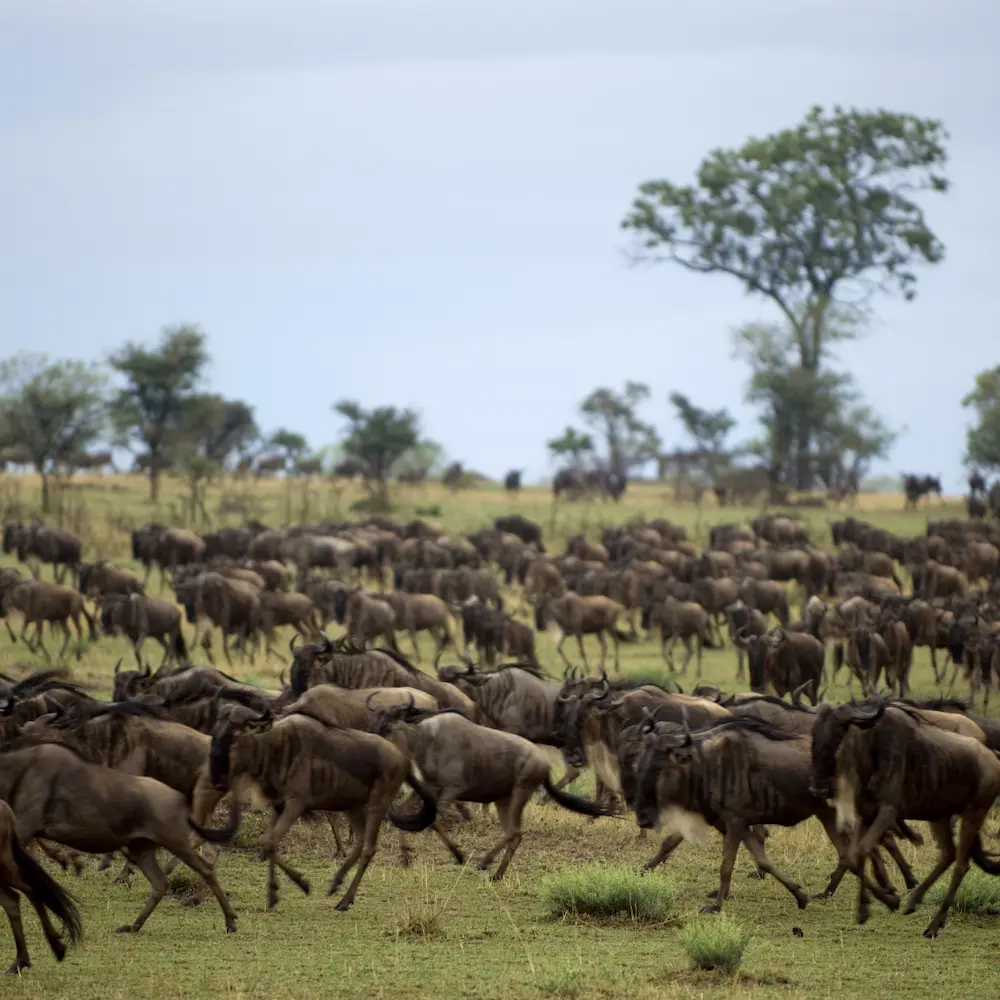
Everyone has heard of the Mara River crossings, but many guides will tell you their favourite time in the Serengeti is the calving season. Early each year, hundreds of thousands of wildebeest gather on the short-grass plains of the southern Serengeti and Ndutu, and give birth within a few weeks. Thousands of calves are born every day, and the predators are never far away.
Calving season at a glance
- When: the herds arrive around December; calving usually peaks in late January to February
- Where: the southern Serengeti and the Ndutu area of the Ngorongoro Conservation Area
- Why go: newborn calves, huge herds and dramatic predator action
- Bonus: green landscapes, dramatic skies and fewer crowds than July to October
- Ideal stay: 3 to 4 nights
Why do the wildebeest calve in the south?
After the short rains, the southern plains grow sweet, nutrient-rich grass on volcanic soils. It's the perfect nursery: mothers get the minerals they need for milk, and the open short grass lets the herds see predators coming. Most calves are born within a few weeks of each other, so there are too many for predators to catch, a survival strategy that has worked for thousands of years.
What will you see?
New life
Calves taking their first steps
A newborn wildebeest can stand within minutes and run with the herd soon after. Watching a birth on the open plains is an emotional, unforgettable moment.
Predators
Lions, cheetahs and hyenas
The calving season brings some of Africa's most intense predator action. The open plains around Ndutu are especially good for cheetahs, and lions and hyenas follow the herds closely.

Scenery
Green plains and dramatic skies
It's the green season, with fresh grass, wildflowers, storm clouds and beautiful light, which photographers love.

Where to stay for calving season
Base yourself in the Ndutu area or the southern Serengeti, close to the herds. Choices range from permanent lodges to seasonal mobile camps that move to follow the migration, putting you right in the heart of the action. Because the herds follow the rain, we choose your camp based on the latest reports from our guides on the ground.
When exactly should you go?
| Month | What to expect |
|---|---|
| December | Herds arrive on the southern plains |
| January | Herds settle; calving begins |
| February | Usually the peak of calving and predator action |
| March | Calves growing stronger; herds start to move |
Nature doesn't follow a calendar, so these are typical patterns, not guarantees. For the rest of the year, see our Serengeti migration guide.
Combine calving season with…
- The Ngorongoro Crater: just next door, perfect for a day trip. Read our Ngorongoro Crater guide.
- A balloon flight: float over the herds at sunrise. See our Serengeti balloon safari guide.
- Zanzibar: January and February are good beach months. See our Serengeti and Zanzibar Itinerary.

Tips for a calving season safari
- Book early: the best camps near the herds fill up months ahead.
- Stay longer: three or four nights gives you the best chance of seeing a birth and a hunt.
- Pack for rain: afternoon showers are common, so bring a light rain jacket.
- Be prepared: predator hunts are part of nature, which can be hard to watch.
A wobbly calf finds its feet, presses close to its mother and takes its first steps across the green plains. Life begins again, as it has for thousands of years, and you were there to see it.
Frequently asked questions
When is the Serengeti calving season?
The herds usually arrive on the southern plains around December, and calving typically peaks in late January to February. Timing varies with the rains.
Where is the best place to see the wildebeest calving?
The southern Serengeti and the Ndutu area of the Ngorongoro Conservation Area are the best places to see the calving season.
Is calving season a good time for a safari?
Yes. It offers huge herds, newborn calves, excellent predator action, green scenery and fewer visitors than the July to October peak.
How many wildebeest calves are born in the Serengeti?
Hundreds of thousands of calves are born during the season, with thousands born each day at the peak.
Can I combine calving season with the Ngorongoro Crater?
Yes. The Ndutu area borders the Ngorongoro Conservation Area, so the crater is an easy addition.
Be there for calving season
The best camps fill early. Tell us your dates and we'll place you where the herds are.
Explore Tanzania Safaris Serengeti Migration WhatsApp Us