The distances are part of what makes Namibia extraordinary. Sossusvlei, Swakopmund, Damaraland, Etosha and the remote north-west feel like completely different worlds, yet travelling between them by road can take many hours. A Namibia fly-in safari changes that equation.
Instead of spending every transfer day travelling overland, safari aircraft can connect airstrips close to lodges and wilderness areas. This means that a traveller can leave the dunes of Sossusvlei, continue to the Atlantic coast, fly onwards into Damaraland, reach the Etosha region and even continue deep into the remote Kunene and Skeleton Coast areas.
This guide uses the published Wilderness Air Namibia Flying Circuit valid from 06 January 2026 to 05 January 2027 to explain how a fly-in safari can work, which regions can be connected, how lodge access works, and why exploring Namibia from the air creates a very different adventure from the classic road trip.
If you are still deciding how you want to explore the country, start with our Namibia Safari Overview or explore our Namibia Safari Tours.
Quick Answer: What Is a Namibia Fly-In Safari?
A Namibia fly-in safari uses small safari aircraft to connect remote regions, lodge areas and airstrips instead of completing every long-distance sector by road.
- Windhoek to Sossusvlei: begin your safari by flying directly into the Namib Desert region.
- Sossusvlei to Swakopmund: move from desert landscapes to Namibia's Atlantic coast.
- Swakopmund to Damaraland: continue north to the Doro Nawas area.
- Damaraland to Etosha: connect Doro Nawas with Ongava near Etosha.
- Damaraland to Hoanib: travel deeper into remote north-western Namibia.
- Serra Cafema: continue into one of Namibia's most remote northern safari regions.
The important thing to understand is that these flights form a safari flying circuit. They are not simply conventional city-to-city domestic airline services.
Why Namibia Is So Well Suited to a Fly-In Safari
Namibia is vast. Many of the country's highlights are separated by hundreds of kilometres of desert, gravel roads and sparsely populated wilderness.
That vastness is one of Namibia's greatest attractions, but it also has an important effect on itinerary planning. A journey that looks short on a map may require several hours on the road.
For travellers with two or three weeks available, those road journeys can become part of the adventure. You see the landscape changing gradually, stop at small towns and viewpoints, and begin to understand just how enormous Namibia really is.
A fly-in safari offers a completely different perspective.
Instead of experiencing Namibia mainly from road level, you begin to understand the geography of the country from above. The transitions between desert, coast, mountains, dry river systems and remote wilderness become part of the experience.
The Important Difference
A fly-in safari is not simply a faster Namibia road trip. It is a different style of journey. The road traveller experiences Namibia through distance. The fly-in traveller experiences Namibia through scale.
How the Wilderness Air Namibia Flying Circuit Works
Wilderness Air publishes a circuit linking major safari regions and remote lodge areas. The network includes Windhoek, Sossusvlei, Swakopmund, Damaraland, Ongava near Etosha, Desert Rhino Camp, Hoanib Skeleton Coast and Serra Cafema.
Because it operates as a circuit, travellers do not always have to return to Windhoek between destinations.
That is what makes this kind of itinerary so interesting.
A Possible Namibia Flying Journey
Or, for travellers wanting to explore more remote Namibia:
Final routings, stops and timings depend on the confirmed flying circuit, accommodation and operational schedule.
1. Fly From Windhoek to Sossusvlei
For many travellers, Sossusvlei is the place they most want to see when visiting Namibia.
The enormous red dunes, Deadvlei, Sesriem Canyon and the landscapes of the Namib Desert make this one of the country's defining destinations.
The traditional way to begin is an overland journey south-west from Windhoek. A fly-in safari changes the first chapter of the trip completely.
Wilderness Air's published circuit includes departures from the Windhoek area to the Sossusvlei region, including access through Kulala/Geluk and Sossusvlei Desert Lodge.
The published circuit shows a Windhoek International departure at approximately 10:30 reaching the Kulala/Geluk area at approximately 11:40. Eros departures can also connect via Windhoek International.
Exact operating times can change, but the routing demonstrates how quickly a traveller can move from Namibia's capital region into the desert.
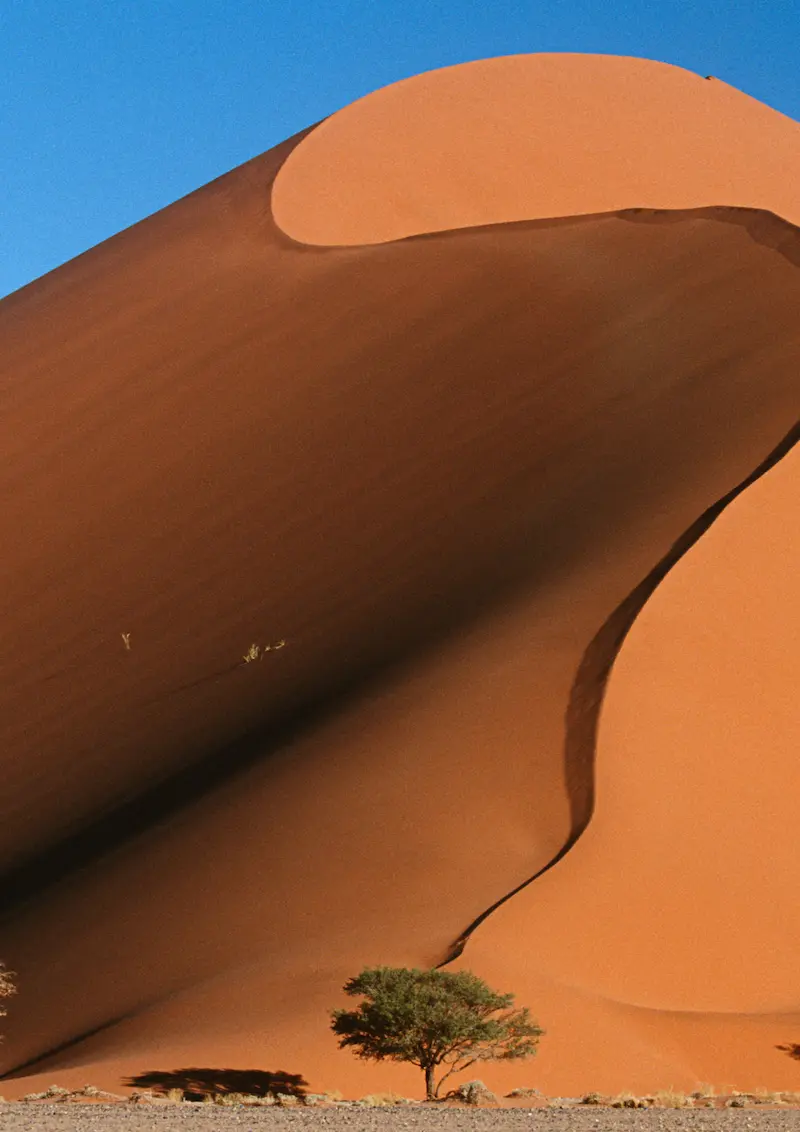
Sossusvlei
Begin the safari in the Namib Desert rather than spending most of the first travelling day on an overland transfer.
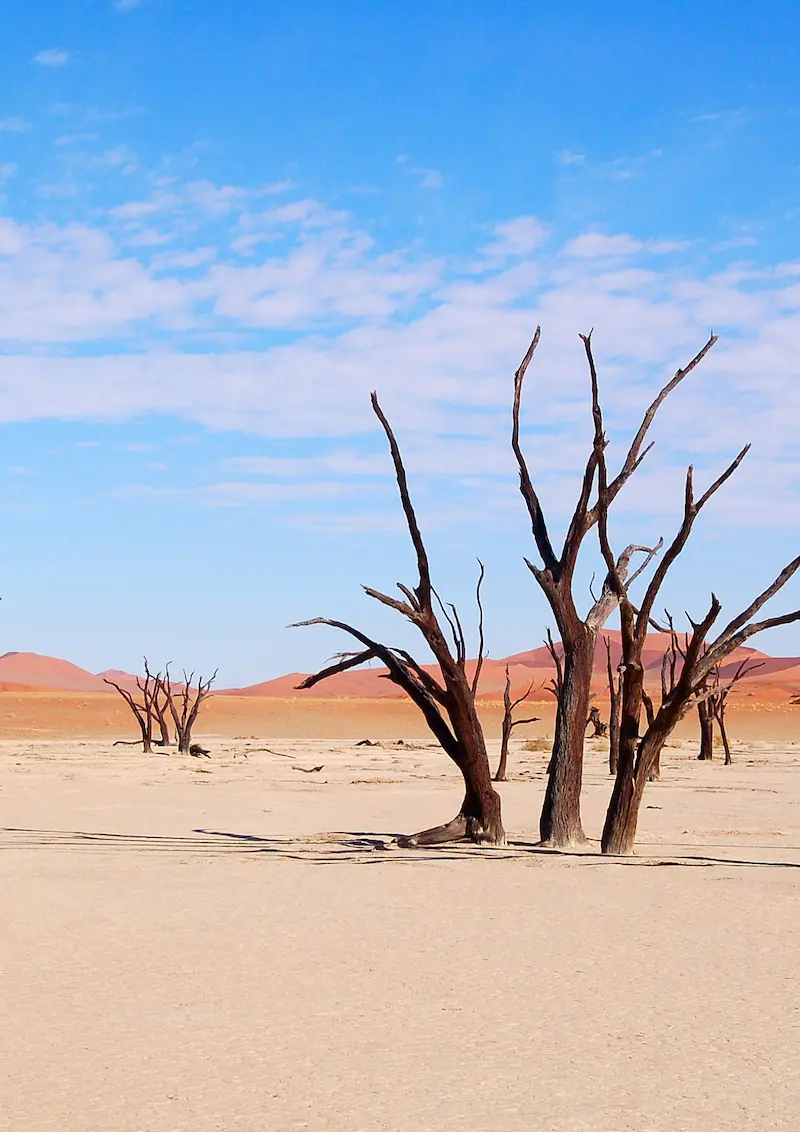
Deadvlei & the Namib
Flying into the Sossusvlei region gives travellers more time to focus on the dunes, desert activities and lodge experience.
Which Sossusvlei Lodges Can Fit Into a Flying Safari?
One of the most useful parts of the Wilderness Air circuit is that the flying network is not limited to one lodge.
The published associated-product map lists a broad collection of accommodation in the Sossusvlei region.
| Area | Properties Listed on the Flying Circuit |
|---|---|
| Sossusvlei Wilderness Camps | Kulala Desert Lodge and Little Kulala |
| Sossusvlei Associated Properties | Dead Valley Lodge, Desert Hills Lodge, Desert Homestead Lodge, Hoodia Desert Lodge, Kwessi Dunes, Le Mirage, Namib Outpost, Sonop Lodge, Sossusvlei Desert Lodge, The Desert Grace and Wolwedans Collection. |
This gives itinerary designers much more flexibility. A fly-in safari does not necessarily mean that every traveller must stay at the same accommodation brand.
The lodge choice can still be matched to your budget, travel style, preferred atmosphere and the rest of your itinerary.
2. Fly From Sossusvlei to Swakopmund
This is where a fly-in Namibia journey begins to feel dramatically different.
Instead of returning from Sossusvlei to Windhoek, the Wilderness Air south-central circuit allows travellers to continue north-west towards Swakopmund.
The published circuit shows a departure from the Kulala/Geluk area at approximately 09:50, reaching Swakopmund at approximately 10:50.
Operational times can vary, but the route itself is what matters most when planning the journey.
Desert to Atlantic Coast
One part of your Namibia journey is dominated by enormous desert dunes. The next introduces Atlantic air, Swakopmund, Walvis Bay and completely different activities.
This transition is one of the reasons flying can add so much to the adventure.
Namibia does not feel like one continuous landscape. It feels like a series of dramatically different environments, and flying allows you to move between them in a way that makes those contrasts even more noticeable.
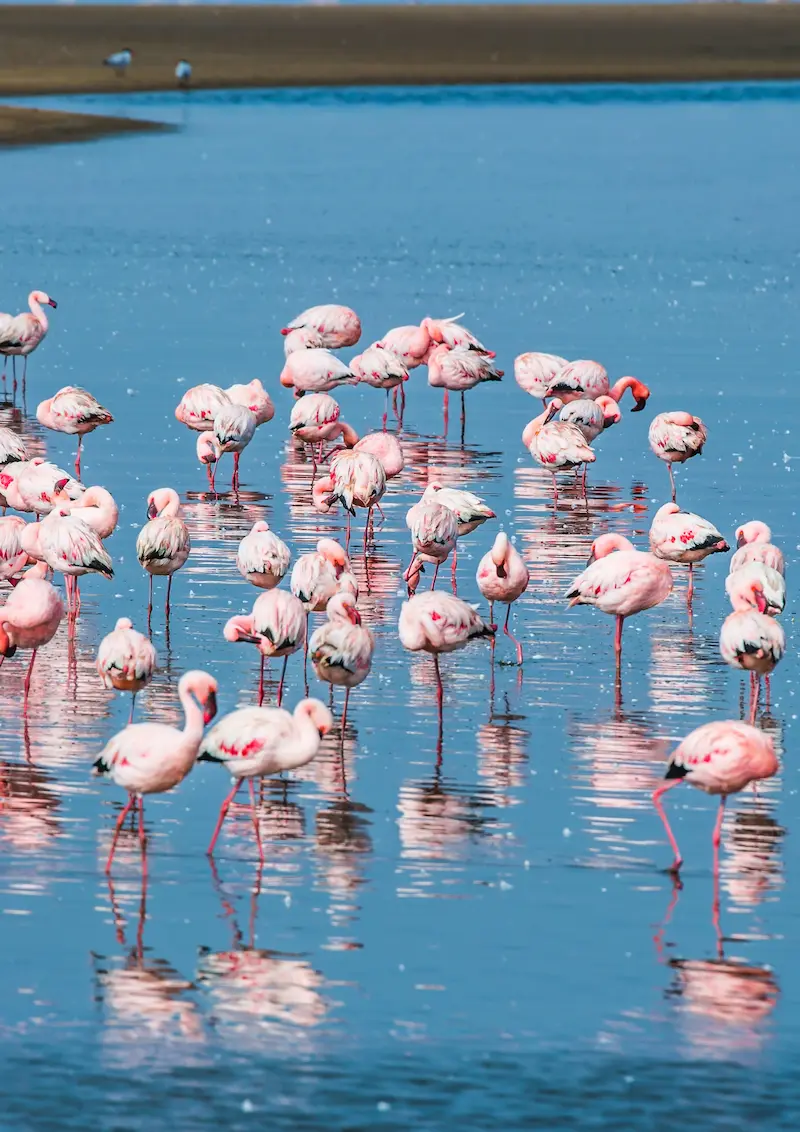
Swakopmund & Walvis Bay
After the Namib Desert, the Atlantic coast brings cooler air, adventure activities, marine experiences and a completely different Namibia atmosphere.
What Happens When Swakopmund Is Foggy?
This is one of those small operational details that is very useful to understand before travelling.
Namibia's Atlantic coast can experience fog, and those conditions can sometimes make Swakopmund inaccessible to aircraft.
Wilderness Air's published flying circuit explains that Arandis, located inland to the north-east, can be used when Swakopmund is affected by fog.
Because Arandis is farther inland, it is generally less affected by the coastal fog.
If Swakopmund cannot be used, travellers may therefore land at Arandis and complete the remaining journey to or from Swakopmund by road.
Tourgy Tip
Safari aviation involves weather, aircraft routing and operational considerations. Avoid building a fly-in itinerary around unrealistic minute-by-minute expectations. Good itinerary planning leaves room for the flying circuit to operate as intended.
3. Fly From Swakopmund to Damaraland
After spending time on Namibia's Atlantic coast, the flying circuit can continue north into Damaraland.
The published Wilderness Air circuit includes a Swakopmund to Doro Nawas sector, shown at approximately 11:35 to 12:30.
Doro Nawas is particularly important because it acts as a gateway and connection point for the wider Damaraland and north-western flying circuit.
This means a traveller can move through Namibia in a logical direction:
You are no longer using Windhoek as a base that you repeatedly return to. Namibia becomes one connected journey.
Damaraland Lodges on the Flying Circuit
The Wilderness Air associated-product network lists several important camps around Damaraland.
| Type | Damaraland Properties |
|---|---|
| Wilderness Camps | Doro Nawas, Damaraland Camp and Desert Rhino Camp. |
| Associated Third-Party Camps | Camp Kipwe, Etendeka Mountain Camp, Mowani Mountain Camp and Onduli Ridge. |
This is important for travellers because it illustrates how safari aviation can support different lodge combinations.
Doro Nawas functions as a north-western hub, with applicable camps and lodges managing transfers between the airstrip and accommodation.

Damaraland
Damaraland introduces rugged mountains, huge open spaces and access to some of Namibia's most remote safari landscapes.
4. Fly From Damaraland to Etosha
One of the most useful links within the flying circuit is the connection between Doro Nawas and Ongava.
This gives travellers a way to combine Damaraland with the Etosha safari region without another long overland transfer.
The published circuit shows Doro Nawas departing at approximately 12:30 and arriving at Ongava at approximately 13:20.
Again, schedules are subject to operational adjustments, but the route demonstrates how naturally these two major Namibia experiences can work together.
Landscape to Wildlife
The journey shifts from remote desert and mountain scenery into one of Namibia's best-known wildlife regions.
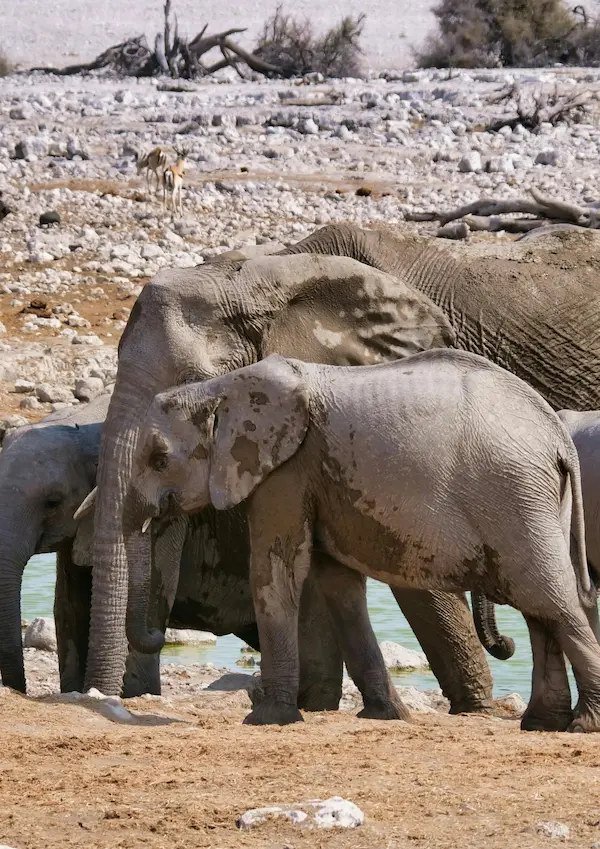
Etosha
Add classic wildlife viewing after exploring Namibia's desert, coast and remote landscapes.
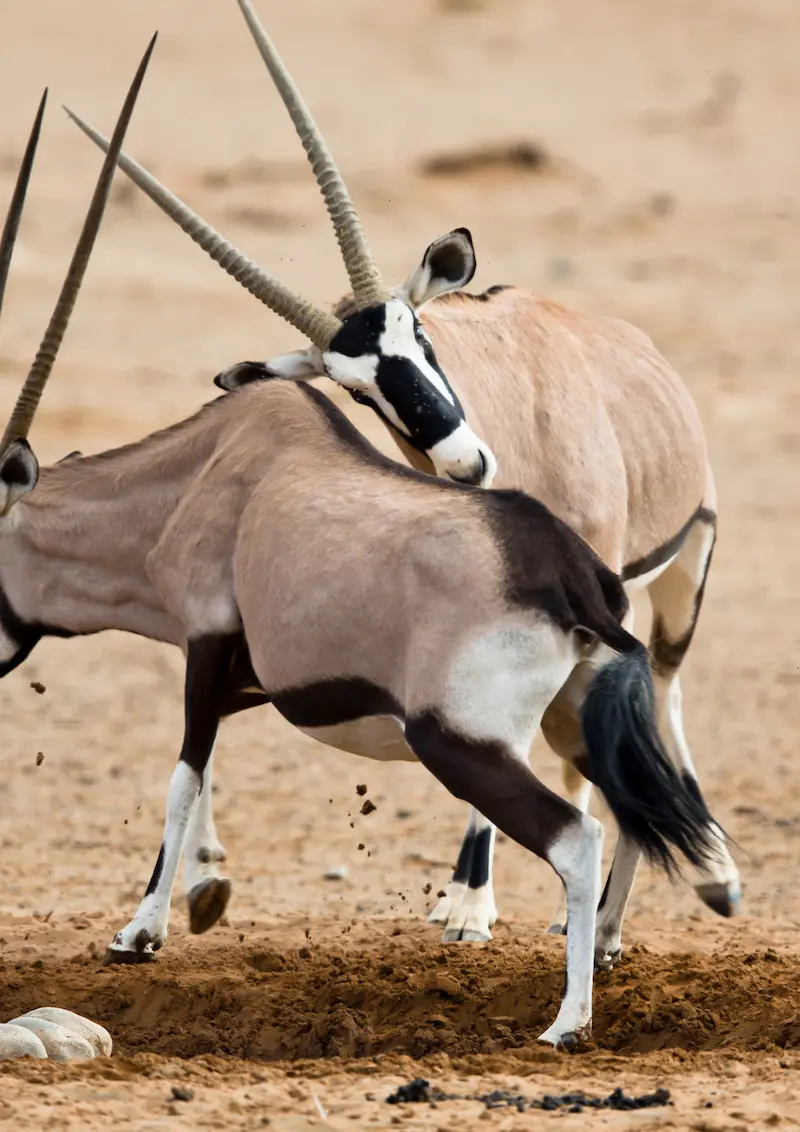
Ongava Area
Ongava provides an important flying connection for itineraries incorporating the Etosha region.
Which Etosha-Area Lodges Are Connected?
The Wilderness Air flying circuit lists a number of associated properties within its Etosha area.
- Andersson's
- Little Ongava
- Ongava Lodge
- Ongava Tented Camp
- Etosha Mountain Lodge
- Etosha Safarihoek Lodge
- Safari House
Lodge Hop connections also link Ongava and Mokuti, with Mokuti serving access for properties including Mushara, Onguma and Mokuti itself.
For itinerary planning, this opens more possibilities than simply thinking in terms of "flying to Etosha."
The exact airstrip, lodge transfer and flight routing depend on where you are staying.
5. Continue Beyond the Classic Namibia Route
Sossusvlei, Swakopmund, Damaraland and Etosha already make an exceptional Namibia itinerary.
But the real power of the Wilderness Air circuit becomes clear when you look farther north-west.
Flights can connect Doro Nawas with Desert Rhino Camp and Hoanib.
Hoanib can then connect farther north through the flying network, including towards Serra Cafema.
This allows travellers with sufficient time and budget to build an itinerary that moves far beyond the standard first-time Namibia route.
A More Remote Namibia Journey
This is where the advantages of safari aviation become especially clear. These are remote environments where flying can transform the logistics of the journey.
6. Hoanib & the Skeleton Coast
Namibia's north-west is dramatically different from the more frequently visited central and southern safari circuit.
The Wilderness Air network includes Hoanib Skeleton Coast, with flying connections involving Doro Nawas, Desert Rhino Camp, Serra Cafema and the Purros/Orutjanda area.
The published Hoanib and Desert Rhino transfer circuit includes sectors such as:
- Hoanib to Desert Rhino Camp
- Hoanib to Doro Nawas via Desert Rhino
- Desert Rhino Camp to Doro Nawas
- Doro Nawas to Desert Rhino Camp
- Doro Nawas to Hoanib via Desert Rhino
- Desert Rhino Camp to Hoanib
- Hoanib to Purros/Orutjanda
This network is why a high-end fly-in safari can reach parts of Namibia that would otherwise require much more complicated overland planning.
7. Fly Even Further North to Serra Cafema
For travellers looking for a truly remote Namibia experience, the published circuit extends to Serra Cafema.
Connections include routes between Serra Cafema and Doro Nawas, with some services routing through Desert Rhino Camp and/or Hoanib.
This gives us an important lesson about Namibia fly-in safaris:
Flying is not only useful because it reduces road time.
It can also make it practical to include destinations that many conventional Namibia itineraries never reach.
What Are Wilderness Air Lodge Hops?
Another useful part of the Wilderness Air network is its Lodge Hops service.
Wilderness describes Lodge Hops as an air-taxi service providing access to selected third-party areas.
The published Lodge Hop network includes connections such as:
- Ongava to Doro Nawas
- Ongava to Mokuti
- Mokuti to Ongava
- Doro Nawas to Swakopmund or Arandis
- Swakopmund to Geluk in the Sossusvlei area
- Purros/Orutjanda connections
Lodge Hop rates are structured per aircraft, according to the Wilderness Air document, rather than simply being described as a conventional scheduled airline seat.
The service is published with a standard maximum of four guests, with additional seats potentially available on request.
Lodge Hop times are also different from traditional airline schedules. Guests may only receive the final departure time while they are in camp, often the night before departure.
Flying Circuits Do Not Work Like Normal Airline Timetables
This is one of the most important things to understand before booking a Namibia flying safari.
The times shown on a safari flying circuit help organise the network, but actual departure and arrival times can vary.
Wilderness Air explains that flights may sometimes operate directly when another stop had originally been expected, while routings and timings can also be adjusted to operate efficiently across Namibia's enormous distances.
Regional and international flight connections are considered within the published circuit, but travellers should still allow for changes.
Do Not Over-Schedule Your Flying Days
We recommend avoiding important activities immediately around safari flight sectors unless the timing has been confirmed. Your itinerary should be designed around the flying circuit rather than trying to force the aviation schedule around too many fixed activities.
Namibia Fly-In Safari vs Namibia Road Safari
Namibia is one of Africa's great road-trip destinations, so choosing to fly does mean experiencing the country differently.
| Fly-In Namibia Safari | Road-Based Namibia Safari |
|---|---|
| Reduces many long overland sectors. | The distances themselves become part of the adventure. |
| Excellent for travellers with limited holiday time. | Excellent for travellers with more time available. |
| Can connect very remote safari areas. | Allows stops and discoveries along the road. |
| Offers an aerial perspective of Namibia's scale. | Shows the landscape changing gradually at ground level. |
| Works particularly well with remote lodges. | Works beautifully for self-drive and privately guided journeys. |
| Requires careful coordination of aircraft, lodges and transfers. | Requires careful planning around driving distances and road conditions. |
Is Flying Better Than Driving in Namibia?
No. It is simply different.
One of Namibia's greatest pleasures is driving through landscapes where the road seems to disappear into the horizon.
On a road safari, you watch the geography change slowly. Desert becomes mountain. Mountain becomes dry riverbed. Settlements become increasingly distant.
Flying removes some of that gradual transition, but replaces it with another experience: seeing Namibia's scale from above and reaching distant regions with far less time spent transferring overland.
The best choice depends on how much time you have, where you want to travel, your budget and what you want the journey itself to feel like.
The Best Option May Be a Hybrid Fly-and-Drive Namibia Safari
You do not necessarily have to choose between a fully road-based safari and a completely fly-in itinerary.
A tailor-made Namibia journey can use aircraft where the distances are greatest and road transfers where travelling overland adds value to the experience.
For example, depending on available flying circuits and your accommodation, we might design a journey combining:
Or the opposite may make more sense.
The point of tailor-made travel is not to fly simply because a flight exists. It is to choose the transport that makes the overall itinerary better.
Example 10-Day Namibia Fly-In Safari
A classic fly-in journey could combine Namibia's most famous landscapes with wildlife and the coast.
Day 1 — Arrive in Windhoek
Arrive in Namibia, transfer to your accommodation and prepare for the safari.
Days 2–3 — Fly to Sossusvlei
Fly from the Windhoek area into the Sossusvlei region.
Spend two nights exploring the Namib Desert, with time for Sossusvlei, Deadvlei, the dunes and your lodge experience.
Days 4–5 — Fly to Swakopmund
Continue from Sossusvlei to the Atlantic coast.
Spend time in Swakopmund and, depending on the itinerary, explore Walvis Bay or add a coastal activity.
Days 6–7 — Fly to Damaraland
Fly from Swakopmund to the Doro Nawas area.
Damaraland brings a completely different character to the journey, with rugged landscapes and access to remote north-western Namibia.
Days 8–9 — Fly to Ongava / Etosha
Continue from Doro Nawas to Ongava.
Spend the final safari days focused on wildlife and the Etosha region.
Day 10 — Fly Back to Windhoek
The published Wilderness Air circuit connects Ongava back to Windhoek International, allowing the safari to finish without retracing the entire route overland.
Example Remote Namibia Fly-In Safari
For travellers with more time, a larger budget and a desire to see Namibia beyond the classic circuit, the route can continue much farther north-west.
This is the type of itinerary where flying is no longer merely a convenience.
It becomes an important part of making the entire journey possible within a realistic holiday timeframe.
Who Should Consider a Namibia Fly-In Safari?
Fly-in Namibia works particularly well for certain travellers.
- Travellers with limited time: flying can reduce some of the longest transfer days.
- Luxury safari travellers: remote lodge combinations often work naturally with safari aviation.
- Honeymooners and couples: a flying safari can create a more seamless lodge-to-lodge journey.
- Repeat visitors to Namibia: flying can make remote regions easier to include on a second or third Namibia journey.
- Travellers combining several distant regions: flying can make Sossusvlei, Damaraland, Etosha and remote northern Namibia more practical in one itinerary.
- Travellers who do not want long driving days: a fly-in or hybrid itinerary can substantially change the pace of the holiday.
Is a Namibia Fly-In Safari Only for Luxury Travellers?
Fly-in safaris are generally a more premium way to travel because aircraft movements are added to the cost of accommodation, activities, lodge transfers and the rest of the safari.
However, there is no single price for a Namibia fly-in safari.
The total depends on the flying route, season, accommodation, number of travellers, available circuit sectors and whether the itinerary uses scheduled circuit flying, lodge hops, road transfers or a combination of different transport options.
This is why Tourgy Tourz prices fly-in Namibia journeys individually rather than advertising one figure that may not match the traveller's actual itinerary.
Why a Fly-In Safari Requires Careful Planning
Booking a Namibia fly-in safari is not simply a matter of choosing a collection of lodges and then purchasing flights between them.
The complete itinerary has to work together.
We consider:
- Your arrival into Namibia.
- Your international or regional flight times.
- The safari flying circuit.
- The airstrip serving each lodge.
- Road transfers between airstrips and accommodation.
- Lodge check-in and check-out times.
- Safari activities.
- Potential route adjustments.
- Weather-related operational changes.
- Your onward or international departure.
This coordination is what turns a collection of flights and hotels into a seamless Namibia holiday.
Why Tourgy Tourz Recommends Planning the Journey First
We do not believe that every Namibia traveller should fly everywhere simply because the option exists.
Some road sectors are worth experiencing. Some regions become much easier when reached by air. Some travellers have more time. Others would rather spend that time at the lodge, on safari or exploring the destination.
Our approach is therefore to begin with the experience you want.
We look at your travel dates, the regions that matter most, your budget, preferred lodges and how comfortable you are with long road journeys.
From there, we can decide where flying genuinely improves the itinerary.
Want to Explore Namibia by Air?
Tell us your travel dates, number of travellers, preferred lodge level and the Namibia regions you want to experience. Tourgy Tourz can build a tailor-made fly-in or fly-and-drive Namibia safari around the available flying circuit, accommodation and activities.
Plan My Namibia Fly-In SafariRelated Namibia Travel Guides
FAQs About Namibia Fly-In Safaris
What is a Namibia fly-in safari?
A Namibia fly-in safari uses small safari aircraft to connect remote regions, airstrips and lodges. Instead of completing every long transfer by road, travellers can fly between areas such as Windhoek, Sossusvlei, Swakopmund, Damaraland, Etosha and remote north-western Namibia.
Can you fly from Windhoek to Sossusvlei?
Yes. The Wilderness Air Namibia flying circuit includes connections from the Windhoek area to Sossusvlei, including Kulala/Geluk and Sossusvlei Desert Lodge.
Can you fly from Sossusvlei to Swakopmund?
Yes. The published south-central Wilderness Air circuit connects the Sossusvlei region with Swakopmund. This allows travellers to continue their Namibia journey towards the coast instead of returning to Windhoek first.
Can you fly from Swakopmund to Damaraland?
Yes. Wilderness Air's circuit includes a Swakopmund to Doro Nawas sector. Doro Nawas is an important connection point for Damaraland and onward travel into north-western Namibia.
Can you fly from Damaraland to Etosha?
Yes. The Wilderness Air circuit connects Doro Nawas with Ongava, providing access to the Etosha safari region.
Can you fly to the Skeleton Coast?
The Wilderness Air network includes Hoanib Skeleton Coast and connections through north-western Namibia. The exact routing depends on the confirmed itinerary, accommodation and operating circuit.
Can you fly to Serra Cafema?
Yes. Serra Cafema forms part of the published Wilderness Air north-western flying circuit, with connections involving Doro Nawas, Desert Rhino Camp and/or Hoanib depending on routing.
What happens if Swakopmund is too foggy for the aircraft?
Coastal fog can occasionally make Swakopmund inaccessible. Wilderness Air may use Arandis, which is located farther inland, with travellers transferred between Arandis and Swakopmund by road.
Are Namibia safari flight times fixed?
Safari flying circuits do not operate exactly like conventional scheduled airlines. Departure and arrival times can change as routing is adjusted, and travellers should allow flexibility on flying days.
What is a Wilderness Air Lodge Hop?
Lodge Hops are Wilderness Air taxi services connecting selected lodge and safari areas. They can provide access to third-party properties and may operate without a fixed departure time, with final timings communicated closer to travel.
Is a Namibia fly-in safari better than a self-drive safari?
Neither option is automatically better. Self-drive gives travellers more independence and allows the road journey to become part of the experience. A fly-in safari reduces long driving sectors and can make remote regions easier to combine.
Can I combine flying and driving in the same Namibia itinerary?
Yes. A fly-and-drive or fly-and-transfer itinerary can be one of the best ways to experience Namibia. Some sectors can be completed by aircraft while other journeys are kept overland where the scenery and route add value to the trip.
How much does a Namibia fly-in safari cost?
There is no single cost because pricing depends on the flight sectors, season, lodges, number of travellers and whether the itinerary uses circuit flights, lodge hops, road transfers or a combination. Tourgy Tourz can prepare a customised quote based on your exact route.
How many days do you need for a Namibia fly-in safari?
Around 7 to 10 days can work well for a fly-in itinerary focused on major regions such as Sossusvlei, Swakopmund, Damaraland and Etosha. Longer itineraries are better if you want to continue into Hoanib, the Skeleton Coast or the far north-west.
Final Thoughts: Namibia Looks Different From the Air
Namibia will always be one of Africa's great road-trip destinations. Its empty roads, enormous horizons and changing landscapes are part of what makes the country so memorable.
But flying introduces another version of Namibia.
You can begin among the dunes of Sossusvlei, continue to the Atlantic coast, move into the mountains and dry river valleys of Damaraland, add an Etosha safari and then continue into some of the most remote landscapes in north-western Namibia.
The Wilderness Air flying circuit makes these regions part of one interconnected safari journey.
For travellers who want less time in transit, more time at their destinations or access to areas far beyond the classic Namibia route, a fly-in safari can completely change the adventure.
Start Planning Your Namibia Fly-In Safari
Tell Tourgy Tourz where you want to go, how many days you have and the style of accommodation you prefer. We can combine safari flights, lodges, activities and road transfers into one tailor-made Namibia journey.
Request a Namibia Fly-In Safari Quote