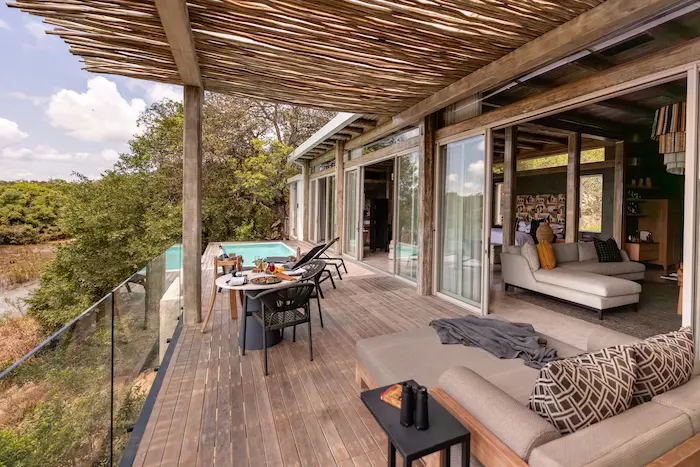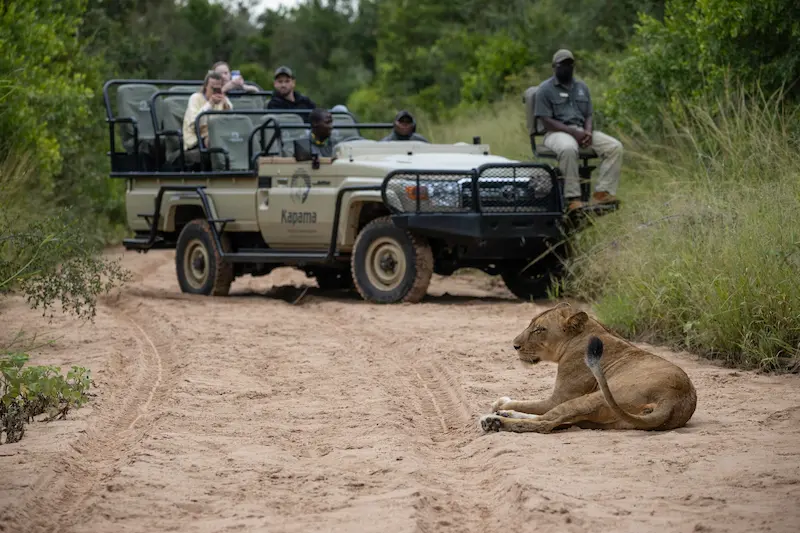
A safari at Kapama Private Game Reserve brings together the things many travellers hope to find in South Africa: Big Five wildlife, experienced guiding, beautifully designed accommodation, unhurried meals and the convenience of arriving through nearby Hoedspruit Airport.
But the name “Kapama” does not refer to one lodge. It is a private reserve with four distinct places to stay—River Lodge, Southern Camp, Buffalo Camp and Karula. Choosing well therefore means understanding not only the reserve, but also the atmosphere, room style and pace you want from your safari.
Where is Kapama Private Game Reserve?
Kapama is located in South Africa’s Limpopo Province, between the northern Drakensberg Mountains and the Greater Kruger region. The reserve covers roughly 150 square kilometres of bushveld and lies beside Hoedspruit Airport, also known as Eastgate Airport.
This location is one of Kapama’s practical advantages. Travellers can fly from Johannesburg or Cape Town to Hoedspruit and move from airport arrival to safari country without a long onward road journey. Courtesy airport transfers are generally offered for guests arriving on scheduled flights, subject to the applicable booking terms.

Why the location matters
- Easy fly-in access: Hoedspruit Airport is immediately beside the reserve.
- Less transfer fatigue: You can spend more of your first and final day enjoying the safari environment.
- Good itinerary connections: Kapama can be combined with Cape Town, Johannesburg, Victoria Falls or another Southern African destination, depending on flight schedules.
- Strong short-stay potential: A three-night safari can feel worthwhile because less time is lost reaching the lodge.
What makes a Kapama safari distinctive?
Kapama offers a polished private-reserve experience. Guests typically explore with a professional guide and assistant guide or tracker, following the signs, sounds and movements of wildlife rather than driving a fixed public route. Drives generally take place in the early morning and late afternoon, when temperatures are more comfortable and animal activity can be stronger.
The experience is not only about checking animals off a list. Guides interpret tracks, alarm calls, vegetation, behaviour and the relationships within the ecosystem. A lion sighting may be memorable, but so can learning why oxpeckers gather on a buffalo or how a tracker reads the direction of an animal from marks in the sand.
What does a typical day at Kapama look like?
Exact times shift with the season and lodge operations, but most safari days follow a rhythm shaped around the cooler hours of morning and evening.
Wake-up and morning refreshments
The day starts early. Guests gather for tea, coffee and a light snack before heading into the reserve as the bush begins to wake.
Guided safari drive
Your guide and tracker read the landscape for fresh signs. Morning light is beautiful for photography, and the drive may include a coffee stop in the reserve.
Breakfast and unhurried lodge time
Return for a generous breakfast, then choose your pace: rest, swim, read, enjoy the view, book a wellness treatment or join an optional activity where offered.
Lunch and relaxation
The warmer part of the day is generally slower. This is when the quality of your room, deck, pool and shared lodge spaces becomes especially important.
Afternoon safari and sundowners
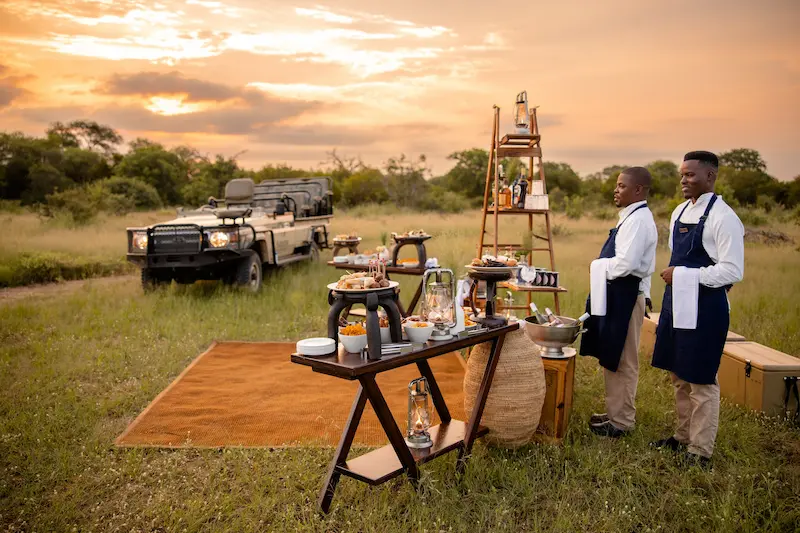
Head back into the reserve as temperatures cool. A sundowner stop offers time to pause before the drive continues into early evening.
Dinner in the bush atmosphere
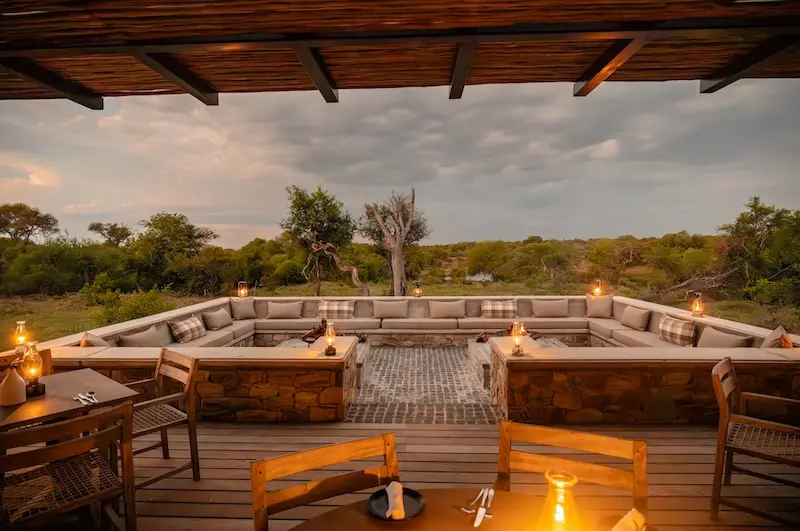
Return to the lodge for dinner, often in a setting designed around firelight, open skies and the sounds of the reserve.

What wildlife can you see?
Kapama is known as a Big Five reserve, meaning lion, leopard, elephant, rhino and buffalo occur within the protected area. Guests may also encounter giraffe, zebra, wildebeest, hyena, kudu, impala, warthog and a wide variety of birdlife and smaller species.
However, safari is not a zoo and sightings are never guaranteed. Weather, water, vegetation, animal movement and sheer luck all shape what happens on each drive. This unpredictability is not a weakness—it is what makes a genuine sighting feel extraordinary.
A better way to approach game viewing
- Give yourself several drives rather than expecting everything on the first outing.
- Tell your guide what interests you, including birds, behaviour, photography or smaller wildlife.
- Stay curious even when the Big Five are not immediately visible.
- Remember that patient tracking often becomes part of the story you remember most.
The four Kapama lodges
All four lodges share access to the reserve, but they do not offer the same atmosphere. Your choice should reflect who is travelling, how private you want the stay to feel, whether you prefer a larger social lodge or an intimate camp, and how much time you expect to spend enjoying your accommodation between drives.
Kapama River Lodge
The largest and most social of the four lodges, with spacious accommodation, broad facilities and easy access to the Kapama Wellness Centre. It suits travellers who enjoy energy, choice and a resort-style safari base.
Best for: first-time guests, friends and groups
Kapama Southern Camp
A warm, refined camp positioned particularly well for families and travellers who prefer a calmer lodge atmosphere. Selected villa configurations can give families additional space and privacy.
Best for: families and relaxed multi-generational stays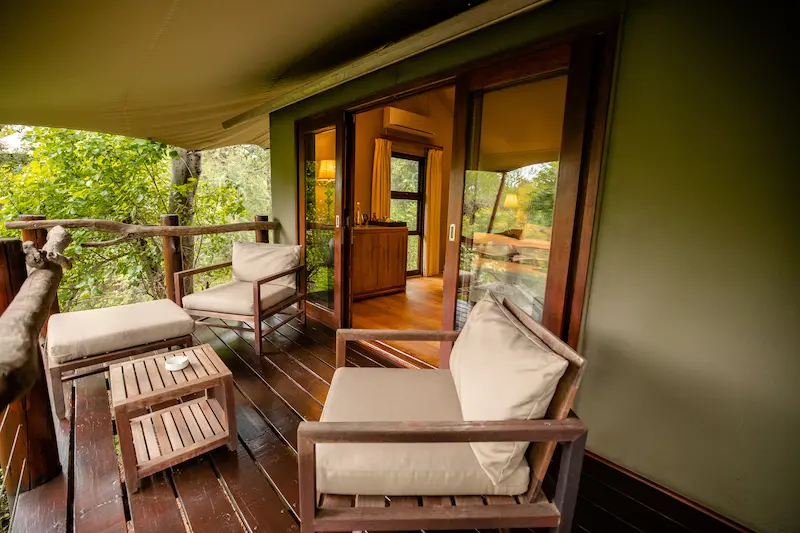
Kapama Buffalo Camp
An intimate luxury tented camp set within dense bushveld. Elevated walkways and tented accommodation create a stronger traditional safari-camp feeling without giving up comfort.
Best for: couples and intimate safari atmosphere
Kapama Karula
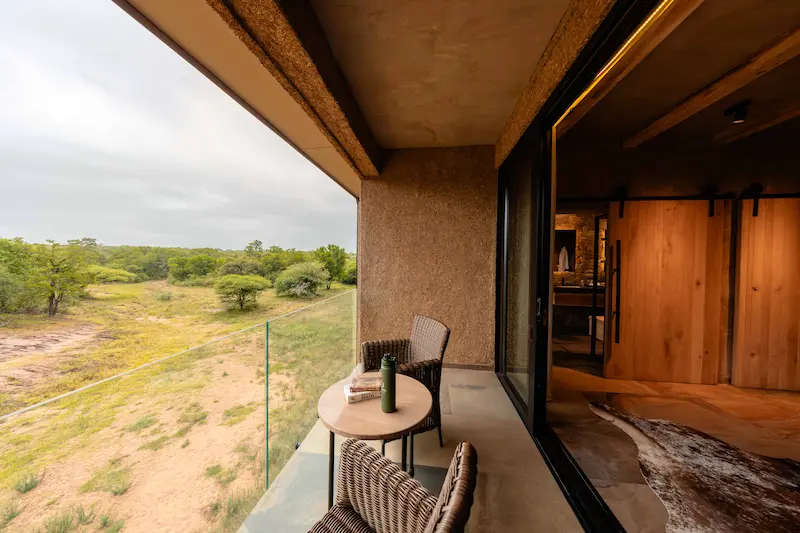
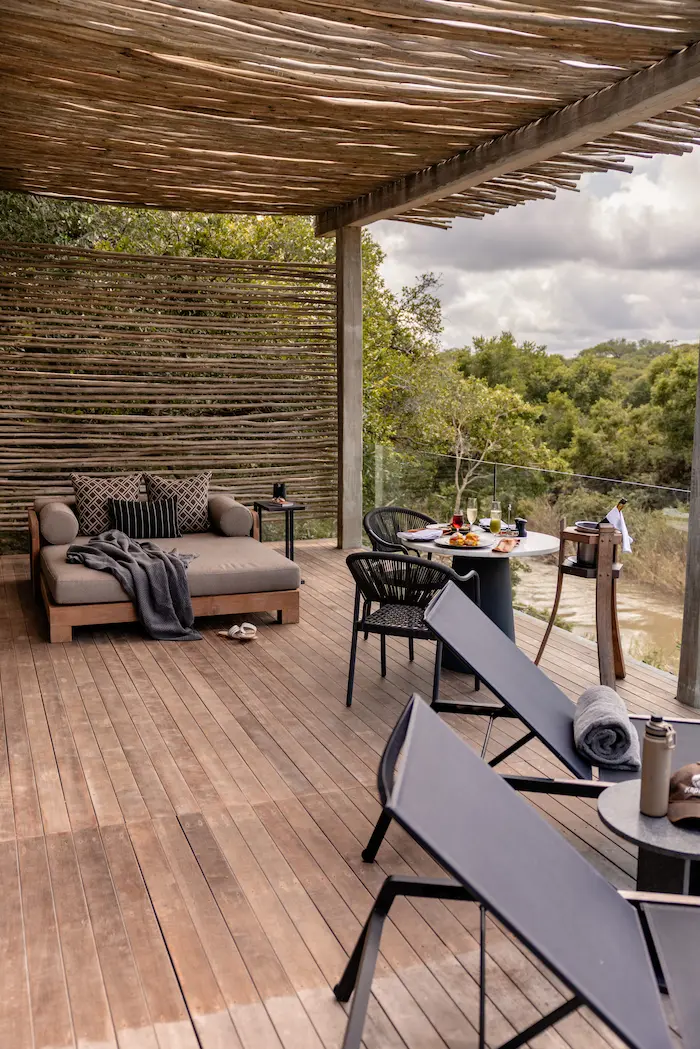
Kapama’s most exclusive lodge, set beside the Klaserie River with spacious villas, sophisticated dining and a quieter luxury experience. Selected villas include private pools.
Best for: honeymoons, special occasions and privacy

How to choose between the lodges
Wellness, dining and time between drives
Safari planning often focuses on wildlife, but a significant part of the day is spent at the lodge. At Kapama, those hours can include spa treatments, pool time, long meals, quiet reading, fitness or simply watching the bush from a deck.

Dining is also woven into the stay rather than treated as a functional break between activities. Settings and menus vary, but travellers can generally expect carefully prepared meals and opportunities to dine in spaces that connect back to the landscape.
When is the best time to visit Kapama?
Kapama is a year-round safari destination. The “best” season depends on whether you value concentrated wildlife viewing, green scenery, warmer weather, birdlife, photography conditions or quieter travel periods.
| Period | General conditions | Why travellers choose it | What to prepare for |
|---|---|---|---|
| May–August | Drier, cooler winter conditions with chilly mornings and evenings. | Thinner vegetation can make some wildlife easier to see; comfortable daytime temperatures. | Warm layers, gloves or a beanie for open-vehicle drives. |
| September–October | Hotter, dry conditions before the main summer rains. | Strong water-dependent wildlife activity and dramatic dry-season landscapes. | Heat, dust and very warm afternoons. |
| November–March | Summer rainfall, green vegetation and warmer temperatures. | Lush scenery, newborn animals, migratory birds and dramatic skies. | Humidity, possible afternoon storms and thicker vegetation. |
| April | A transition month as rainfall eases and temperatures begin to cool. | Green landscapes with increasingly comfortable conditions. | Variable weather; pack flexible layers. |
How many nights should you stay?
For most first-time visitors, we recommend at least three nights. This normally gives you up to six game-drive opportunities, depending on arrival and departure times, while leaving enough space to enjoy the lodge.
- Two nights: Possible for a short extension, but the experience can feel compressed.
- Three nights: A strong minimum for first-time safari travellers.
- Four nights: Better for a slower pace, spa time, photography and deeper immersion.
- Five nights or more: Well suited to honeymoons, special occasions and travellers who prefer not to rush.
Arrival timing matters. A three-night stay that reaches the lodge before the afternoon drive can feel fuller than one arriving late in the evening. Tourgy Tourz considers flight schedules, transfers and lodge check-in timing when shaping the itinerary.
How to get to Kapama
Fly to Hoedspruit Airport
This is generally the simplest option. Scheduled services operate from Johannesburg and Cape Town, and Kapama provides transfers for eligible fly-in guests according to the applicable lodge arrangements.
Travel by road from Johannesburg
A road transfer or self-drive journey is possible, but it takes considerably longer. This can work well when the safari forms part of a wider Mpumalanga or Limpopo itinerary, especially if you want to include the Panorama Route.
Private charter
Kapama has private aviation facilities, and charter options may be arranged for travellers prioritising time and convenience. Availability, routing, luggage limits and cost should be confirmed for the specific journey.
What is usually included?
Kapama lodge rates are often offered on an inclusive safari basis, but exact terms depend on the lodge, room category, package and season. A quotation may include:
- Accommodation in the selected room, suite, tent or villa category
- Meals according to the confirmed package
- Morning and afternoon guided safari drives
- Selected beverages, depending on the contracted rate
- Transfers from Hoedspruit Airport for qualifying fly-in bookings
- Applicable lodge services and facilities
Flights, premium beverages, spa treatments, private vehicles, specialist activities, conservation levies, gratuities and travel insurance may be separate unless clearly stated. Always read the included and excluded section of the final quotation rather than assuming every package is identical.
Who is a Kapama safari best suited to?
What should you pack?
- Neutral, comfortable clothing that can be layered
- A warm jacket for winter mornings and open-vehicle drives
- Sun hat, sunglasses and high-SPF sunscreen
- Closed walking shoes and comfortable lodge footwear
- Binoculars if you have them
- Camera, spare batteries and memory cards
- Personal medication and copies of prescriptions
- A compact day bag rather than oversized luggage
You do not need an entirely new “safari wardrobe.” Comfort, weather protection and practical layering matter more than dressing like an explorer in a movie.
Questions to answer before requesting a quote
The more precise your enquiry, the more useful the recommendation will be. Before asking for a Kapama quotation, decide what you can about the following:
- Your preferred travel dates and whether they are flexible
- The number of adults and the ages of any children
- Your preferred number of nights
- Whether you are celebrating a honeymoon, anniversary or birthday
- Your lodge preference—or whether you want a recommendation
- Your approximate budget per person or total trip budget
- Whether flights should be included
- Any dietary, mobility, medical or accessibility requirements
- Whether Kapama is a standalone trip or part of a wider itinerary
Plan your Kapama safari
Send us the details below. Your answers help us recommend the right lodge and also allow us to understand which Kapama experiences travellers are most interested in.
Kapama safari FAQs
Is Kapama inside Kruger National Park?
Kapama is a privately owned reserve in the Greater Kruger region rather than a lodge inside the public Kruger National Park. It offers its own private-reserve game-drive experience.
Can I see the Big Five at Kapama?
The Big Five occur within the reserve. However, wildlife sightings are natural and cannot be guaranteed on any specific drive or stay.
Which Kapama lodge is the most private?
Karula is generally the strongest choice for travellers seeking an exclusive villa-style stay, while Buffalo Camp offers a smaller and more intimate tented-camp atmosphere. The better fit depends on the style of privacy you prefer.
Which Kapama lodge is best for families?
Southern Camp is especially positioned for families, with selected villa configurations and a warm, relaxed atmosphere. River Lodge can also suit families and groups depending on room availability and children's ages.
Can children join game drives?
Age policies and activity conditions may differ by lodge and can change. Share the ages of all children before booking so the correct room and safari arrangements can be confirmed.
Do I need malaria medication?
The Greater Kruger region is considered a malaria-risk area. Medical advice depends on the season, individual health and current guidance. Consult a qualified travel-health professional before departure.
Can dietary requirements be accommodated?
Many dietary requirements can be accommodated when communicated in advance. Share allergies, intolerances, religious requirements and preferences at enquiry stage so they can be confirmed with the lodge.
Can Tourgy Tourz combine Kapama with Cape Town or Victoria Falls?
Yes. Kapama can be combined with Cape Town, Johannesburg, Victoria Falls, Botswana, Namibia or an Indian Ocean beach stay depending on available flights, travel time and budget.
Where is Kapama Private Game Reserve?
Kapama Private Game Reserve is in Limpopo, South Africa, between the northern Drakensberg Mountains and the Greater Kruger region, close to Hoedspruit Airport.
How do you get to Kapama?
Most guests fly to Hoedspruit (Eastgate) Airport, right beside the reserve, from Johannesburg or Cape Town. You can also drive from Johannesburg, which takes about 5 to 6 hours, or fly in by private charter.
How many nights should I stay at Kapama?
Three nights is a good minimum for most first-time visitors. Four nights offers a more relaxed pace with additional time for wellness, leisure and optional experiences.
What is the best time to visit Kapama?
Kapama can be visited all year. The dry winter months, roughly May to September, make game viewing easier as the bush thins out, while the green summer season brings lush scenery, baby animals and migratory birds.
Which Kapama lodge should I choose?
River Lodge suits most first-time visitors, Southern Camp is ideal for families, Buffalo Camp offers an intimate tented-camp feel and Karula is the most exclusive. Compare them in our guide: Which Kapama Lodge Is Right for You?